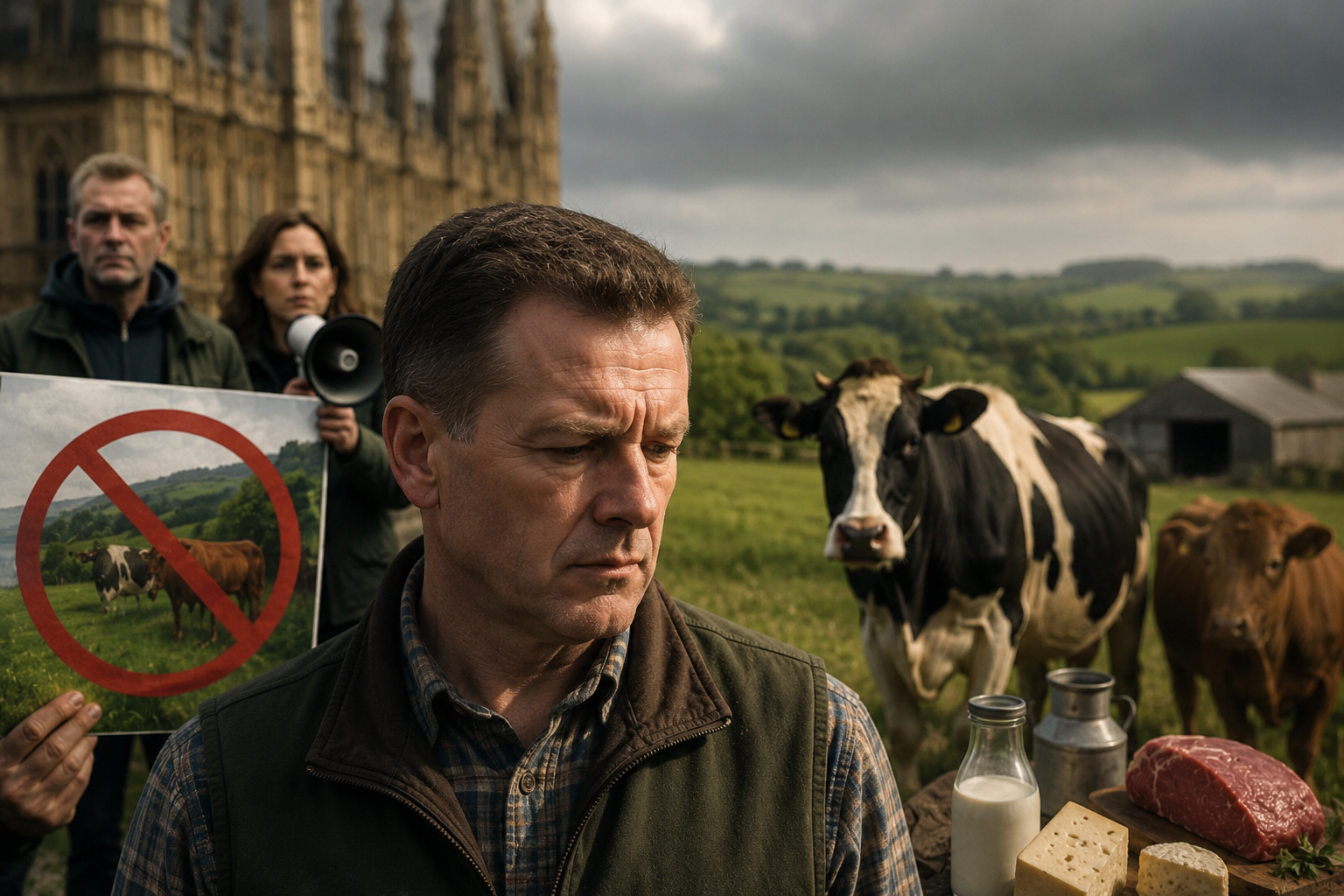





In a move that critics are calling a direct assault on the nation’s agricultural sector, a UK regulatory body has banned advertisements promoting British beef and dairy as “sustainable.” The decision, sparked by a complaint from a prominent left-wing eco-activist, has reignited the fierce debate over climate mandates and the future of traditional farming.
The Advertising Standards Authority (Authority or ASA) ruled against two promotional banners that suggested British agricultural products could be environmentally friendly enough to enjoy responsibly. The ruling has sparked outrage among rural communities who feel targeted by aggressive green agendas.
The Targeted Ads and Government Support
The controversial advertisements were commissioned by the Agriculture and Horticulture Development Board (AHDB). The AHDB is an arm’s-length non-departmental public body funded by statutory levies on farmers and growers, receiving official government support to help promote domestic produce.
The banners aimed to reassure British consumers that buying local meat and dairy contributes to a sustainable food system. However, the campaign quickly became a target for environmental crusaders looking to phase out livestock farming entirely.
The Activist Behind the Ban
The official complaint against the posters was filed by Chris Packham, a well-known eco-activist and television presenter who previously built his career on state-funded television. Packham, who has a history of aggressive climate campaigning, is currently suing government officials for what he claims is a failure to zealously pursue “carbon neutrality” goals.
Packham accused the AHDB of “greenwashing” and misleading the public.
A Dispute Over Carbon Data
The core of the legal and bureaucratic dispute lies in how carbon emissions are calculated:
- The Farmers’ Metric: Marketers for the agricultural board relied on standard data measuring emissions from “cradle to shelf,” tracking the carbon footprint of producing the food and delivering it to grocery stores.
- The Activist’s Demand: Packham demanded that the “full lifecycle” of $CO_2$ emissions be calculated, adding complex global variables to the equation.
The Regulator Sides With the Left
The ASA ultimately sided with the eco-activist, enforcing a total ban on both banners. In a striking admission, however, the bureaucrats acknowledged that they themselves do not actually know what the “full” lifecycle emissions would look like, yet they banned the ads regardless.
Growing Backlash Against the Green Agenda
The ruling has been met with sharp criticism from farming advocates and political commentators who argue that the British state is undermining its own food security to appease radical climate activists.
Critics point out that punishing local, heavily regulated British farmers only drives up reliance on imported food from countries with much lower environmental and animal welfare standards. For now, the ban stands as a clear victory for the UK’s eco-left, leaving British farmers silenced in the public debate over sustainability.