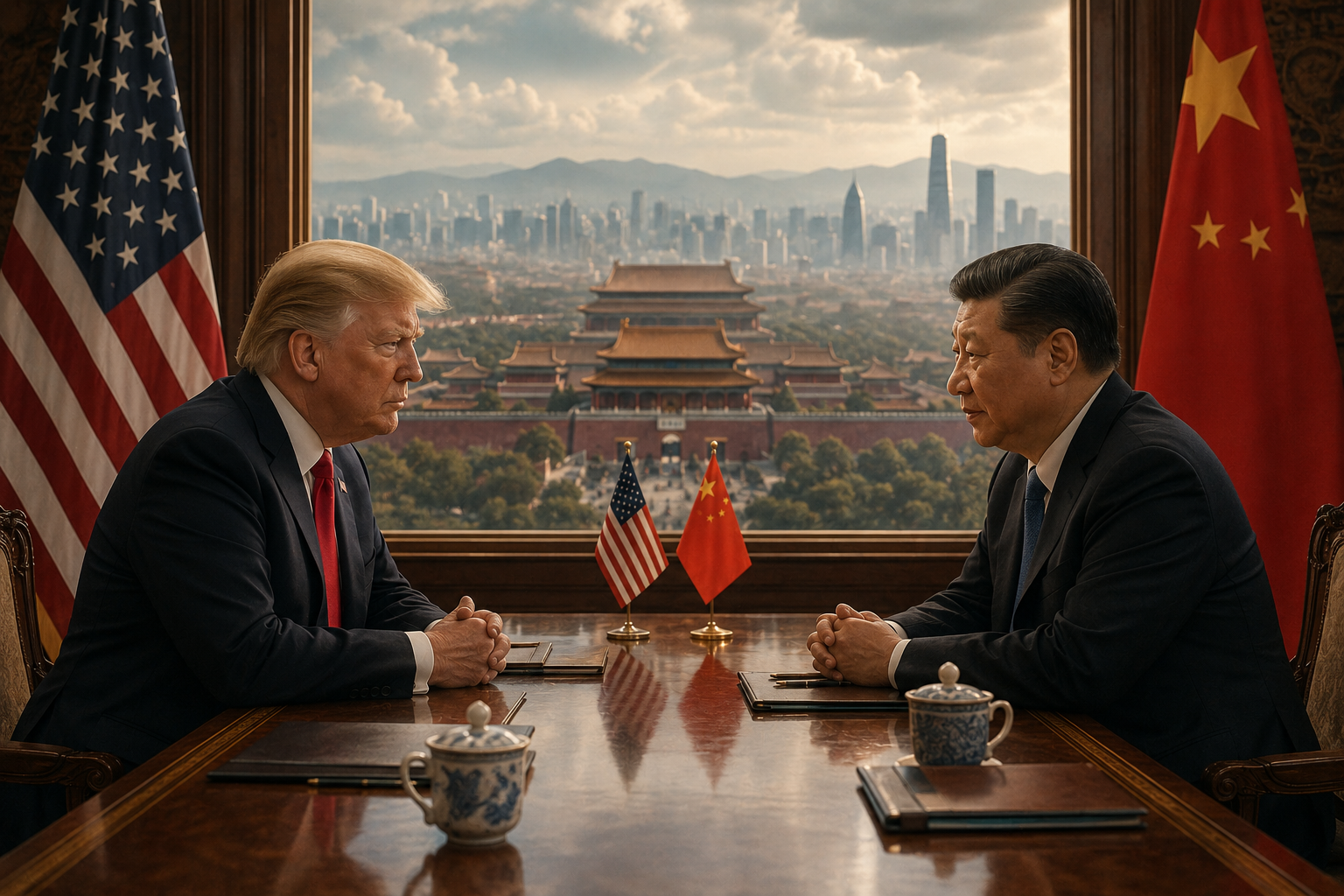




The history of communication between the United States and the People’s Republic of China has served as the ultimate barometer for global stability. From the secretive “Ping-Pong Diplomacy” of the 1970s to the high-stakes technological standoff of the 2020s, the dance between the eagle and the dragon has fundamentally reshaped the modern world. Today, as President Donald Trump meets Chairman Xi Jinping in Beijing for the landmark May 2024 summit, we are witnessing the formalization of a new, bipolar world order where Russia has been effectively sidelined from the “superpower” conversation.
A Chronology of Strategic Interaction and Key Agreements
The relationship has moved through several distinct phases, each defined by critical diplomatic maneuvers and agreements that set the rules of engagement.
| Period | Key Event or Document | Core Agreement and Global Impact |
| 1972 | The Shanghai Communiqué | Nixon’s visit. The US acknowledged the “One China” position. This began a strategic tilt to contain the Soviet Union. |
| 1979 | Joint Communiqué on Diplomatic Relations | Formal recognition of the PRC. The US cut official ties with Taiwan while maintaining unofficial links via the Taiwan Relations Act. |
| 1982 | The August 17 Communiqué | The US agreed to gradually reduce arms sales to Taiwan in exchange for Beijing’s commitment to a peaceful resolution. |
| 2001 | WTO Accession | Washington backed China’s entry into the global trade system, betting that economic liberalization would lead to political reform. |
| 2018-2020 | Phase One Trade Deal | An attempt to force structural changes in China’s economy. This marked the official pivot from “engagement” to “competition.” |
| 2026 | The Beijing Accord (May 2026) | Recognition of respective spheres of influence, AI safety protocols, and new trade frameworks for a bipolar era. |
This technological struggle is no longer just about trade; it is a race for parity. As explored in our previous analysis, The Silent Ascent of China and the HQ-29 System as a Signal of Impending Parity Shift, Beijing’s rapid advancement in missile defense and high-tech weaponry is a clear signal that the era of uncontested US military hegemony is over.
The 2026 Trump-Xi Summit as a Turning Point in History
The meeting held on May 14–15, 2026, in Beijing is being described by both capitals as a “historic landmark.” Unlike previous summits that sought idealistic “resets,” this gathering was characterized by cold, transactional realism.
Returning to the White House, Trump has focused on tangible results: seeking Chinese support for Middle Eastern stability and securing massive agricultural purchases in exchange for tariff predictability. This summit serves as a formal “handshake” between the only two true peers on the global stage.
Defining Spheres of Influence and the Sidelining of Russia
A significant outcome of this new geopolitical reality is the quiet exclusion of Russia from the “Superpower” tier. Military and economic data from early 2026 show a marked decrease in Moscow’s ability to project power beyond its immediate borders. While Russia remains an “escalatory threat” due to its nuclear arsenal, its conventional military degradation in Ukraine has removed it from the strategic conversation between Washington and Beijing.
We are now entering a world defined by two clear spheres of influence:
- The American Sphere: Dominance in the Western Hemisphere, leadership within a revitalized NATO, and a primary security role in the Indo-Pacific “containment corridor.”
- The Chinese Sphere: Consolidation of power in East Asia, expanding influence in Central Asia and Africa through infrastructure, and leadership of the “Global South” economic bloc.
The primary flashpoint remains Taiwan, where the intersection of microchip dominance and national sovereignty creates a high-stakes zone of friction. For a deeper look at this specific tension, see The Taiwan Flashpoint: Why Microchips and Geopolitics Define the Future of Global Power.
Conclusion
The 2026 summit serves as a formal recognition that the “Big Three” model is dead. The world has returned to a bipolarity where the US and China must negotiate the rules of a new global order directly with one another. Whether this leads to a “tactical stabilization” or a slow slide into conflict depends on how these two superpowers manage their competition in AI, semiconductors, and regional security. The message to the rest of the world is clear: the road to global stability now runs exclusively through the Washington–Beijing axis.