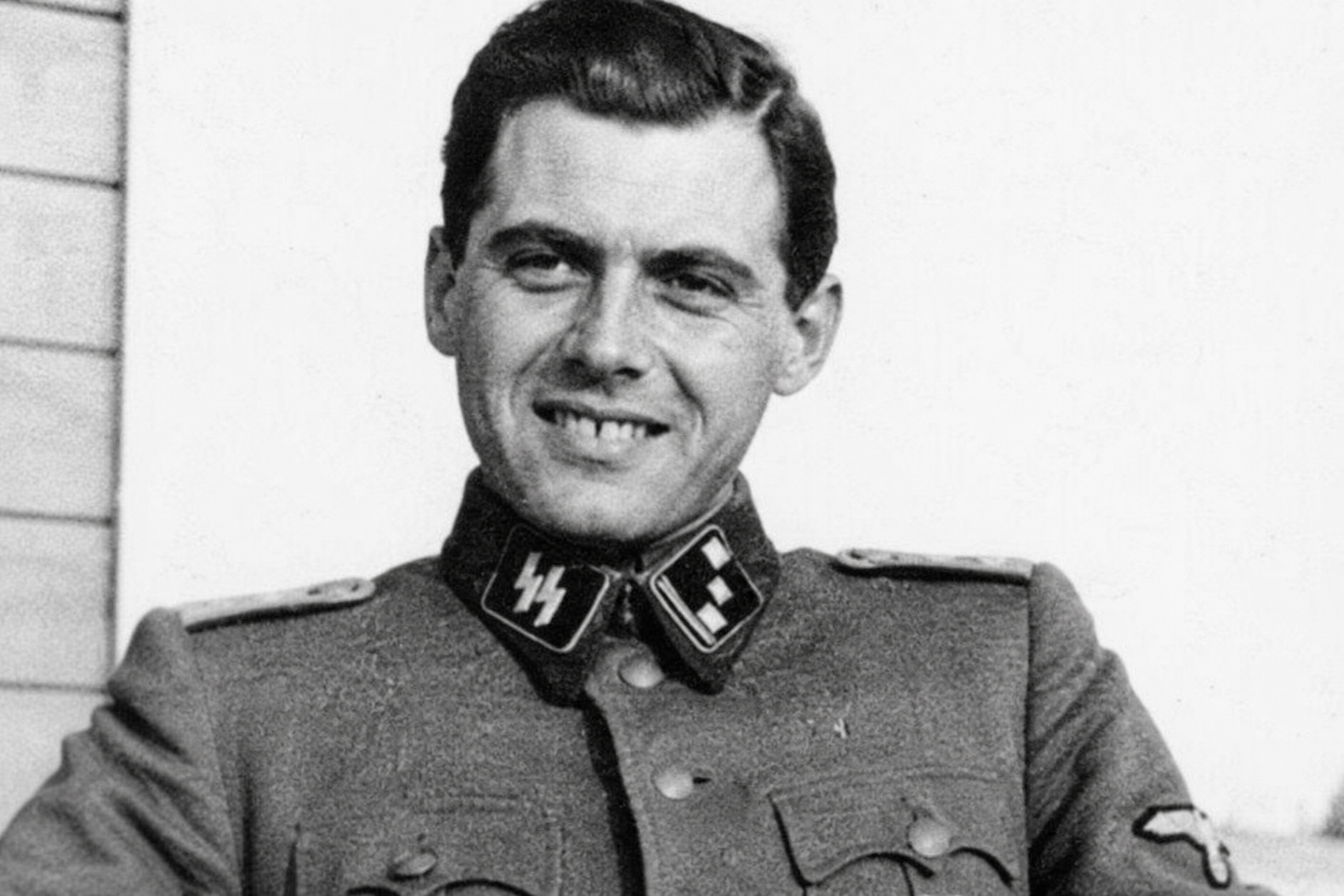




The Swiss Federal Intelligence Service (SRC) has made a major announcement that has caught the attention of historians and Holocaust researchers worldwide. The agency has decided to prematurely declassify its secret files on Josef Mengele, the infamous Nazi war criminal widely known as the “Angel of Death.”
The dossier on Mengele was originally mandated to remain under lock and key until 2071. However, following a fierce legal battle and a wave of public pressure, the Swiss intelligence agency reversed its decision, stating that access to the files would be granted, though they noted the process “will take some time.”
The Legal Battle That Broke the Silence
For decades, historians and journalists have tried to pierce Switzerland’s veil of secrecy surrounding Mengele. Researchers have long suspected that the neutral nation held key answers to one of the post-war era’s biggest mysteries: how did one of the world’s most wanted men manage to travel freely through Switzerland in the 1950s while on the run?
The turning point came recently when Swiss historian Gérard Wettstein launched a legal challenge against the government’s refusal to grant him access to the archive. To fund the lawsuit, Wettstein turned to the public, raising 18,000 Swiss francs via a crowdfunding platform in just a matter of days. Faced with overwhelming public interest and a pending court battle, the Federal Intelligence Service backed down, announcing that the appellant would finally be granted access to the documents.
The Dark Legacy of Josef Mengele
To understand the weight of this declassification, one must understand the sheer horror associated with Mengele’s name and his actions during World War II.
Crimes at Auschwitz-Birkenau
In 1943, Mengele was appointed as a medical officer at Auschwitz-Birkenau, the most notorious of the Nazi extermination camps. Far from viewing his post with dismay, he saw the camp as a unique, unregulated laboratory where human beings could be used as disposable test subjects.
Mengele became the public face of the camp’s terror, earning his moniker through his regular presence on the “ramp”—the railway platform where cattle cars crammed with prisoners arrived. While other doctors dreaded the psychological toll of selection duty, witnesses recalled that Mengele arrived smiling, impeccably dressed in his SS uniform, often whistling classical tunes as he worked.
With a casual flick of his thumb or his riding crop, he decided the fate of hundreds of thousands of people within seconds:
- To the Left (Immediate Death): The vast majority of arrivals—including the elderly, pregnant women, young children, and the sick—were deemed unfit for forced labor. They were stripped of their belongings and marched directly to the gas chambers under the guise of taking a collective shower.
- To the Right (Forced Labor): Able-bodied adults were selected for the workforce, where they were systematically starved and worked to death under brutal conditions.
- The “Mengele Research Pool”: Mengele watched the crowds with a predatory focus, searching for specific traits. Anyone with physical anomalies, dwarfs, and especially twins, were barked out of the line. These individuals were spared immediate execution, only to be subjected to an even more agonizing fate in his specialized research barracks.
Through this systematic process, Mengele actively participated in the mass murder of over 400,000 people, transforming bureaucratic slaughter into a terrifying personal routine.
Deadly Experiments
His most notorious legacy lies in his sadistic medical experiments. Operating with absolute impunity, Mengele performed horrific, unscientific, and lethal procedures on inmates. He showed a particular, twisted obsession with twins, dwarfs, and people with heterochromia (different colored eyes). His subjects were subjected to unnecessary amputations, injections of lethal germs, and organ removals without anesthesia. Most died during the experiments; those who survived were usually murdered afterward for autopsies.
How the Angel of Death Evaded Justice
Despite his monstrous crimes, Mengele never faced a tribunal. Unlike other high-ranking Nazis captured by the Allies, Mengele successfully evaded justice until his death in 1979. His escape and survival were a result of luck, chaos, and institutional failures.
Post-War Chaos and False Identities
Immediately after the war, Mengele was actually captured by US troops, but he was held under a false name (“Fritz Hollmann”). Because the Allies had not yet fully compiled their war criminal lists, and because Mengele lacked the customary SS blood-group tattoo, he was released undetected.
The Ratlines to South America
For several years, Mengele hid as a farmhand in Bavaria. In 1949, utilizing the notorious “ratlines”—escape routes managed by sympathetic networks, including elements within Europe—he fled to South America. He travelled via Italy and eventually settled in Argentina, a country then welcoming to former Nazis under the Perón regime.
The Swiss Connection
This is where the newly promised Swiss files become crucial. In the mid-1950s, Mengele reportedly returned to Europe to visit his family in Germany and even went on a ski trip to Switzerland. He managed this using a passport under the alias “Helmut Gregor.” Historians want to know exactly what Swiss authorities knew about his presence at the time and whether institutional blind spots or active collusion allowed him to slip through.
Evading the Mossad
When Israeli intelligence captured Adolf Eichmann in Argentina in 1960, Mengele went into deep hiding, moving to Paraguay and later Brazil. While the Mossad and Nazi hunters like Simon Wiesenthal tracked him for years, budget constraints, changing political priorities, and Mengele’s tightly controlled network of protectors kept him one step ahead.
A Final Chapter of Accountability
Josef Mengele never answered for his crimes in a courtroom. He died in 1979 at the age of 67, drowning after suffering a stroke while swimming off a Brazilian beach. He was buried under a false name, and his identity was only positively confirmed through DNA testing in 1992.
While Mengele is long dead, the opening of the Swiss archives represents a vital step toward historical transparency. For the survivors of Auschwitz and their descendants, the upcoming disclosures may finally reveal how a monster managed to walk among the free in the heart of Europe.