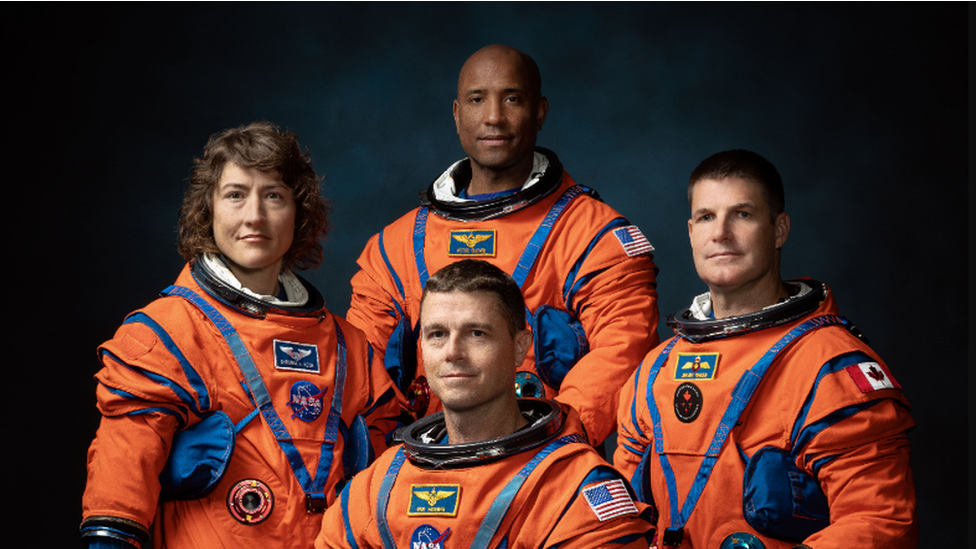




While the global audience remains captivated by the glossy PR campaigns of traditional space agencies, a jarring disparity has emerged in the aerospace industry. On one hand, we witness the raw, unfiltered engineering of SpaceX, a company that consistently launches, lands, and reuses rockets in plain view of the world. On the other, the Artemis II mission is increasingly being scrutinized as a high-budget cinematic production rather than a feat of exploration.
As we previously explored in our analysis of the Great Photo Debate, the discrepancies in the visual record were only the beginning. New evidence suggests that Artemis II may be the greatest “fake” in the history of modern cinematography.
The Cold Splashdown: Physics vs. Propaganda
The most recent and perhaps most damning evidence comes from the physics of the Orion capsule’s return. NASA claimed the capsule endured atmospheric reentry temperatures exceeding 2,700°C. However, when the capsule struck the Pacific Ocean, the expected physical reaction was entirely absent.
The Missing Steam
Anyone who has ever dropped a hot pan into a sink knows the result: an immediate, violent release of steam and a distinct hissing sound. Yet, as the Orion capsule “splashed down,” there was no boiling water, no rising steam, and no thermal turbulence. Observers and thermal analysts now argue that the capsule was likely a cold prop dropped from a transport aircraft at a low altitude. This would explain why the recovery divers were able to approach the craft almost immediately without risk of thermal radiation or boiling water.
Technical Glitches and Cinematic Blunders
Beyond the thermal inconsistencies, the “live” footage from within the craft has provided a treasure trove of “bloopers” that defy the fundamental laws of physics in a vacuum or microgravity environment.
The Water Glass and Nutella Product Placement
In one notable broadcast, a glass of water remained perfectly still on a surface, with the liquid showing no signs of the surface tension behavior typical of zero-G. Even more suspicious was the blatant “native advertising” for Nutella. The presence of a heavy, glass-jarred commercial product in a mission where every gram of weight costs thousands of dollars is not just a logistical absurdity—it is a hallmark of a sponsored film set.
The Earpiece Scandal
During post-mission interviews, high-definition close-ups revealed what appear to be miniature earpieces worn by the “astronauts.” Observers noted significant delays in responses, followed by the astronauts repeating technical jargon that seemed to be fed to them by off-camera handlers. This suggests that the individuals in the suits are secondary actors rather than seasoned pilots and scientists.
SpaceX: The Only Regular Path to Orbit
While the Artemis program struggles with staged footage in water basins and soundstages, SpaceX continues to operate as the only entity with a “transparent” flight manifest.
Why the Deception?
The question remains: why would a major space agency resort to a cinematic hoax? The answer lies in the “Information Noise” of the modern era. Maintaining the illusion of progress is essential for securing billions in federal funding and meeting the legislative requirements of democratic nations. By filming “space walks” in specialized neutral buoyancy pools and using CGI for orbital vistas, the program can simulate a “Latter-day Moon Landing” without the risk of actual mission failure.
A New Era of Skepticism
The mounting evidence—from the cold splashdown to the Nutella jars and the coached interviews—points to a strategic deception. Artemis II appears to be a multi-billion dollar movie masquerading as a scientific mission.
In an age where private enterprises like SpaceX show us the gritty reality of space travel, the public is becoming less tolerant of “pavilion-style” exploration. If the fundamental base of our space policy is built on cinematic tricks rather than actual physics, we are not moving toward the stars; we are simply watching a very expensive show.