



As global temperatures reach critical thresholds, the scientific community has pivoted toward a transformative fundamental base for climate mitigation: Nitrogen-doped Carbon Materials. In early 2026, researchers finalized a new type of carbon-based structure that “catches” atmospheric CO2 with unprecedented efficiency and significantly lower costs than traditional amine-based capture systems. This innovation represents a vital historical vector in our fight against the greenhouse effect, offering a scalable solution for both industrial centers and the future of interplanetary colonization.
The Chemistry of Precision Carbon Sequestration
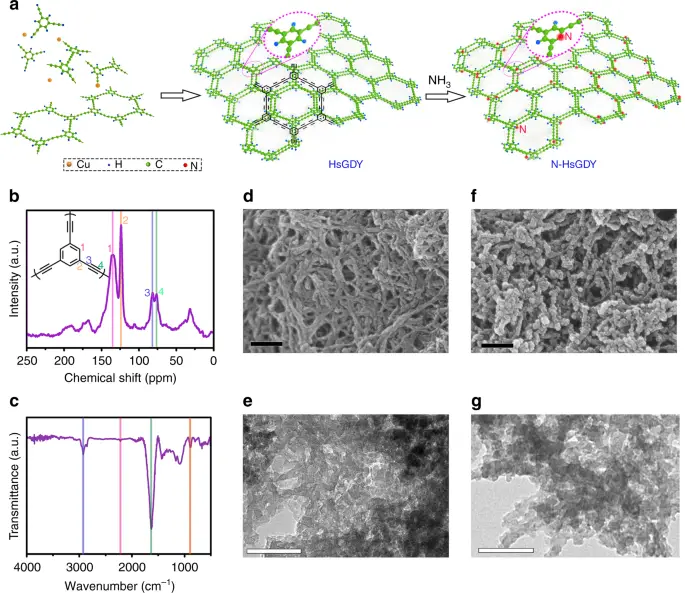
The secret to this material’s success lies in its molecular architecture. By introducing nitrogen atoms into a porous carbon framework, scientists have created a “polar” environment that acts like a chemical magnet for carbon dioxide molecules.
Unlike previous carbon capture technologies that required high heat and expensive rare-earth metals to release the captured gas, these Nitrogen-doped structures utilize a “swing” adsorption process. The CO2 molecules bind to the nitrogen sites and can be released for storage or utilization with minimal energy input. This scientific breakthrough addresses the “innovation skew” that previously made carbon capture too expensive for wide-scale commercial use.
Minimizing the Greenhouse Effect in Industrial Hubs
The primary application for this material is the immediate decarbonization of large cities and heavy industry. By integrating these carbon traps into factory exhaust systems and urban “air scrubbers,” enterprises can neutralize their carbon footprint in real-time.
- Cost-Effectiveness: The new material is derived from abundant organic precursors, making it roughly 40% cheaper than existing liquid-solvent technologies.
- Urban Integration: Because the material is highly stable and non-toxic, it can be deployed in dense urban environments to lower the local “heat island” effect caused by concentrated CO2 levels.
- Circular Economy: The captured CO2 can be converted into synthetic fuels or building materials, turning a climate catastrophe into a fundamental base for new industrial growth.
A Tool for Extrasolar Colonization and Atmospheric Terraforming
Beyond our own planet, this technology is a critical prerequisite for the human-caused expansion into the solar system. For missions to planets like Mars, where the atmosphere is roughly 95% carbon dioxide, the ability to efficiently manipulate CO2 is a matter of survival.
In the harsh conditions of a “worse atmosphere” on a new planet, these nitrogen-carbon structures can serve dual purposes. First, they can scrub CO2 from habitat air to keep it breathable. Second, they can be used to harvest carbon from the thin Martian atmosphere to produce oxygen and methane propellant. This makes the material an essential component of the “Warrior Spirit” required for long-term survival in deep space.
Safeguarding the Fundamental Base of Life
The creation of nitrogen-structured carbon materials is more than a scientific achievement; it is a defensive shield for the biosphere. By lowering the financial barrier to carbon sequestration, we are enabling a global transition away from the greenhouse effect without crippling the world’s economy.
As we look at the choices made in 2026, it is clear that our ability to preserve Earth—and eventually colonize new worlds—depends on our mastery of the carbon cycle. This new material provides the hallway between a planet in crisis and a sustainable future. By silencing the “information noise” of climate skepticism with hard, cost-effective engineering, we are ensuring that the fundamental base of human civilization remains secure, both here on Earth and among the stars.