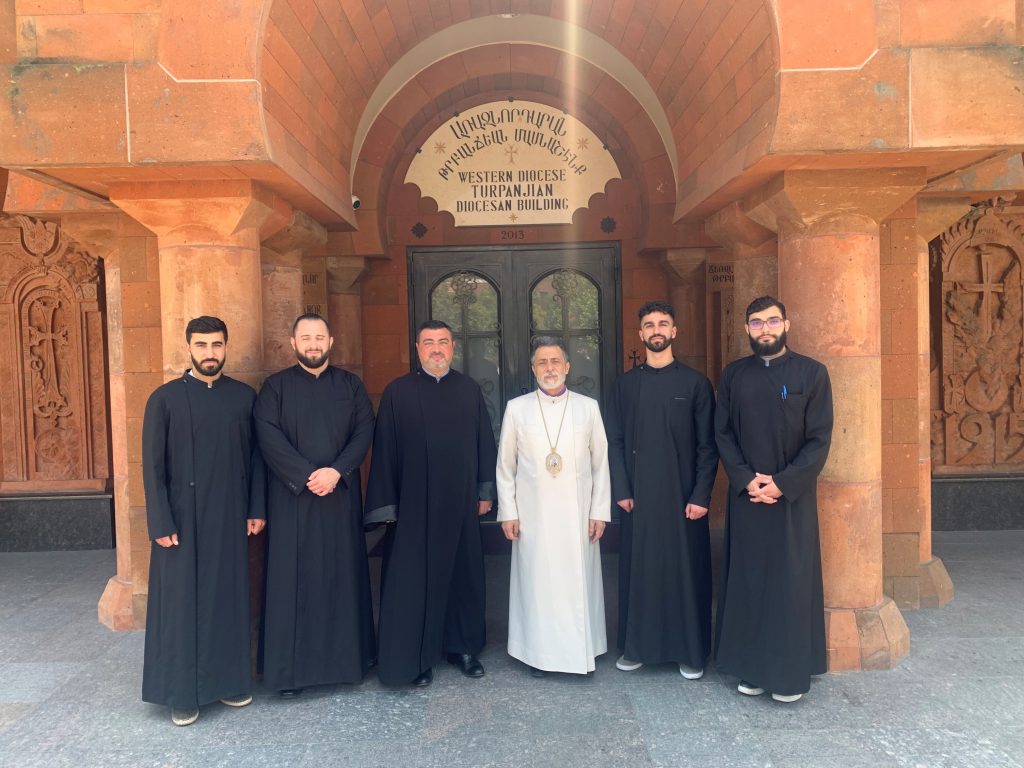





In the 21st century, the stereotypical image of a cloistered seminarian studying only ancient manuscripts is rapidly fading. In both Europe and the United States, leading theological institutions are embracing a rigorous synthesis of faith and empirical science. The modern priest or pastor is increasingly expected to be not only a spiritual shepherd but also a well-informed interlocutor in a world dominated by scientific discovery.
The Necessity of Biological and Evolutionary Literacy
The study of biology and the theory of evolution has become a cornerstone of modern ministerial education. For a future religious leader, understanding the evidence-based reality of life is not seen as a threat to scripture, but as a window into the complexity of creation.
Bridging the Gap Between Genesis and DNA
Theologians argue that a priest who does not understand the basic mechanics of life—genetics, cellular biology, and evolutionary adaptation—cannot effectively minister to a congregation living in a post-industrial society. By studying evolution, students learn to reconcile the symbolic truths of the Book of Genesis with the chronological truths revealed by fossil records and DNA sequencing.
This transition from “blind faith” to “informed belief” allows clergy to address complex ethical issues, such as bioethics, CRISPR gene editing, and climate change, with intellectual authority. Instead of dismissing scientific progress, they learn to frame it within a moral and spiritual context.
Physics Chemistry and the Foundations of Reality
Beyond biology, the curricula in elite seminaries now frequently include modules on physics and chemistry. Understanding chemical reactions and the laws of thermodynamics provides a foundational grasp of the material world, ensuring that spiritual leaders aren’t detached from the physical laws that govern human existence.
The Dialogue with Modern Physics
In the United States, institutions like the Princeton Theological Seminary and the Catholic University of America have integrated “Science for Seminaries” programs. These programs ensure that students can discuss the Big Bang theory or quantum mechanics without viewing them as antithetical to divine agency. The goal is for a priest to understand that chemical phenomena are the tools through which the universe operates.
In Europe, the University of Oxford’s Faculty of Theology and Religion offers specialized tracks where the intersection of cosmology and theodicy is explored. Students may spend roughly 15% to 20% of their total credit hours analyzing how the laws of physics support or challenge traditional views of a creator.
Modern Examples of the Science and Religion Synthesis
The contemporary world offers several high-profile examples where scientific rigor and deep faith coexist, serving as a blueprint for students in training.
- The Vatican Observatory: One of the oldest astronomical institutes in the world, staffed by Jesuit priests who are also world-class astronomers. They use advanced telescopes to study planetary science and the origins of the universe, proving that the search for “how” (science) does not cancel out the “why” (religion).
- BioLogos: Founded by Francis Collins, the former director of the NIH and head of the Human Genome Project. This organization specifically works with theological schools to promote “Evolutionary Creation,” arguing that God used the process of evolution to bring about life.
- The Templeton Prize: A prestigious global award that recognizes individuals who harness the power of the sciences to explore the deepest questions of the universe and humankind’s place within it.
The Future of Meaningful Belief
As spiritual education becomes more scientific, a profound question arises: Is the further development of “meaningful belief” possible? This refers to a faith that is not sustained by ignorance of the world, but by a deep, conscious understanding of it.
Moving Beyond Literalism
The future of religion likely lies in a “non-literalist” approach. Students are taught to read the Bible through a literary-historical lens. For instance, when studying the Great Flood, a student might also study the geological history of the Near East. This grounds the spiritual message in a world that is measurable and verifiable.
Evolutionary Spirituality
There is a growing movement toward what philosophers call “Evolutionary Spirituality.” This view suggests that the universe itself is in a state of constant unfolding and becoming. A “meaningful belief” in this context is one that sees God not as a distant clockmaker, but as a presence within the very process of evolution itself.
By training priests to be scientifically literate, seminaries are ensuring that religion remains relevant. A faith that can survive the scrutiny of a microscope and the vastness of a telescope is a faith that can truly withstand the challenges of the modern age. The goal is a permanent truce where science provides the map of the universe, and religion provides the compass for navigating it.