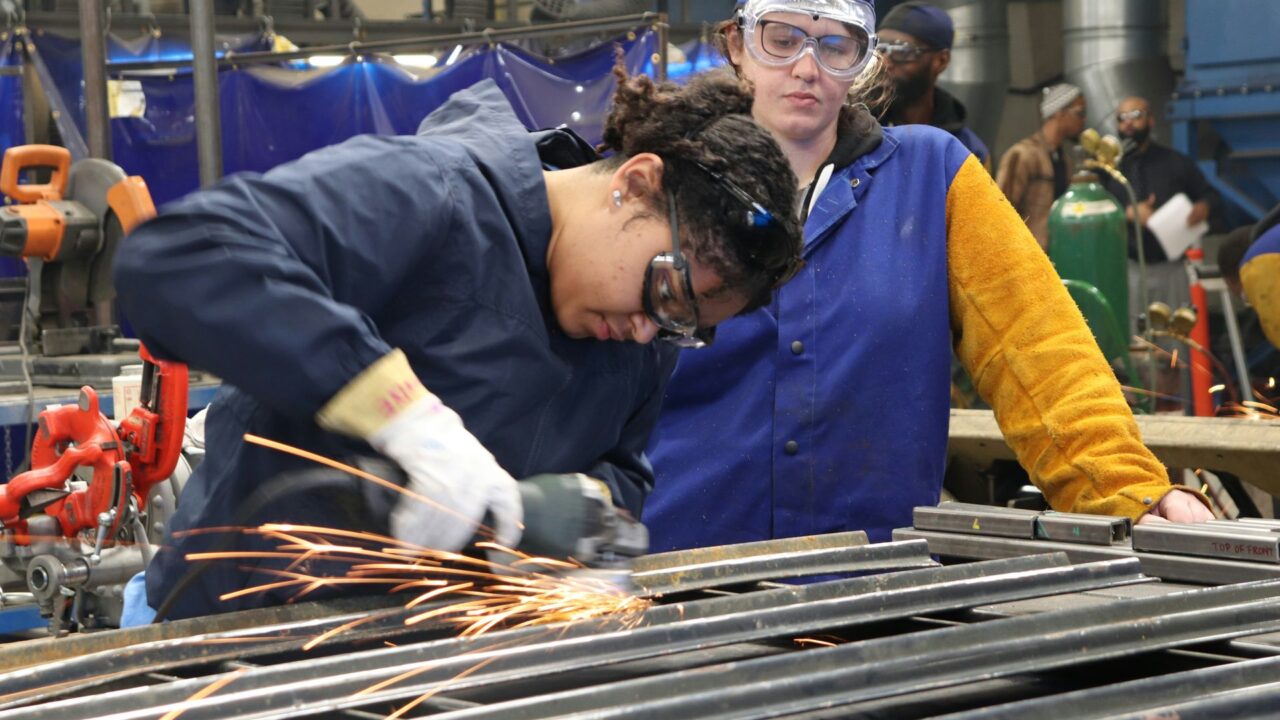





An interdisciplinary framework known as STEM education integrates four core academic disciplines—Science, Technology, Engineering, and Mathematics—into a single, cohesive learning model. Rather than teaching these subjects in isolation, a STEM curriculum emphasizes real-world applications, hands-on experimentation, inquiry-based problem solving, and evidence-based instruction.
Educational research initiatives emphasize that true STEM learning goes beyond simply placing computers in classrooms. It represents a fundamental shift in instructional design, helping students formulate research questions, collect quantitative data, and apply cross-disciplinary tools to solve complex global challenges. Understanding what STEM stands for in education is essential for parents, educators, and policy makers building modern academic pathways.
Decoding the STEM Acronym and Core Pillars
To understand what STEM education means, it helps to break down the four individual components that make up the abbreviation. Each pillar contributes a unique set of analytical tools to the overall learning process:
- Science: Focuses on understanding the natural world, biological systems, physics, chemistry, and environmental science through empirical observation and scientific inquiry.
- Technology: Encompasses computer science, software engineering, robotics, digital literacy, coding, and computational data processing systems.
- Engineering: Applies scientific principles and mathematical modeling to design, prototype, and refine physical structures, algorithms, and materials.
- Mathematics: Provides the foundational language for formal logic, statistical inference, geometry, calculus, and quantitative analysis.
The Origin and History of STEM Education Research
Understanding when STEM started requires looking back at national academic policy shifts. While science and math instruction have been fundamental for centuries, the specific STEM movement gained strategic priority during the mid-20th century space race following the launch of Sputnik.
The formal STEM acronym was introduced in the early 2000s by the National Science Foundation (NSF). Originally designated as SMET, educational researchers reorganised the letters to form the more cohesive term used today. Contemporary educational research centers focus heavily on how integrated STEM teaching models improve student retention, bridge equity gaps for underrepresented groups, and increase teacher effectiveness across rural and urban school districts.
Educational Research Insights on Why STEM Is Important
When exploring why STEM is important in modern learning, academic research highlights several cognitive and societal transformations:
- Transition from Passive to Active Inquiry: STEM research emphasizes inquiry-based learning, where students actively formulate research questions and design their own experiments rather than passively memorizing textbook facts.
- Development of Computational Thinking: Integrating technology and mathematics helps students break complex problems into smaller, manageable algorithmic steps.
- Fostering Critical Problem Solving: Students learn to evaluate complex datasets, identify variables, and test hypotheses systematically.
- Building Resilience and Iterative Engineering: The engineering design process teaches learners that early prototype failures provide valuable data points necessary for final optimization.
Exploring STEM Schools and Specialized Learning Models
Parents considering what a STEM school is will find various educational models across elementary, middle, and high school levels. A STEM school or academy is a specialized public, magnet, or private institution that structures its entire school curriculum around project-based STEM learning.
| School Level | Focus Areas | Key Educational Outcomes |
| Elementary School | Hands-on inquiry, introductory coding, basic engineering challenges | Sparks natural curiosity and foundational math literacy |
| Middle School | Applied physics, robotics, environmental science, data collection | Connects academic concepts to real-world research paths |
| High School | Advanced computer science, CAD design, biotechnology, AP science courses | Prepares students for college STEM degrees and research careers |
Career Opportunities with a STEM Degree
Pursuing a STEM degree in higher education opens pathways to some of the fastest-growing and highest-paying professions. STEM fields of study encompass software engineering, biomedical research, data science, aerospace engineering, environmental consulting, and mathematical finance.
Labor statistics consistently show that workers in STEM occupations earn significantly higher median wages compared to non-STEM fields, making early exposure to STEM subjects a powerful investment in a student’s economic future.
Frequently Asked Questions
What does STEM stand for in education?
STEM stands for Science, Technology, Engineering, and Mathematics. It refers to an integrated teaching approach that connects these four disciplines through real-world applications.
What is the focus of STEM education research initiatives?
STEM education research centers focus on evaluating teaching methods, developing evidence-based curricula, improving teacher preparation, and expanding access to high-quality science and math learning for diverse student populations.
How is a STEM school different from a traditional school?
While traditional schools teach science and math as isolated subjects, a STEM school embeds engineering design and technology across the entire curriculum through hands-on, project-based learning.
What is the difference between STEM and STEAM?
STEAM includes the Arts alongside Science, Technology, Engineering, and Math. The addition of visual, performing, or liberal arts aims to enhance creative problem-solving and design thinking within technical projects.