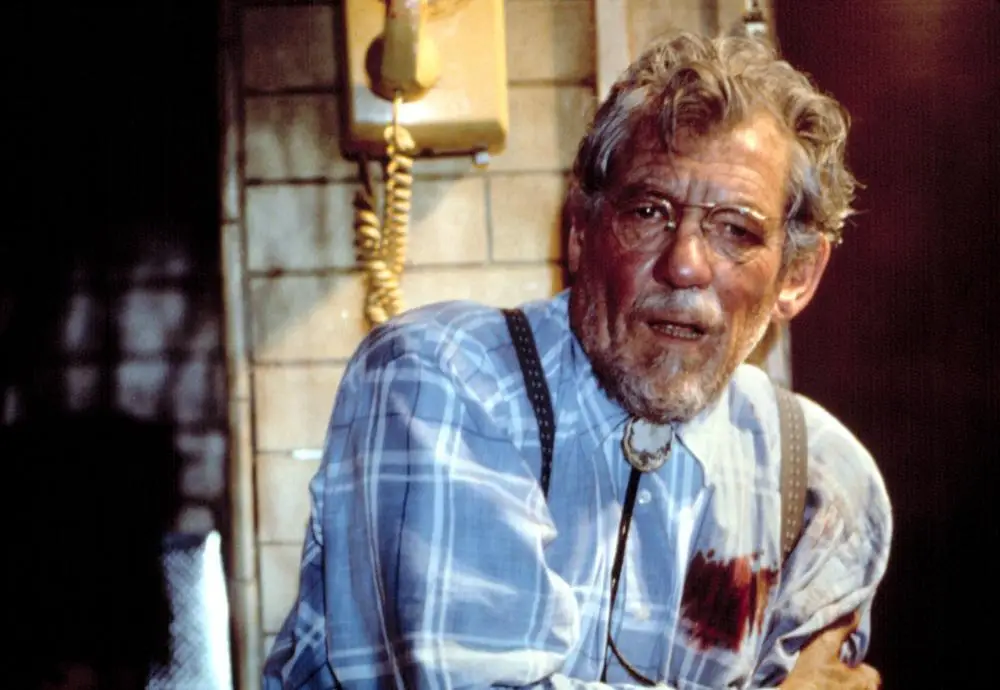



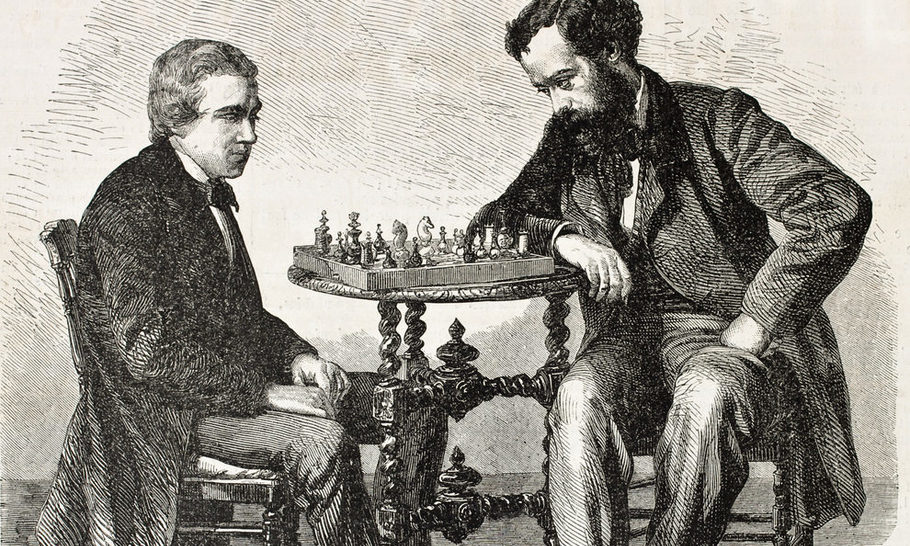

Stephen King’s novella Apt Pupil serves as a chilling psychological bridge between the documented horrors of the 20th century and the latent darkness within modern domestic life. Unlike many Hollywood depictions that frame Nazism as a distant, cartoonish villainy, King’s narrative focuses on the symbiotic rot between an aging war criminal, Kurt Dussander, and an All-American teenager, Todd Bowden. This relationship mirrors the real-world complexities of the post-war era, where the “banality of evil” integrated itself into the mundane suburbs of the victors.
The Architect of Shadows: Kurt Dussander and His Historical Ghosts
The character of Kurt Dussander is a meticulously crafted composite of several high-ranking SS officials who managed to vanish into the fabric of the post-war world. In the story, Dussander is the former kommandant of a fictional concentration camp named Patin, where he oversaw industrial-scale slaughter. His historical DNA is most clearly linked to Richard Glücks, the head of the Concentration Camps Inspectorate, who was responsible for the administrative implementation of the “Final Solution,” and Alois Brunner, a key assistant to Adolf Eichmann.
Dussander’s metamorphosis from a genocidal “oberst” to a reclusive, gin-drinking pensioner named Arthur Denker reflects the terrifying reality of the Ratlines—the escape routes used by Nazis to flee to South America or hide in plain sight in Europe and the US. Just as Dussander hides behind the facade of a harmless, grumpy old man, real figures like Franz Stangl, the kommandant of Sobibor and Treblinka, worked in a Volkswagen factory in Brazil for years before being apprehended. The parallel is stark: the “monster” often looks like a grandfather, a neighbor, or a librarian, highlighting that the capacity for atrocity does not manifest in a physical deformity but in a psychological detachment.
Metamorphosis of the Modern Voyeur
Todd Bowden represents perhaps the most disturbing element of King’s work—the “Golden Boy” who is not repulsed by the Holocaust but is instead intoxicated by its power. Todd’s journey is a dark subversion of the American Dream. He is intelligent, athletic, and charismatic, yet he seeks out Dussander not to seek justice, but to satisfy a prurient, voyeuristic hunger for “the goody box”—the gruesome details of death.
Todd’s transformation throughout the story is a psychological mirroring. As he forces Dussander to recount his crimes and even don a replica SS uniform, the power dynamic shifts. Todd begins to exhibit the same predatory traits as his mentor; his grades slip, his empathy withers, and eventually, he graduates from a curious observer to a literal predator. This mirrors the radicalization processes observed in extremist circles today, where exposure to “forbidden” ideologies under the guise of intellectual curiosity leads to a total erosion of moral boundaries.
Mirrors of Modernity – The Banality of Evil in 2026
The enduring relevance of Apt Pupil in today’s society lies in its exploration of how historical trauma can be commodified and repurposed. In our current era, the Holocaust is often reduced to a digital aesthetic or a political tool. The “Todd Bowden syndrome” is visible in the way online subcultures obsess over the aesthetics of authoritarianism, often detached from the actual human suffering involved.
Furthermore, the story critiques the modern obsession with True Crime and the voyeuristic consumption of trauma. Society today consumes documentaries about serial killers and genocides with the same detached fascination that Todd displays. There is a fine line between “never forgetting” and “morbidly indulging,” and King suggests that by staring too long into the abyss of another man’s crimes, we risk inviting that same darkness into our own lives.
The ultimate metamorphosis in the story is not just Dussander’s return to his murderous roots or Todd’s descent into madness; it is the realization that the infrastructure of evil—the bureaucracy, the obedience, and the capacity for cruelty—did not die in 1945. It simply waited for a new “apt pupil” to pick up the mantle. This serves as a warning for a 2026 audience: the greatest threat to democracy isn’t a ghost from the past, but the quiet, polite neighbor who finds the past’s darkness more alluring than its lessons.