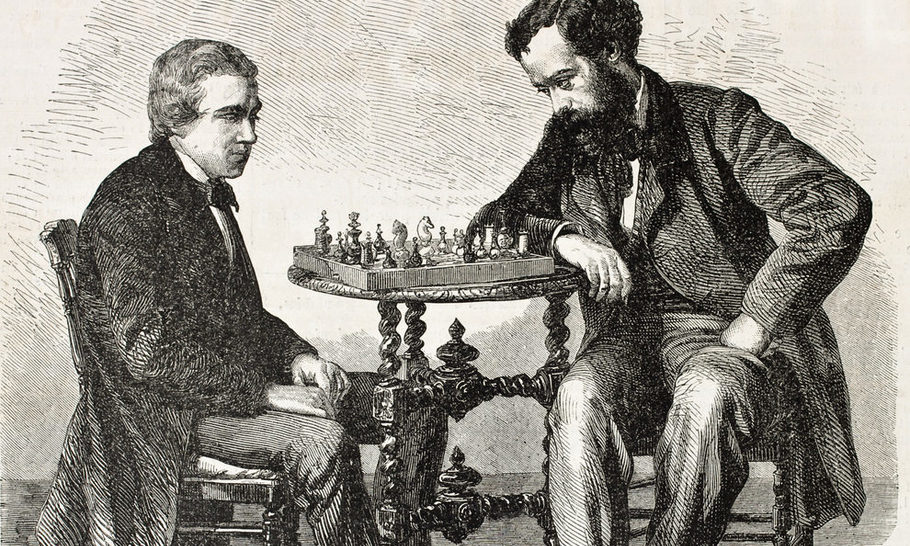




As one of the oldest and most enduring intellectual board games in human civilization, the history of chess spans over fifteen centuries. Combining strategic depth, mathematical precision, and psychological endurance, this strategic pursuit has transcended cultures, royal courts, and historical eras.
When people ask how old is chess or when was chess invented, historians trace the continuous lineage of the game of chess back to the 6th century. Understanding what is the history of chess requires exploring how ancient military tactics transformed into a global sport, discovering who invented chess, and examining how modern technology continues to reshape chess history.
Ancient Origins and the Early History of Chess Invention
Curious players frequently ask where was chess invented and who created chess. When looking at where did chess originate, solid historical consensus points toward Ancient India during the Gupta Empire around 600 AD.
The origin of chess begins with an ancient game known as Chaturanga, which translates to “four divisions of the military.” This first version of chess featured pieces representing infantry, cavalry, elephants, and chariots. When asking was chess invented in india, historical records confirm that the Indian subcontinent is indeed where did chess come from.
As trade networks expanded, the game migrated into Sasanian Persia:
- Persian Adaptations: In Persia, the game became known as Shatranj. It was here that players developed early terminology, shouting “Shah!” (King!) when threatening the monarch and “Shah Mat!” (The King is helpless!), which provides the linguistic answer to why is chess called chess and gives us the modern term checkmate.
- The Islamic Golden Age: Following the Arab conquest of Persia, the game chess spread throughout the Middle East, leading to formal strategy treatises and the earliest written history of chess pieces.
- European Introduction: By the 10th century, Moorish expansion brought the game to Spain, while Scandinavian trade routes carried early historical chess sets across Northern Europe.
Evolution of Rules and the Design History of Chess Pieces
As players inquire about how was chess invented and how rules evolved, historical records show that the transition from old chess to modern regulations occurred during the late Middle Ages in Europe.
A major shift in history of chess rules occurred during the late 15th century, dramatically accelerating the tempo of the game of chess:
- The Power of the Queen: Originally a weak piece called the Vizier, the Queen was granted unlimited diagonal and linear movement, transforming her into the most lethal piece on the board.
- The Bishop’s Scope: The Bishop’s range was extended across open diagonals, replacing the short-range elephant piece from original chess.
- Pawn Advances and Castling: Pawns gained the option to move two squares forward on their initial turn, and history of castling in chess introduced a combined move to safeguard the King while deploying the Rook into action.
The Staunton Standard and Modern Chess Sets
Prior to the mid-19th century, first chess board setups used localized, highly decorative pieces that often made it difficult for international players to recognize opponents’ pieces. In 1849, Nathaniel Cook designed and Howard Staunton endorsed a standardized, highly functional set. The Staunton design became the mandatory standard for official competitions worldwide, laying the foundation for modern equipment crafted by legendary makers like the House of Staunton.
The Birth of World Champions and International Tournaments
By the late 1800s, competitive international play sparked intense interest in discovering the greatest strategic minds in chess history facts:
- Wilhelm Steinitz (1886): Crowned the first official World Chess Champion after defeating Johannes Zukertort, inaugurating systematic positional play.
- The Soviet Dominance Era: Champions like Mikhail Botvinnik, Anatoly Karpov, and Garry Kasparov dominated international play through state-sponsored academies and rigorous theoretical preparation.
- Modern Masters: Grandmasters such as Magnus Carlsen transformed classical strategy into dynamic, highly accurate universal play, earning recognition in discussions regarding the greatest player in game of chess history.
Technological Revolutions and the Era of Computer Engines
The late 20th century marked a new chapter in history of computer chess. While early automated machines were revealed as hoaxes, true computational chess emerged in 1997 when IBM’s Deep Blue defeated World Champion Garry Kasparov in a historical match.
Modern history of chess engines like Stockfish and AI-driven platforms like AlphaZero have transformed how players study history of chess openings, analyze complex tactical patterns, and evaluate board positions with superhuman accuracy.
Frequently Asked Questions
When was the game of chess invented?
When was chess first invented? Historical evidence indicates that the early ancestor of chess, Chaturanga, emerged in Northern India during the 6th century AD (around 600 AD), making the game of chess over 1,400 years old.
Who created the game of chess?
While no single individual’s name is recorded in history as the sole inventor of chess, the game was created by Indian scholars and strategists during the Gupta Dynasty to simulate military battle formations.
Where did the game of chess originate from?
Where is chess from? Chess originated in Northern India before spreading to Persia, the Islamic world, and eventually Western Europe, where modern rules were finalized during the 15th century.