





Iran is not merely a state on a Middle Eastern map; it is one of the few living “empire-civilizations,” with a history spanning over 2,500 years. To understand why modern Tehran challenges the global order, one must look into the depths of Persian identity—a tapestry woven from the greatness of ancient kings, Biblical prophecies, and religious messianism.
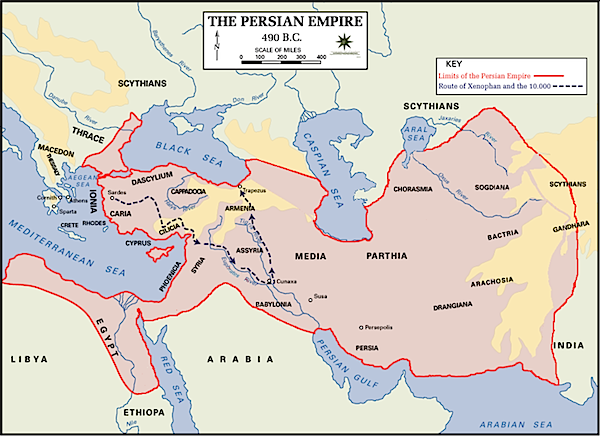
Ancient Persia The Cradle of World Empires
The territory of modern-day Iran, encompassing the Elamite plateau and the Persian lowlands, was the birthplace of the first true “world empire.” In 550 BCE, Cyrus the Great founded the Achaemenid Empire.
This state was unique for antiquity: the Persians did not merely conquer; they allowed subjects to maintain their own cultures and religions. The Persian administrative system, its royal roads, and its postal service became the blueprint for the future Roman Empire. Persia was a global center for science and culture, where astronomy, medicine, and the philosophy of Zoroastrianism flourished.
Biblical Context Persians as the Protectors of Israel
In the Bible, Persia is mentioned more frequently and more positively than almost any other non-Jewish nation.
- Cyrus the Great in the Old Testament He is famously referred to as the “Messiah” (Anointed One) of the Lord in the Book of Isaiah. It was Cyrus who liberated the Jews from the Babylonian Captivity and issued the decree to rebuild the Temple in Jerusalem.
- The Book of Esther The entire narrative of Purim unfolds in the Persian capital of Susa, where a Jewish girl becomes the Queen of Persia and saves her people from genocide.
- Daniel and Darius The prophet Daniel served in the courts of Persian kings, and it was during this period that critical eschatological ideas—concerning the end of days and final judgment—began to take shape, eventually influencing early Christianity.
The irony of history is that the nation which once saved the Jewish people from destruction now declares the elimination of the State of Israel as its primary geopolitical goal.
The Religious Shift From Zoroastrianism to Shiism
Ancient Iran practiced Zoroastrianism, a religion centered on the eternal struggle between Light (Ahura Mazda) and Darkness (Ahriman). This dualism—viewing the world as a battlefield between absolute good and absolute evil—remained embedded in the Persian psyche even after the Islamic conquest.
In the 7th century, the Arab conquest brought Islam, but the Persians did not dissolve into Arab culture. Instead, they eventually embraced Shiism, a branch of Islam that emphasizes suffering, martyrdom, and the promised return of the “Hidden Imam” (the Mahdi) to restore justice. For the Iranian state today, religion is not just a ritual; it is a permanent revolution against perceived oppression.
Why Iran Fights the World
The aggressive policy of modern Iran following the 1979 Islamic Revolution is based on three pillars rooted in history and faith.
The Trauma of the Humiliated Empire
Throughout the 19th and 20th centuries, Great Powers (Britain, Russia, and the US) treated Iran as a resource base. The current regime plays on national pride, asserting that as descendants of a great empire, they will never again allow the West to dictate terms. Conflict with the West is a tool for national self-affirmation.
The Export of the Islamic Revolution
Ayatollah Khomeini’s ideology posited that Islam has no borders. Tehran sees itself as the leader of all the “oppressed” (mustadafin) of the world. Their struggle against the United States (labeled the “Great Satan”) is not just geopolitics; it is a sacred war to purge the Islamic world of Western influence.
The Messianic Clock
Radical factions within the Iranian leadership believe that global chaos and the struggle against the “enemies of God” accelerate the return of the Mahdi. This makes their foreign policy appear irrational from an economic standpoint but perfectly logical within their theological framework.