





The relationships between the Russian Federation and the Baltic nations of Estonia, Latvia, and Lithuania have long been defined by profound historical friction. The roots of this tension lie not simply in geographic proximity but in centuries of imperial expansion, occupation, and fundamentally divergent paths to sovereignty. Understanding these historical pre-conditions is essential to analyzing the current geopolitical landscape, which is increasingly characterized by scenarios of catastrophic conflict.
Historical Pre-Conditions for Conflict
The primary historical grievance dates back to the annexation of the Baltic regions by the Russian Empire in the 18th century. While the three nations gained brief independence after World War I, it was the events surrounding World War II that cemented decades of animosity. Under the secret protocols of the Molotov-Ribbentrop Pact in 1939, Nazi Germany and the Soviet Union divided Eastern Europe into spheres of influence, leading directly to the Soviet occupation and annexation of Estonia, Latvia, and Lithuania in 1940. This period, which continued with a brief interruption of Nazi occupation until 1944 and then lasted until 1991, saw systematic Sovietization, political repressions, and mass deportations. For the Baltic peoples, this was an illegal occupation that sought to erase their national identities; for the Soviet (and later Russian) narrative, it was a legitimate liberation.
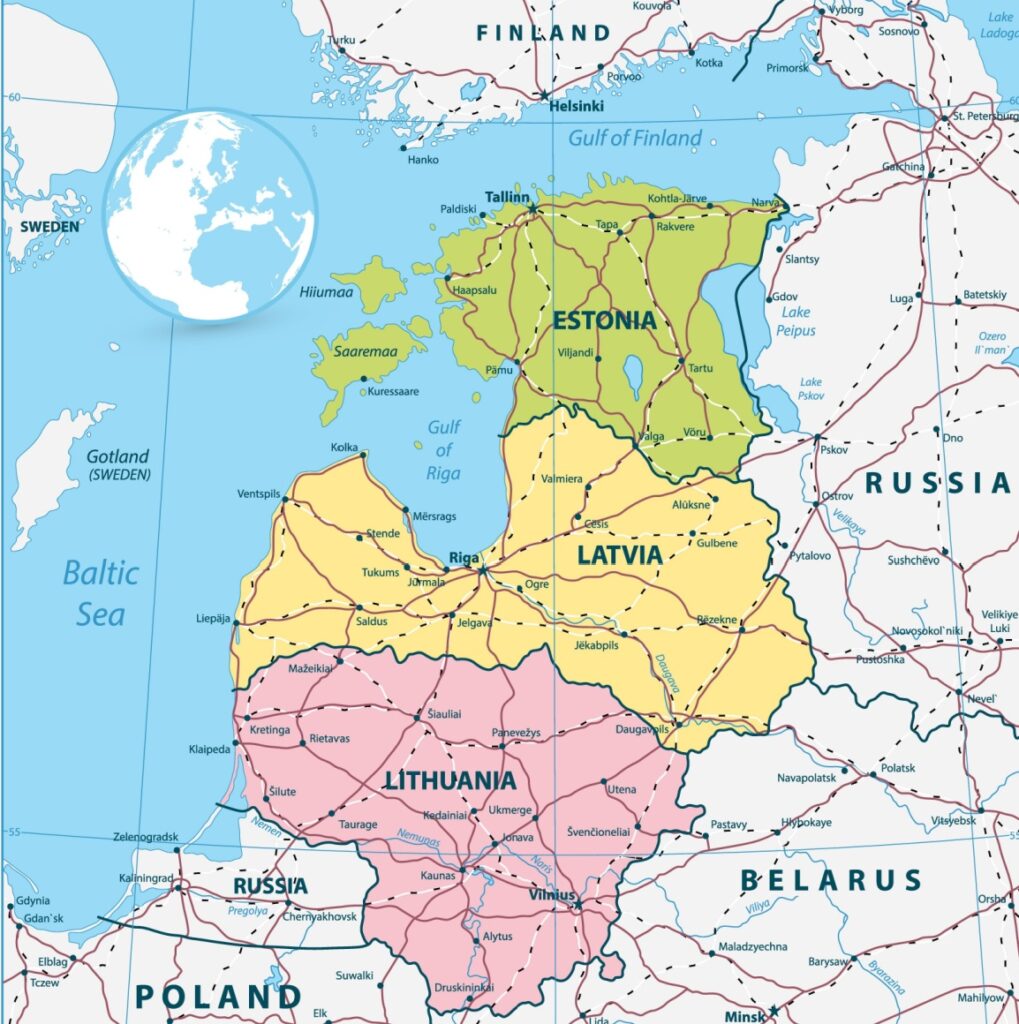
When the Baltic states restored their independence in the early 1990s, they immediately sought integration into Western security and economic structures, joining both NATO and the European Union in 2004. Russia has consistently viewed this integration not as a sovereign choice of these nations but as an encroachment on its traditional sphere of influence. This fundamental disagreement—sovereign rights versus sphere-of-influence politics—along with disagreements over the status of large ethnic Russian minorities in Estonia and Latvia, conflicting historical narratives, and the strategic importance of the Kaliningrad exclave (accessible only through Baltic territory), ensures that the relationship remains inherently unstable.
Predictions of a Continent-Wide Catastrophe
Against this historical backdrop, significant attention has been drawn to a recent scenario outlined by the German newspaper Bild. According to their reporting, there are predictions of an imminent joint “special operation” by the armed forces of Russia and Belarus, targeting the territories of Lithuania, Latvia, and Estonia. The scenario includes the critical detail that Belarus is now a nuclear-armed state, presumably hosting Russian warheads, which adds a layer of extreme danger to any potential localized conflict.
Perhaps most alarmingly, the scenario outlined in Bild suggests that traditional security guarantees from the United States would not be forthcoming. This withdrawal of support is linked to an alleged diplomatic offense, with the US being unable or unwilling to rely on European nations during a prior, hypothetical war with Iran. Europe itself is depicted as severely weakened, politically fractured, and incapable of coherent, effective defense, presenting what many would consider a total geopolitical catastrophe for the continent.
In this bleak vision of a fractured and vulnerable Europe, the role of Ukraine is recast dramatically. Instead of being the primary focus of conflict, the scenario envisions Ukraine emerging as an “oasis and salvation” for the rest of European civilization, perhaps suggesting that its battle-hardened resilience and strategic depth could offer security or safe haven when traditional European alliances crumble. While highly speculative, this scenario highlights the deepest fears among European security planners and underscores the critical importance of strong, reliable alliances and independent defense capabilities.