





When we speak of the foundations of human civilization, the Fertile Crescent often dominates the conversation. However, the vast plateau of modern-day Iran holds a unique and central place in the history of the world. Home to one of the oldest continuous major civilizations, the region has served as a bridge between the East and the West for millennia.
The Elamites and the Rise of the Persian Empire
Before the rise of the world-renowned Persian Empires, the territory was home to the Elamites (starting around 3200 BCE), a sophisticated civilization centered in Susa. They were contemporaries of the Sumerians and Akkadians, developing their own unique script and complex urban structures.
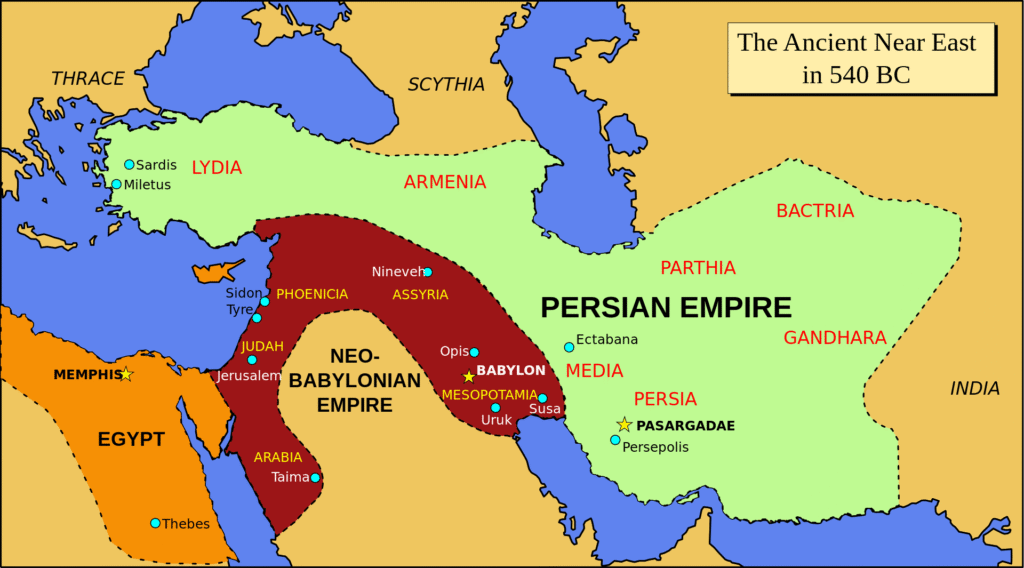
However, the most significant ancient civilization to occupy this land was the Achaemenid Empire (founded by Cyrus the Great in 550 BCE). This was the first true global superpower. At its height, the empire stretched from the Balkans and Egypt in the west to the Indus Valley in the east. The Persians introduced revolutionary concepts that still echo in modern governance:
- The First Declaration of Human Rights: The Cyrus Cylinder, an ancient clay record, outlined policies of religious freedom and the abolition of forced labor.
- Infrastructure and Connectivity: The Royal Road, a precursor to the Silk Road, allowed for unprecedented trade and communication across continents.
- Administrative Innovation: The division of the empire into “Satrapies” (provinces) allowed for local customs and laws to be preserved under a central, stable government.
Iran as a Vital Cultural Hub
Iran is not just a nation; it is an ethnic and cultural conglomerate. Its geographical position at the crossroads of the Silk Road meant that for thousands of years, it was the “melting pot” where Persian, Hellenistic, Turkic, Arab, and Mongol influences collided and synthesized.
This crossroads status gave birth to unparalleled contributions in science, poetry, and philosophy. From the mathematics of Al-Khwarizmi (the father of Algebra) to the medical canons of Avicenna, the intellectual output of this region formed the bedrock of the European Renaissance. Even today, the Persian language and its literary traditions serve as a unifying thread for millions across Central and South Asia.
The Risk of Cultural Erasure
The modern geopolitical instability surrounding Iran poses a direct threat to the physical and intangible remnants of these ancient civilizations. Because the “Iranian identity” is a delicate tapestry of diverse ethnic groups—Persians, Azeris, Kurds, Lurs, and Baluchs—any systemic collapse or violent conflict within this conglomerate risks destroying more than just a state.
- Archaeological Destruction: Sites like Persepolis, Pasargadae, and the ancient water systems of Shushtar are irreplaceable. In recent regional conflicts (such as in Iraq or Syria), we have seen how quickly “terrorist mindsets” or scorched-earth policies can erase thousands of years of history in an afternoon.
- Loss of Intangible Heritage: The destruction of the social fabric in Iran would lead to the loss of ancient languages, traditional crafts, and philosophical schools that have survived since the time of Zoroaster.
- A Genetic and Linguistic Vault: As one of the few places where ancient Indo-European roots remain visible in daily life, the disintegration of this region would be like losing a massive library of human history.
To protect the cultural integrity of Iran is to protect a shared chapter of human evolution. The ancient civilizations that walked the Iranian Plateau did not just build monuments; they built the intellectual framework of the modern world. If this ethnic and historical conglomerate were to be destroyed by modern conflict, the world would lose one of its last direct links to the dawn of organized society.