





An analysis of Donald Trump’s pro-Israel policies, the theological roots of Christian Zionism, and the historical foundations of Israel’s regional influence.
Donald Trump and the Strategic Alliance with Israel
During his presidency, Donald Trump reshaped decades of American foreign policy regarding the Middle East. From moving the U.S. embassy to Jerusalem to brokering the Abraham Accords, his administration’s alignment with Israel was unprecedented. Understanding this shift requires looking beyond simple diplomacy into the realms of domestic politics, personal identity, and long-standing religious traditions.
The Foundations of Trump’s Pro-Israel Policy
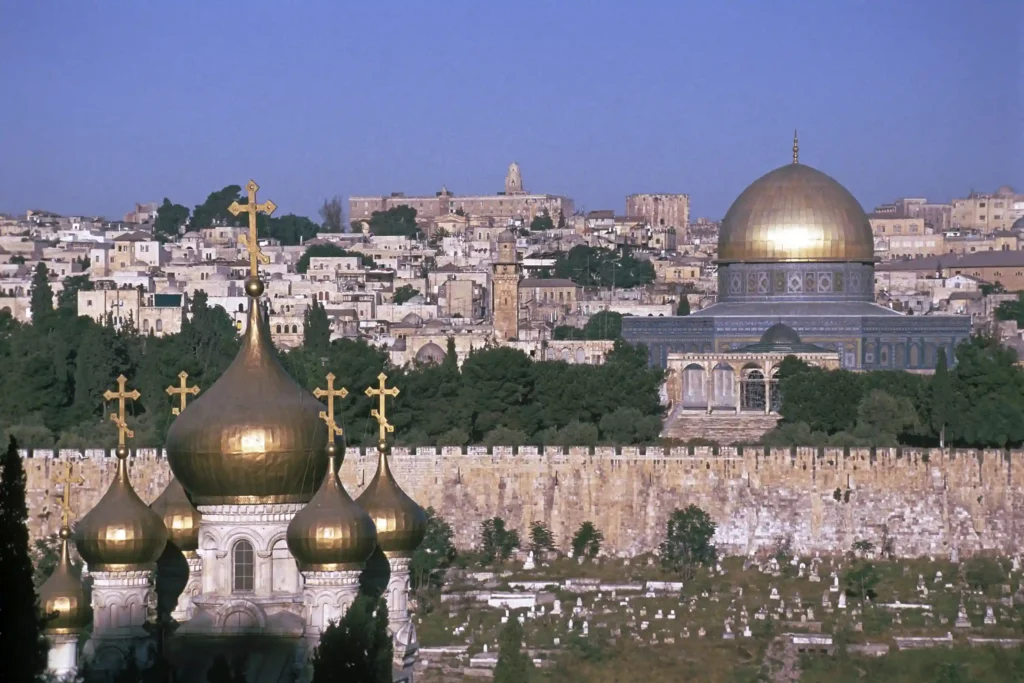
Donald Trump’s support for Israel was driven by a combination of strategic realism and the demands of his political base. By recognizing Jerusalem as Israel’s capital and the Golan Heights as Israeli territory, he signaled a departure from “strategic ambiguity” toward total alignment.
Political Alliances and the Abraham Accords
Trump’s primary goal was to create a new regional order. The Abraham Accords normalized relations between Israel and several Arab nations (the UAE, Bahrain, Morocco, and Sudan). This was based on the “outside-in” strategy: marginalizing the Palestinian conflict to create a unified front against Iran. For Trump, Israel is the most reliable technological and military partner in a volatile region.
The Question of Ancestry: Does Trump Have Israeli Roots?
There is no historical or genealogical evidence to suggest that Donald Trump has Israeli or Jewish roots. His ancestry is primarily German and Scottish. However, his family ties to Judaism are personal; his daughter, Ivanka Trump, converted to Judaism before marrying Jared Kushner, who served as a senior advisor on Middle East affairs. This familial connection likely strengthened his personal affinity for the Israeli state.
Why the Christian World Supports Israel
The “special relationship” between the United States and Israel is heavily anchored in the beliefs of millions of Christians, particularly within the Evangelical movement.
Christian Zionism and Biblical Prophecy
For many Christians, the restoration of the Jews to their ancestral homeland is seen as a fulfillment of Biblical prophecy. Based on Genesis 12:3 (“I will bless those who bless you, and whoever curses you I will curse”), many believers feel a moral and spiritual obligation to protect Israel. In the U.S., Christian Zionists outnumber Jewish Zionists, forming a powerful voting bloc that ensures consistent pro-Israel policy regardless of the administration.
Shared Judeo-Christian Values
Beyond theology, there is a cultural sense of “shared values.” Many in the West view Israel as the only liberal democracy in the Middle East—a Western-style outpost that shares legal, ethical, and social standards with Europe and the Americas. This creates a civilizational bond that transcends temporary political disagreements.
The Historical Context of Israeli Dominance
To understand why Israel holds such a dominant position today, one must look at the deep historical and modern factors that have shaped the Levant.
The Deep Roots: From Antiquity to 1948
Israel’s “historical dominance” is rooted in the narrative of the ancient Kingdoms of Israel and Judah. Following the Roman expulsion (the Diaspora), the Jewish longing to return to Zion remained a central cultural pillar for 2,000 years. The modern state, established in 1948, was born out of the necessity of the Holocaust, but its survival was ensured by a unique “siege mentality” that prioritized extreme self-reliance and military innovation.
Modern Dominance: Technology and Defense
Today, Israel’s dominance is defined by the “Start-Up Nation” phenomenon. Because of its lack of natural resources and its constant security threats, Israel invested heavily in human capital.
- Military Innovation: Systems like the Iron Dome.
- Cybersecurity: Israel is a global leader in digital defense.
- Intelligence Infrastructure: Mossad and Unit 8200 provide world-class intelligence that even the U.S. relies upon.
A Symbiosis of Faith and Power
Donald Trump’s policies were an amplification of a deep-seated American and Christian sentiment. Whether through theological conviction or geopolitical calculation, the West sees Israel as an indispensable anchor. Israel’s dominance is not merely a product of military might, but a combination of ancient historical identity and a modern, high-tech economy that has made it a central player on the global stage.