




The Sumerian civilization, which emerged in the fertile plains of Mesopotamia (modern-day Iraq) around 4500 BC, remains one of the most profound investigations into the origins of human society. As the first true “high” civilization, the Sumerians established the fundamental base for modern law, science, and education. Yet, despite their technological leap, their origins and their spiritual connection to a group of beings known as the Anunnaki continue to spark intense historical and alternative debates.
The Enigmatic Origins of the Black-Headed People
The Sumerians referred to themselves as the Sag-giga (“the black-headed people”). Unlike their Semitic neighbors, their language was an “isolate”—it shared no known roots with any other tongue on Earth.
History suggests they arrived in Lower Mesopotamia during the Ubaid period, but their exact point of origin remains a mystery. Some theories point to the Caucasus Mountains, while others suggest they migrated by sea from the Indus Valley. Regardless of their start, they transformed a swampy delta into a network of sophisticated city-states like Eridu, Ur, and Uruk, creating a scientific vector that would propel humanity forward.
The Anunnaki and the Nephilim: Giants of the Ancient World
Central to Sumerian theology were the Anunnaki—”those who from heaven to earth came.” In Sumerian texts, these were powerful deities who organized the world and created humanity to serve the gods.
The Enochian Connection: Nephilim and Watchers
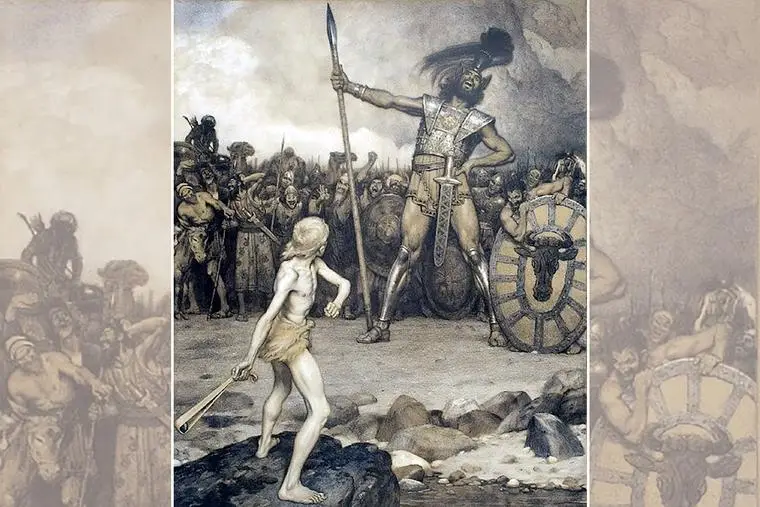
When we place the Sumerian records alongside biblical chronography, a fascinating parallel emerges. The Book of Enoch, an ancient Jewish religious work, speaks of the Watchers (Angels) who descended to Earth and intermarried with human women. Their offspring were the Nephilim—giants of immense strength and stature.
Many alternative historians suggest that the Anunnaki and the Nephilim (or the “fallen ones” mentioned in Genesis 6) are the same entities. According to this theory:
- The Anunnaki were not mere myths but a superior race (or non-human intelligence) that shared advanced knowledge of astronomy and engineering with the Sumerians.
- The giants of the Book of Enoch mirror the Sumerian descriptions of “heroes of old” and semi-divine kings, such as Gilgamesh, who was said to be two-thirds god and of massive proportions.
Sumerians in the Biblical Timeline
Placing the Sumerians within biblical chronography aligns them with the era between the Antediluvian (Pre-Flood) age and the Tower of Babel.
- The Great Flood: Both the Sumerian Epic of Gilgamesh and the Bible describe a global deluge. The Sumerian “Ziusudra” is the historical parallel to the biblical Noah.
- The Tower of Babel: The biblical “Land of Shinar” is linguistically linked to “Sumer.” The massive Sumerian Ziggurats—towering stepped temples—are widely believed to be the architectural inspiration for the Tower of Babel.
- Abraham of Ur: The biblical patriarch Abraham is said to have originated from Ur of the Chaldeans, a major Sumerian center, bridging the gap between Sumerian culture and the foundations of monotheism.
Why Did Sumer Disappear?
Despite their brilliance, the Sumerian city-states eventually vanished from history around 2000 BC. The causes were a mix of environmental and political factors:
- Ecological Suicide: Centuries of intensive irrigation led to soil salinization. The salt levels in the earth rose so high that wheat could no longer grow, leading to mass famine and the collapse of the fundamental economic base.
- Invasions: Weakened by hunger and internal conflict between cities, Sumer was eventually conquered by the Akkadians under Sargon the Great and later absorbed by the Babylonians and Elamites.
The Sumerian Heritage in the 21st Century
We live in a world built upon Sumerian innovation. Every time we look at a clock or a map, we are using the Sexagesimal (Base-60) System invented by Sumerian mathematicians. Their legacy includes:
- Time and Geometry: The division of an hour into 60 minutes and a circle into 360 degrees.
- The Written Word: Cuneiform, the world’s first writing system, which allowed for the recording of history and laws.
- The Wheel: First used by the Sumerians for both pottery and transportation, a vector that changed human mobility forever.
- Governance: The first codes of law and the concept of a bicameral assembly.
Civilizational Vector
The Sumerians remind us that history illuminates the origins of our current struggles and triumphs. Whether they were aided by the mysterious Anunnaki or achieved their heights through sheer human ingenuity, their influence is undeniable. They were the first to investigate the stars and the first to master the earth, leaving behind a blueprint for civilization that we still follow five millennia later. By studying their rise and fall, we gain a scientific forecast of our own challenges regarding environmental sustainability and societal stability.