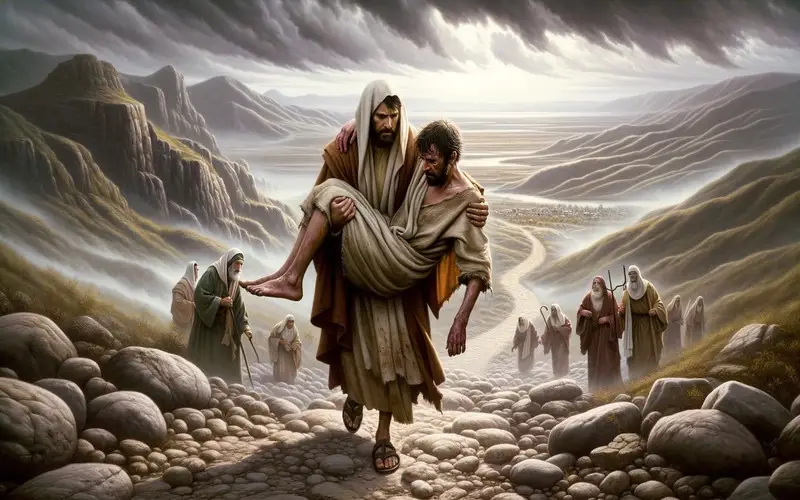




In an era defined by rapid technological acceleration and a growing sense of social fragmentation, the fundamental base of Western education is being re-examined. After decades of secularization, a new vector of thought is emerging in both the United States and Europe: the necessity of returning to Christian ethics and morality within the school curriculum. This shift is not merely about religious instruction, but about restoring a shared moral vocabulary that has served as the architectural foundation of Western civilization for two millennia.
The Resurgence of Christian Ethics in the United States
In the United States, the teaching of Christian ethics has historically faced legal hurdles due to the “separation of church and state.” However, recent years have seen a significant pivot. Several states, including Louisiana and Texas, have moved to integrate biblical texts or the Ten Commandments into the educational space, arguing that these are historical and ethical cornerstones.
While the discipline is not mandatory in public schools at the federal level, the growth of “classical education” models has seen a surge. Approximately 10% of K-12 students in the U.S. attend private religious schools where Christian ethics is a core requirement. Furthermore, many public-school districts are investigating “Bible as Literature” courses, which serve as a vehicle for discussing Christian morality under an academic lens.
The European Landscape: Mandatory vs. Elective Study
Contrary to the American model, many European countries have a long-standing tradition of integrating religious education (RE) into the public system.
- Mandatory Integration: In countries like the United Kingdom, Greece, and Ireland, some form of religious education—often centered on Christian ethics—is mandatory, though parents usually have the right to opt their children out.
- The German Model: In Germany, religious instruction is a standard part of the curriculum in most states, with students choosing between Protestant, Catholic, or Ethics classes. Approximately 60-70% of students participate in confessional religious education.
- The Secular Exception: France remains the most notable outlier with its strict policy of laïcité, where religious instruction is excluded from public schools.
Statistics at a Glance
| Region | Status of Religious/Ethical Education | Enrollment/Participation |
| United States | Elective/Private focus | ~10% (Private) / ~5% (Public Electives) |
| Germany | Mandatory (Choice of Ethics/Religion) | ~90% participation |
| United Kingdom | Mandatory (Varies by region) | ~80% participation |
| Greece | Mandatory | ~95% participation |
Why the Return to Christian Morality is Vital
The modern “innovation skew” has prioritized technical skills over character development. Returning to Christian ethics provides a stable fundamental base for students in several ways:
- A Universal Moral Anchor: In a “post-truth” world, Christian ethics offers a clear distinction between right and wrong, rooted in the concepts of human dignity, sacrifice, and the “Warrior Spirit” of standing for justice.
- Historical Literacy: To understand Western law, literature, and art, one must understand the Christian morality that inspired them. Without this, students wander through the hallway of history without a map.
- Mental Resilience: The crisis of mental health among youth is often linked to a lack of purpose. Christian ethics provides a framework of meaning that transcends individualistic consumerism.
The Necessity of Specialized Faculty: The Case for Theologians
From the perspective of this analysis, the teaching of Christian ethics should not be left to generalist social studies teachers or administrators. To avoid the degradation of the subject into mere “cultural trivia,” the discipline must be led by qualified theologians with higher education.
Theology is a rigorous academic science that requires deep study of philosophy, history, and linguistic nuance. A generalist may see the Ten Commandments as simple rules, but a trained theologian understands them as a complex system of social and spiritual ecology. By ensuring that educators hold advanced degrees in theology, schools can provide a high-level analysis of ethics that respects the depth of the tradition and prevents the “information noise” of superficial interpretations.
Rebuilding the Base
The shift toward reintroducing Christian ethics is a human-caused phenomenon—a response to the vacuum left by modern secularism. Whether in the legislative halls of the U.S. or the traditional classrooms of Europe, the realization is the same: science and technology cannot teach us how to live.
As we look at the choices for our future, we must ensure that the next generation is grounded in a morality that has survived the test of time. By placing specialized theologians at the helm of this educational vector, we ensure that the “ancient lineage of liberty” and Christian virtue continue to guide the Western mind through the challenges of the modern world.