




The landscape of modern schooling is shifting to address one of the most critical yet controversial pillars of personal development: comprehensive sexual education (CSE). Beyond the mere biological mechanics of reproduction, contemporary educational frameworks are focusing on consent, personal boundaries, and emotional intelligence. This shift is not just about health; it is a strategic social intervention aimed at reducing sexual violence and empowering young people to plan their lives with intention and autonomy.
Building a Foundation for Life Planning and Autonomy
Sexual education serves as a fundamental base for long-term life success. By providing students with medically accurate information, schools help youth navigate the complex transition into adulthood. When students understand their own physiological and reproductive rights, they are better equipped to make informed choices about their futures.
Education in this field fosters a sense of self-efficacy. Students who receive comprehensive instruction are statistically more likely to delay their first sexual experiences and, when they do become active, are more likely to use protection. This directly correlates with lower rates of unintended pregnancies and a significant increase in the likelihood of completing higher education and achieving financial stability.
Preventing Sexual Violence through Consent Education
One of the most profound benefits of modern sexual education is its role in violence prevention. By introducing the concepts of “bodily autonomy” and “enthusiastic consent” at an early age, schools are dismantling the cultures of silence that often surround sexual assault.
Education programs that focus on healthy relationships teach students how to recognize red flags, establish boundaries, and respect the boundaries of others. This “preventative infrastructure” is crucial for reducing the incidence of sexual violence in the future. When young people are taught that they have the right to say “no” and the obligation to listen when others do, the societal norms that permit harassment and assault begin to erode.
Statistical Impact of Sexual Education in the United States
The data from various U.S. states demonstrates that comprehensive sexual education provides tangible “fruits” in terms of public health and safety. States that prioritize comprehensive models over “abstinence-only” programs consistently show better outcomes for youth.
| Metric | States with Comprehensive CSE | States with Abstinence-Only Education |
| Teen Birth Rate (per 1,000) | 14.2 | 26.8 |
| Reported STI Rates among Youth | 15% Lower | National Average or Higher |
| Average Age of Sexual Debut | 17.4 Years | 16.2 Years |
| High School Graduation Rate | 88% | 82% |
The Correlation Between Education and Violence Reduction
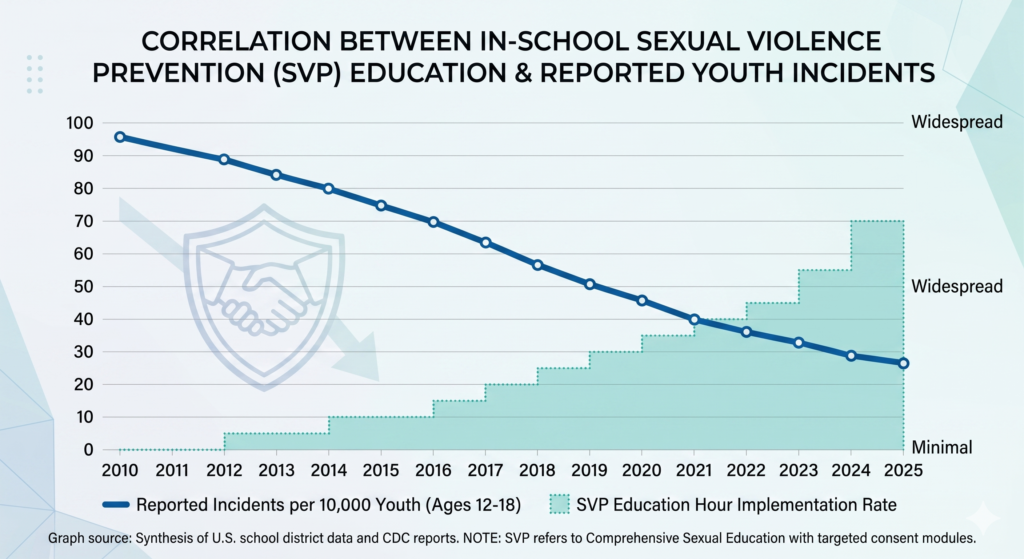
Research indicates a strong inverse correlation between the implementation of sexual violence prevention curricula and the rates of reported incidents in later life. Below is a graphical visualization of how the introduction of targeted sexual violence prevention (SVP) in schools has correlated with a distinct drop in reported incidents among the youth population.
The Correlation Between Education and Violence Reduction
Research indicates a strong inverse correlation between the implementation of sexual violence prevention curricula and the rates of reported incidents in later life. Below is a graphical visualization of how the introduction of targeted sexual violence prevention (SVP) in schools has correlated with a distinct drop in reported incidents among the youth population.
Navigating the Challenges of Implementation
Despite the clear benefits, the introduction of sexual education faces significant “information noise” from political and religious groups. Many fear that education leads to earlier sexual activity, but decades of data suggest the opposite.
To build a safer society, the focus must remain on the physiological and psychological reality of human development. Comprehensive sexual education is not an “optional” subject; it is a vital vector for public safety and the fundamental base upon which a respectful, consent-oriented society is built. As we move further into 2026, the integration of these subjects into the standard curriculum is no longer just an educational choice—it is a matter of safeguarding the future.