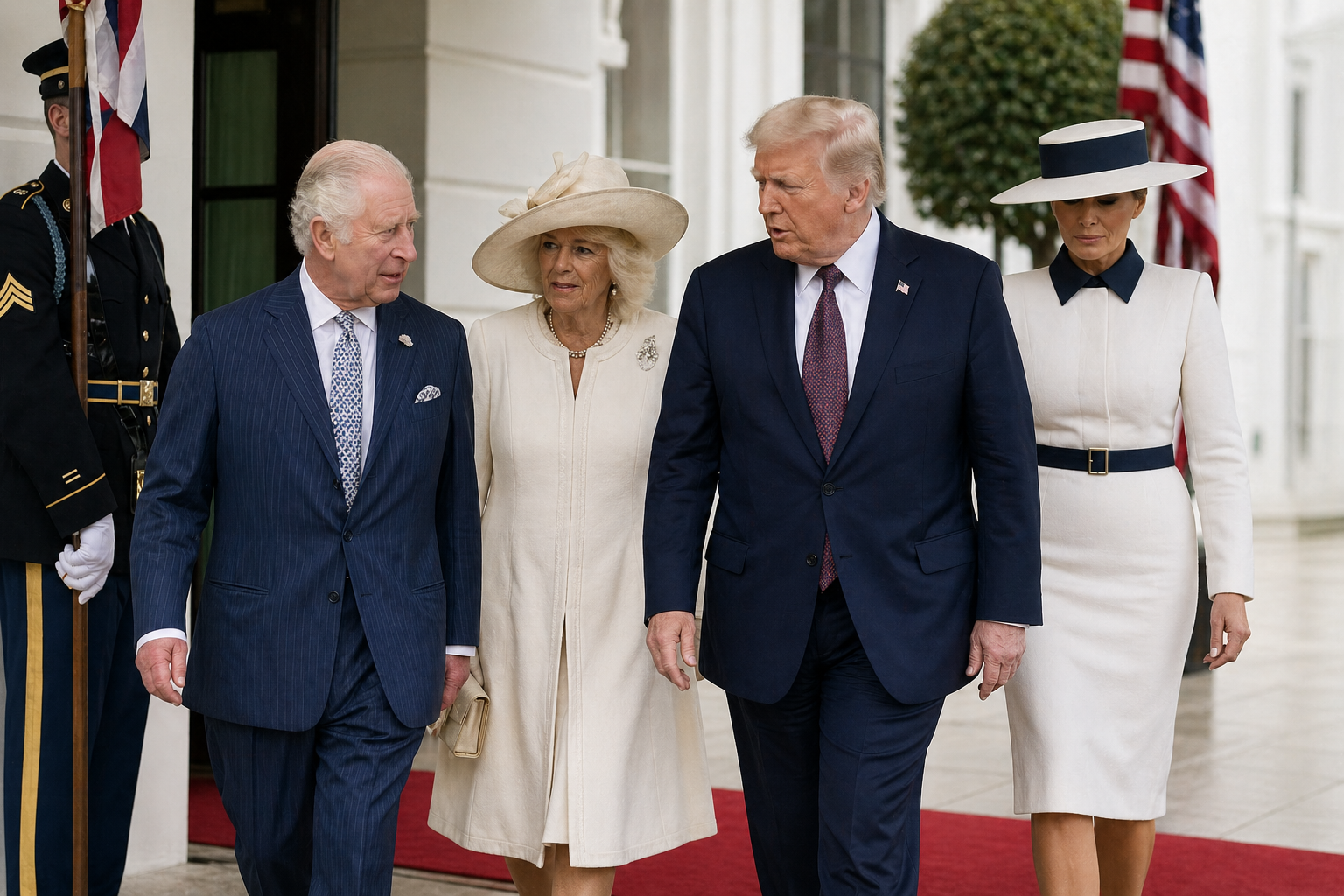




In the intricate theater of geopolitics, symbolism is rarely accidental. As rumors and strategic whispers suggest a potential visit by the British Monarch to a Donald Trump-led United States, historians and analysts are looking back nearly a century—to the landmark 1939 visit of King George VI and Queen Elizabeth.
That journey was the first time a reigning British monarch set foot on American soil. Today, a return to such high-level pageantry would be far more than a diplomatic courtesy; it would be a chilling mirror held up to a world teetering on the edge of a new global catastrophe.
1939: The Sunset of Peace
To understand the gravity of 1939, one must recall the atmosphere of that spring. Europe was a powder keg, its fuse already lit by the annexation of Austria and the Sudetenland. The King’s visit to Washington was not merely a ceremonial tour; it was a desperate, calculated effort to consolidate the “Anglosphere” against the encroaching shadow of Nazi Germany.
At the time, the United States was still deeply entrenched in its isolationist posture, dictated by the Neutrality Acts. The British Crown arrived in a nation that was physically distant and politically reluctant to involve itself in another “European war.” The King’s mission was to humanize the British struggle, to build a personal rapport with Franklin D. Roosevelt, and to lay the psychological foundation for the lend-lease agreements that would eventually sustain the Allies. It was a visit defined by the looming reality of a war that everyone knew was coming, yet few dared to speak aloud.
A War Already in Motion
The context of a potential royal visit in 2026 bears a haunting resemblance to 1939, yet with a terrifying difference: the war is no longer a distant threat—it is already here.
While 1939 was characterized by a race against time to prevent a global firestorm, our current reality is defined by the struggle to contain one that has already erupted across multiple fronts. From the active conflicts in Eastern Europe to the simmering tensions in the Indo-Pacific, the “Third World War” is no longer a historical hypothesis; it is a structural reality of the modern era.
Then vs. Now: The Symbolic Shift
The contrast in the roles played by these historical actors is profound:
- 1939: The British Empire, though fading, was still the global guarantor of the status quo, desperately pleading for the support of the rising American giant. It was an appeal from an old world trying to wake a sleeping one.
- 2026: Today, the dynamic is inverted and more volatile. The United States under a Trump presidency represents a radical departure from the post-WWII multilateral order that the 1939 visit helped birth. The current American stance is characterized by “America First” skepticism toward traditional alliances, creating a vacuum that the British Crown must navigate with unprecedented care.
The Looming Crisis
When George VI shook hands with FDR, the goal was to unite a fractured West against a totalitarian threat. Today, a royal visit would be an attempt to stabilize a fractured West that is currently debating its own identity.
The symbolic weight of such a visit lies in the question it poses: Can the institutions that preserved the West in the 20th century survive the realities of the 21st? In 1939, the visit served to signal the inevitability of an alliance against tyranny. In 2026, such a meeting would serve as a critical test of whether the “Special Relationship” can endure in an era of surging nationalism, shifting global power centers, and the fraying of the global rules-based order.
History does not repeat itself, but it rhymes. In 1939, the world was waiting for the first bomb to fall. Today, we are living in the smoke of a conflict already underway. If the Crown travels to Washington, it will not be for a celebration; it will be a somber acknowledgment that, once again, the fate of the global order rests on the tenuous, often strained, bond between the halls of power in London and the volatile landscape of American politics.