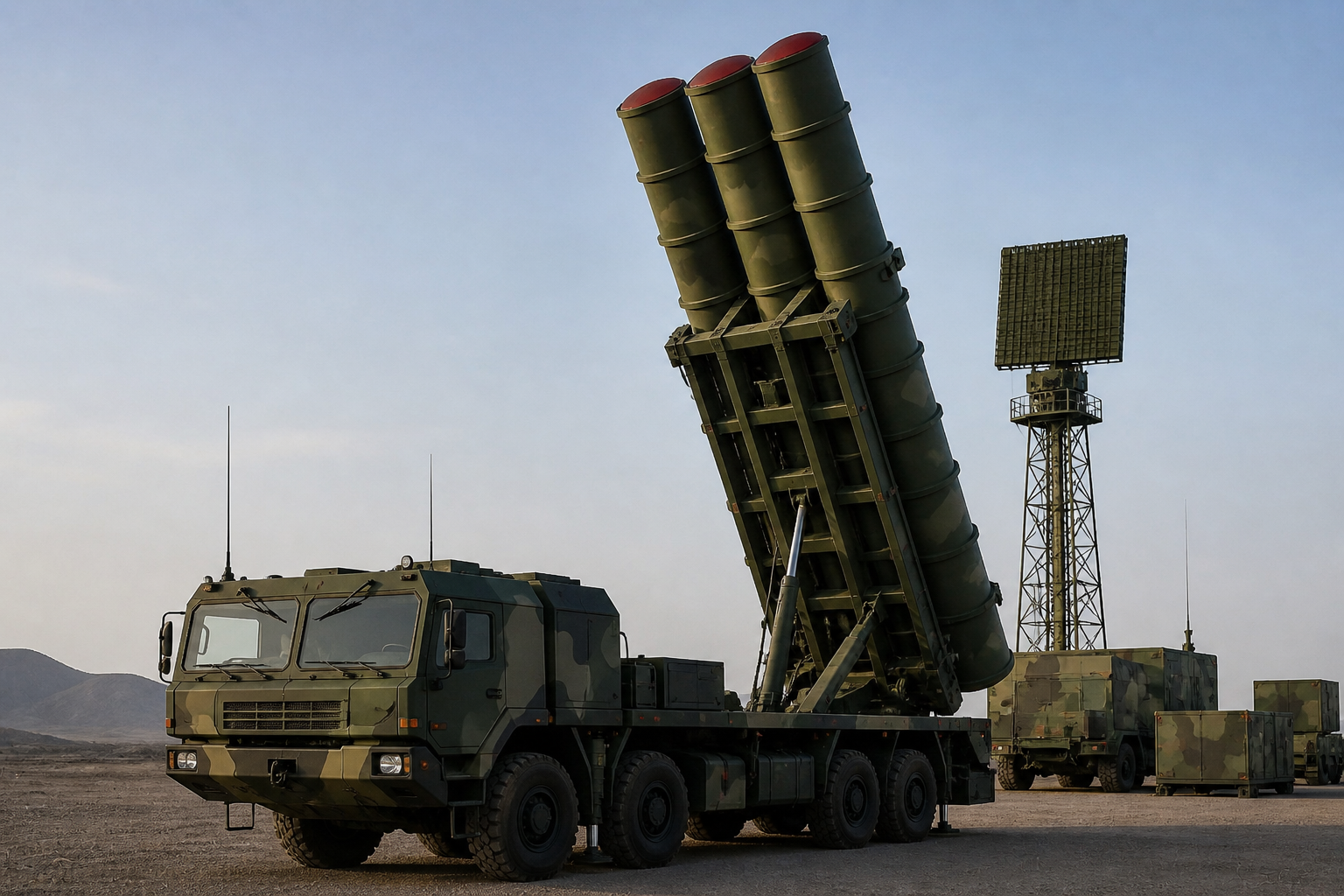





While the Western world is preoccupied with regional proxy wars and the immediate depletion of conventional stockpiles, Beijing has been quietly perfecting a long-term strategy for total technological dominance. The recent emergence of rare footage showcasing China’s HQ-29 anti-ballistic missile (ABM) system, as reported by Defence Express, signifies a watershed moment in global military power dynamics. It is no longer a question of if China will challenge the West, but rather a calculation of when the window of opportunity will officially open.
The HQ-29 and the New Frontier of Space Warfare
Development of the HQ-29 began in the early 2000s, reflecting a twenty-year commitment to neutralizing the West’s most potent assets: satellites and ballistic missiles. This system is not merely a defensive shield; it is a high-altitude interceptor designed to operate at the edge of space.
| Feature | HQ-29 Capability | Strategic Significance |
| Operational Range | Up to 2,500 km | Covers massive swathes of the Indo-Pacific |
| Intercept Altitude | Up to 850 km | Capable of destroying Low Earth Orbit (LEO) satellites |
| Primary Target | Ballistic missiles & Satellites | Neutralizes GPS and communications of rivals |
By rivaling or even exceeding the capabilities of the Russian S-500, the HQ-29 places China in an elite tier of nations capable of conducting “Star Wars” level operations. The ability to intercept targets at an altitude of 850 km means that in the opening minutes of a conflict, China could effectively blind the United States and Europe by eliminating their orbital infrastructure.
The Strategy of Strategic Patience
China’s current posture is one of calculated observation. While the United States finds itself bogged down in Middle Eastern conflicts, expending hundreds of billions of dollars on bombing campaigns against Iran and its proxies, China is conserving its resources. Beijing is not just building weapons; it is studying Western tactics, analyzing the weaknesses of NATO systems, and waiting for the moment of maximum exhaustion.
Europe, meanwhile, remains caught in a cycle of bureaucratic delay. The continent’s pace of rearmament is sluggish compared to the hyper-industrialized output of Chinese factories. Historically, the West relied on a “technological edge” to offset the mass of its adversaries, but the HQ-29 proves that China has now achieved both mass and technological superiority.
The Geopolitical Endgame and the New Axis
The logic of Beijing’s strategy is clear: China will not wait forever. The moment the United States loses its strategic parity—crippled by internal division or drained by regional wars—China is prepared to strike. This will not be a localized skirmish, but a coordinated global realignment supported by its strategic partners.
| Partner | Role in the Potential Conflict |
| Russia | Ties down NATO resources on the Eastern Front |
| North Korea | Acts as a regional disruptor to distract US forces in Asia |
| Belarus | Provides a strategic bridgehead to threaten Central Europe |
In this scenario, a weak and fractured Europe would be contained by Russia and Belarus, leaving China free to dictate terms in the Pacific and beyond.
The End of Western Hegemony
The HQ-29 is a clear signal that the era of uncontested Western air and space superiority is over. China’s military-industrial complex is now operating at a level that the West struggles to even comprehend. As Beijing continues to watch and learn from current global escalations, the message is unspoken but deafening: once the parity shifts, the strike will be swift, technological, and final. The West’s primary skill for the coming decade will not be projecting power, but surviving the loss of it.