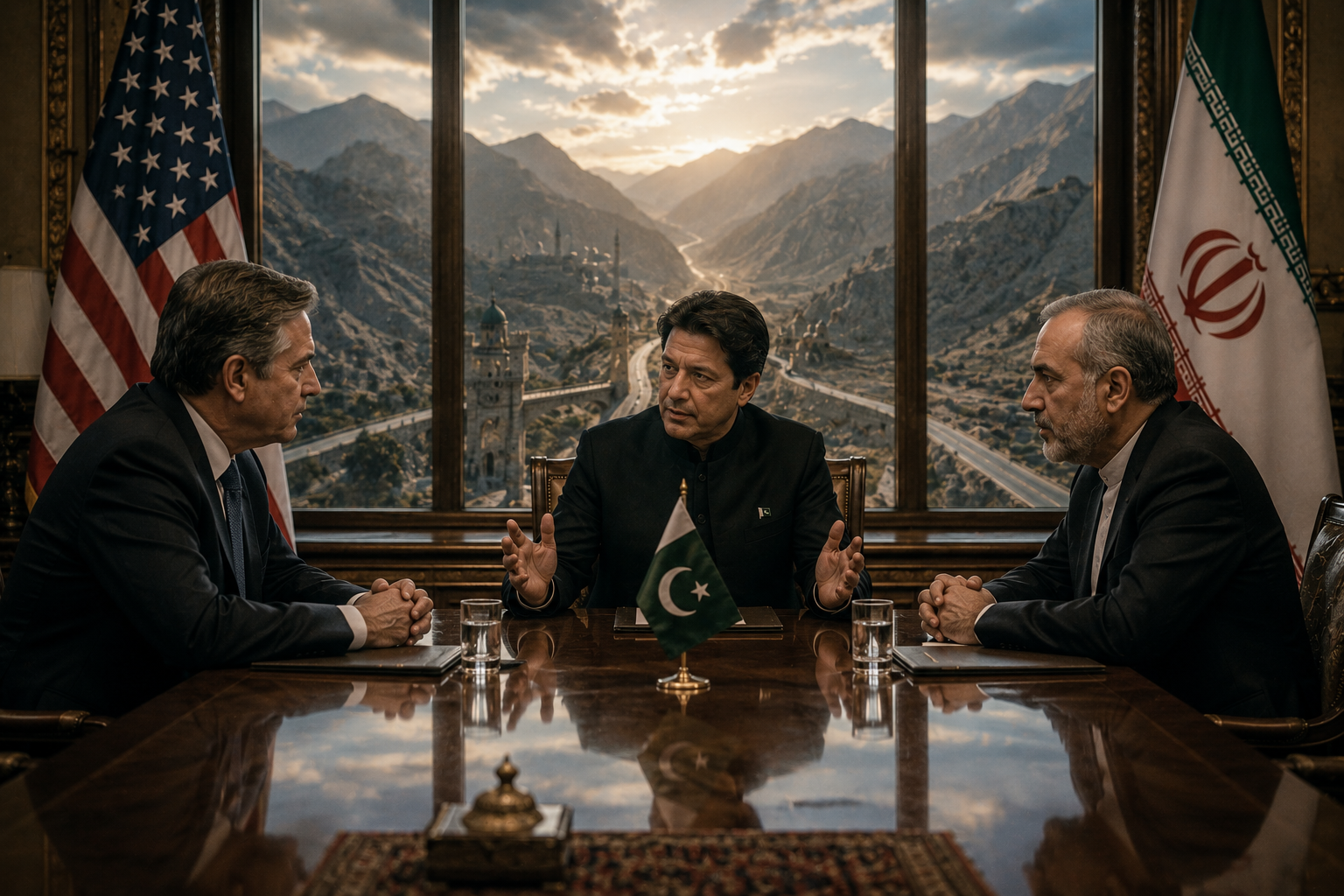




In the high-stakes theater of global diplomacy, the Islamic Republic of Pakistan occupies a position that is as precarious as it is indispensable. While much of the Western world views Pakistan through the prism of its internal volatility or its rivalry with India, a more complex reality exists. Islamabad has become the primary backchannel for two of the most entrenched enemies on the planet—the United States and Iran. This role is not merely a diplomatic convenience but a historical mission born from geography, religious identity, and the cold reality of nuclear deterrence.
The Strategic Logic of the Pakistani Mediator
The reason Pakistan serves as the ideal interlocutor lies in its unique double-access. Since the 1979 Islamic Revolution in Iran, Pakistan has officially served as Iran’s protecting power in the United States, managing the Iranian Interests Section in Washington. Geographically, Pakistan shares a nearly 600-mile border with Iran, while maintaining a decades-old, albeit fractured, security partnership with the U.S. military. This dual relationship allows Islamabad to translate the revolutionary rhetoric of Tehran into the strategic language of Washington, preventing total regional collapse.
Unlike other regional players who have taken clear sides in the Sunni-Shia divide, Pakistan has historically practiced a policy of strategic hedging. While it maintains close ties with Saudi Arabia for financial reasons, it cannot afford an enemy in Tehran. Consequently, Pakistan does not strictly take a side; instead, it acts as a stabilizing weight, ensuring that the friction between the Western superpower and the Persian theocracy does not ignite a fire that would inevitably consume Pakistan’s own borders.
Nuclear Authority and the Weight of the Islamic Bomb
Pakistan’s authority in these negotiations is fundamentally underscored by its status as the world’s only nuclear-armed Muslim-majority nation. The development of its nuclear program—often referred to during its inception as the “Islamic Bomb”—elevated Pakistan from a regional actor to a global player with systemic importance. This nuclear potential provides a layer of geopolitical gravitas that forces both the U.S. and Iran to take Pakistani mediation seriously.
For Washington, the stability of a nuclear-armed Pakistan is a matter of supreme national security, ensuring that the U.S. remains engaged with Islamabad even during periods of diplomatic cooling. For Tehran, Pakistan is a peer that possesses the ultimate deterrent, which grants Islamabad’s diplomats a level of respect that non-nuclear mediators rarely command. This nuclear authority acts as a silent guarantor during backchannel talks, lending weight to the messages passed between the two capitals.
Internal Strife and the Trump Intervention
However, the mediator is itself a house divided. Pakistan has long been embroiled in what many call a war within, facing a relentless insurgency from the Tehrik-i-Taliban Pakistan (TTP) and a separatist movement in the province of Balochistan. These internal conflicts are often fueled by the very regional instability Pakistan seeks to mediate. During the first Trump administration, the relationship between Washington and Islamabad reached a breaking point when Donald Trump famously accused Pakistan of lies and deceit regarding its counter-terrorism efforts, leading to a freeze in billions of dollars of security aid.
The “Trump miracle” in Pakistan occurred not through traditional diplomacy, but through a transactional pivot. When Trump sought to exit the war in Afghanistan, he realized that no exit was possible without Pakistani cooperation. By leveraging a mix of financial pressure and personal rapport with then-Prime Minister Imran Khan, the Trump administration managed to align interests. Pakistan’s help in bringing the Taliban to the negotiating table for the Doha Accords effectively ended the cold war between the U.S. and Pakistan, proving that Washington’s need for Islamabad’s regional influence outweighs its desire for punitive measures.
Why Washington Needs Islamabad in 2026
As of 2026, the global landscape has made Pakistan’s role even more critical. With the U.S. focused on the “Great Power Competition” with China and the ongoing complexities of the Middle East, Washington lacks the direct cultural and political channels required to de-escalate with Iran’s hardline leadership. Pakistan remains the only actor capable of delivering honest brokerage—messages that aren’t viewed as imperial demands by Tehran or as revolutionary threats by Washington.
The historical roots of this mission go back to the very formation of the state in 1947. Founded by Muhammad Ali Jinnah as a homeland for British India’s Muslims, the country has always struggled with its identity—oscillating between the liberal democratic visions of leaders like Benazir Bhutto and the conservative Islamization projects of military dictators like Zia-ul-Haq. Modern figures like the populist Imran Khan or the current military leadership under General Asim Munir continue to navigate this tightrope. Today, the U.S. requires Pakistan’s support because, in an era of shifting alliances, a neutral, nuclear-armed bridge is the only thing standing between a managed rivalry and a catastrophic regional war.