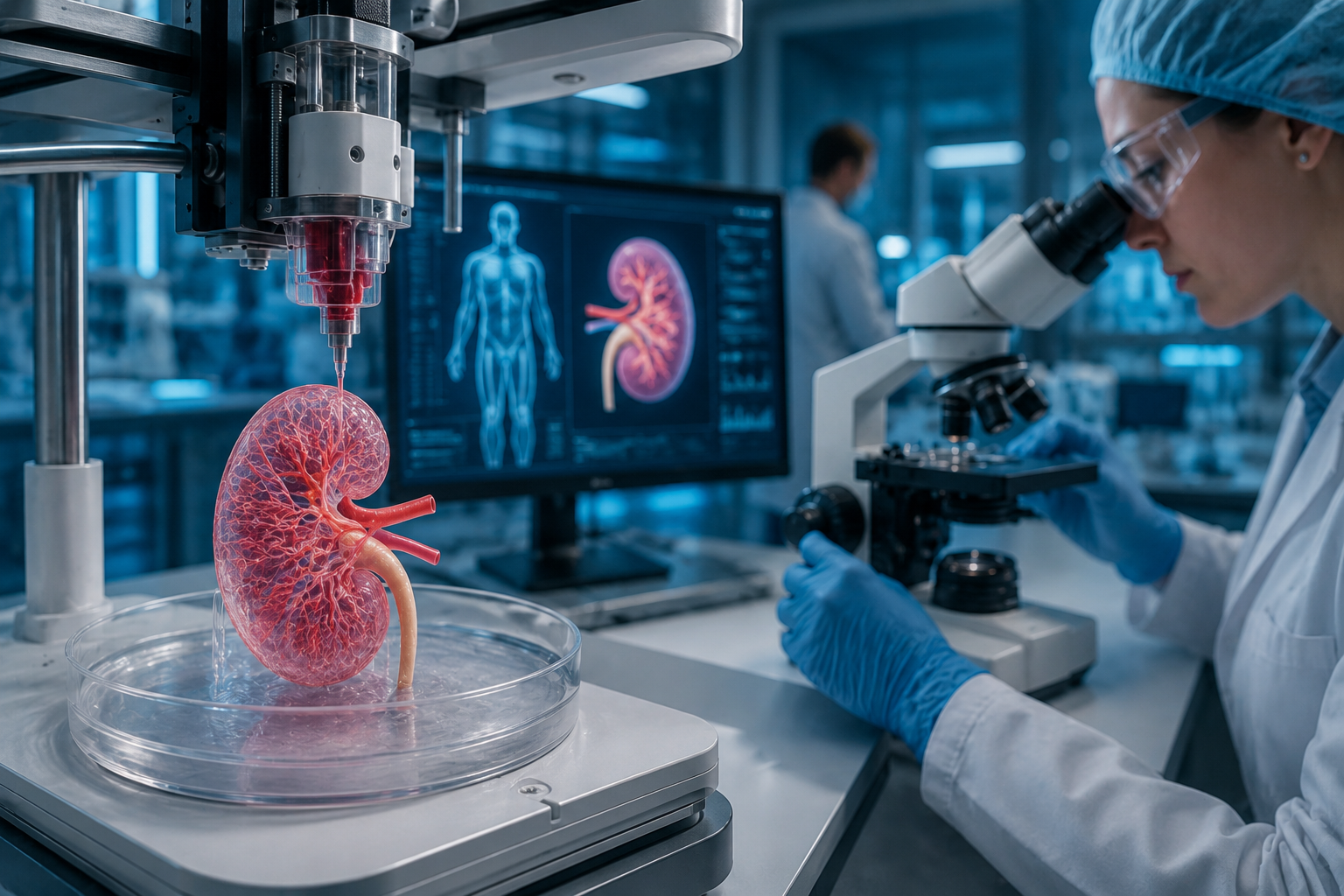


In a historic breakthrough for regenerative medicine, scientists have successfully completed the first preclinical trials of a fully artificial kidney created entirely through 3D bioprinting. This milestone achievement, developed by researchers at the Institute for Regenerative Medicine, marks a monumental step toward ending the global shortage of donor organs and eliminating the need for grueling dialysis treatments.
The Global Transplantation Crisis in the US and Europe
The success of this 3D-printed organ comes at a critical time. Today, transplantation medicine in the United States and Europe is facing a severe systemic crisis. Despite advanced healthcare systems, the demand for donor organs vastly outstrips the available supply, creating a chronic shortage that costs thousands of lives every year.
In both regions, the infrastructure for organ donation relies heavily on deceased donors, which introduces numerous complications. Strict medical criteria for viable organs, logistical challenges in transporting them within tight timeframes, and the necessity of finding a near-perfect genetic match mean that only a fraction of registered donors can actually save a life.
Furthermore, patients who are fortunate enough to receive a transplant are not cured in the traditional sense; they must exchange one chronic condition for another. To prevent their immune system from attacking the foreign organ, they must take powerful immunosuppressant drugs for the rest of their lives. These medications carry severe side effects, including an increased risk of cancer, kidney toxicity, and life-threatening infections.
The scale of this crisis is reflected in the staggering annual statistics from the United States and the European Union:
Global Organ Donation and Waiting List Statistics (Annual Average)
| Region | New Patients Added to Waiting List Annually | Patients Currently on the Active Waiting List | Deaths While Waiting / Removed Due to Becoming Too Sick |
| United States (US) | ~ 43,000 | ~ 103,000 | ~ 6,000 – 7,000 |
| European Union (EU) | ~ 41,000 | ~ 87,000 | ~ 5,000 – 6,000 |
Note: In both regions, kidneys make up the vast majority (approximately 80–85%) of the total waiting lists, driven by the global rise in diabetes and hypertension.
A Perfect Match Powered by Stem Cells
Unlike traditional mechanical implants or animal-to-human transplants (xenotransplantation), this bioengineered organ was constructed using the patient’s own stem cells. By utilizing the recipient’s cellular blueprint, the scientists managed to solve the biggest hurdle in transplant medicine: organ rejection.
The 3D bioprinter meticulously deposits layers of biocompatible hydrogel and living stem cells, precisely replicating the complex cellular architecture of a human kidney, including its intricate network of blood vessels and nephrons.
Flawless Functional Performance in Trials
During the preclinical trials, the bioprinted kidney exceeded all expectations, demonstrating a level of success rarely seen in early-stage bioengineering. The results confirmed two critical breakthroughs:
- 100% Functionality: The artificial organ performed the exact biological duties of a natural kidney, successfully filtering waste products from the blood and producing urine.
- Zero Immune Rejection: Because the kidney was grown from the recipient’s own genetic material, the host’s immune system recognized the organ as its own, completely bypassing the need for dangerous, lifelong immunosuppressant drugs.
The End of the Donor Organ Era
Chronic kidney disease affects millions of people worldwide, forcing many to spend years on transplant waiting lists or undergo exhausting dialysis sessions multiple times a week. This breakthrough opens a clear pathway to a future where organs can be manufactured on demand.
While clinical human trials are the next necessary step before this technology becomes widely available in hospitals, the successful completion of these preclinical trials proves that 3D-printed vital organs are no longer a concept of science fiction, but a looming reality that could soon dismantle the tragic statistics of the global waiting lists.