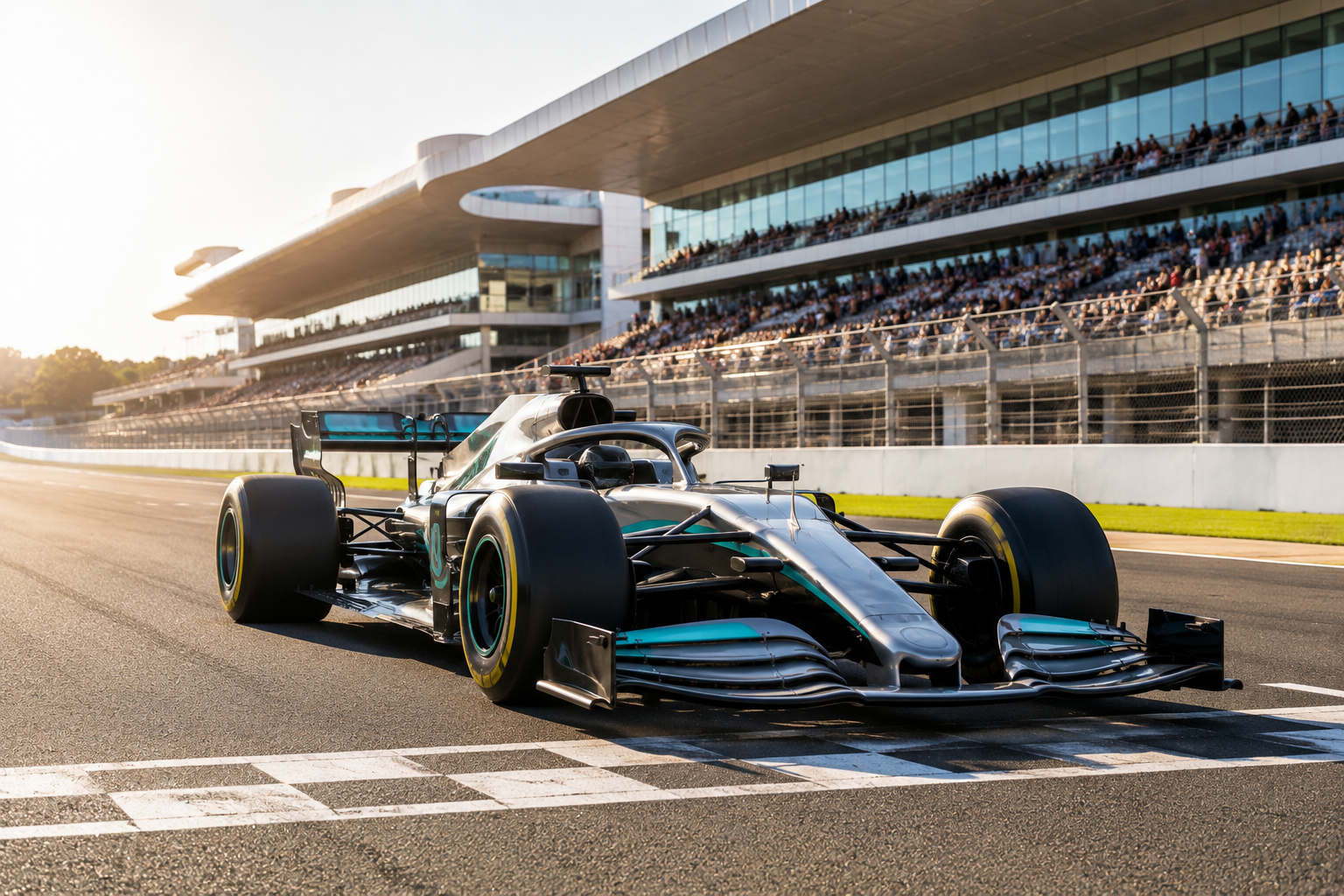




Formula 1 is the undisputed pinnacle of motorsport, captivating hundreds of millions of fans worldwide with an intoxicating mix of high-speed drama, cutting-edge engineering, and fierce driver rivalries. But when did f1 start, where did f1 originate, and how long has f1 been around?
To understand the modern spectacle, we must look back at formula 1 history to see how a dangerous pastime for postwar daredevils transformed into a multi-billion dollar global phenomenon—and check in on the breathtaking historical shifts happening right now in the 2026 season.
The Birth of a Legend: When Was F1 Founded?
If you are wondering when was f1 created or when was f1 invented, the roots of the sport trace back to the European Grand Prix motor racing of the 1920s and 1930s. However, the official f1 history as a standardized World Championship began in the post-WWII era. The Fédération Internationale de l’Automobile (FIA) formalized the rules for a premier single-seater racing category in 1946, leading up to the launch of the tournament.
When did formula 1 start? The inaugural World Championship race took place on May 13, 1950, answering the question of where did f1 start as the cars roared down the tarmac at the Silverstone Circuit in the United Kingdom, a former Royal Air Force wartime airfield. This historic race was utterly dominated by the Alfa Romeo 158. Driven by Giuseppe “Nino” Farina, this front-engined machine secured the victory, and Farina went on to become the sport’s very first World Champion, cementing the initial chapter of the history of formula 1. In this early era, the sport was defined by sheer bravery; cars lacked seatbelts, tracks had no modern barriers, and drivers competed wearing polo shirts and cork helmets.
Decades of Evolution: How Old is F1?
As of today, Formula 1 is over 75 years old, and analyzing how old is f1 shows a sport that has undergone radical, generation-defining transformations. The 1960s brought a rear-engine revolution led by British innovators like John Cooper and Colin Chapman, which made cars lighter, faster, and more agile. This was quickly followed by the 1970s focus on aerodynamics, where wings and downforce altered the silhouette of racing forever, setting the stage for the iconic, bitter rivalry between Niki Lauda and James Hunt.
The 1980s and 1990s introduced terrifying turbo-charged outputs of over 1,000 horsepower and gave us the legendary battles between Ayrton Senna and Alain Prost, followed by the rise of Michael Schumacher. Most recently, the 2010s welcomed the turbo-hybrid era, bringing highly efficient V6 power units and an unprecedented era of technological dominance by Lewis Hamilton and Mercedes.
All-Time Greats: The Top F1 Drivers in History
To truly appreciate the history of f1, one must look at the maestros who mastered these unpredictable machines.
Michael Schumacher
Active from 1991 to 2012, the 7-time World Champion redefined modern F1 fitness, strategy, and relentless work ethic. Schumacher brought Scuderia Ferrari back from a decades-long slump to construct one of the most dominant dynasties the sporting world has ever seen.
Lewis Hamilton
Holding 7 World Championships and statistically standing as the most successful driver in F1 history, Hamilton broke barriers as the sport’s first Black driver and has maintained a world-class level of excellence across three different decades.
Ayrton Senna
A 3-time World Champion, Senna is widely regarded as the most naturally gifted and intensely passionate driver to ever sit in a cockpit. His supernatural car control in the rain and his fierce qualifying laps became the stuff of legend before his tragic passing in 1994.
Juan Manuel Fangio
“El Maestro” dominated the very first decade of F1, winning 5 world titles with four completely different manufacturers—Alfa Romeo, Maserati, Mercedes, and Ferrari—a feat that will likely never be repeated.
Alain Prost
Nicknamed “The Professor,” the 4-time World Champion used analytical precision, smooth driving, and tactical calculation to dismantle his rivals. His legendary mental warfare and on-track duels with Ayrton Senna remain the gold standard for F1 rivalries.
A Shocking New Chapter: The 2026 Season
The ongoing 2026 season has shaken up the history of f1 like never before. With a massive overhaul in regulations—introducing active aerodynamics, lighter chassis, and power units operating on 100% sustainable fuels—the grid has been completely turned upside down.
The current 2026 standings reveal an incredible battle between a rising prodigy and an iconic veteran. Mercedes’ teenage sensation, Kimi Antonelli, is currently leading the World Drivers’ Championship with 156 points, having captured a staggering 5 victories so far this season. Meanwhile, 41-year-old Lewis Hamilton, driving in his debut season for Scuderia Ferrari, shattered a long two-year winless drought with a masterclass victory at the Spanish Grand Prix in Barcelona, vaulting himself into 2nd place in the championship with 115 points. George Russell sits in 3rd with 106 points, while three-time champion Max Verstappen finds himself struggling in 7th with just 55 points. In the team standings, Mercedes leads the Constructors’ Championship with 262 points, ahead of Ferrari (190 points) and McLaren (141 points).
Quick Answers for New Fans
- When was f1 created? The framework was established right after World War II in 1946, but the racing series officially launched with its first championship race in 1950.
- Who has won the most F1 championships? Michael Schumacher and Lewis Hamilton share the all-time record with 7 World Championships each.
From the front-engined Alfa Romeos roaring through Silverstone to teenagers leading the grid in hybrid-electric rockets in 2026, Formula 1 continues to push the boundaries of what is possible. The story is being rewritten with every single lap!