


Modern society is experiencing a profound psychological shift in how it navigates time. According to global analytical insights—most notably the Pinterest Predicts 2026 trend forecast—consumers are fundamentally abandoning traditional long-term future planning. Confronted with continuous macroeconomic volatility and digital overstimulation, a staggering 55% of global respondents state that comfort has become their primary daily necessity.
Rather than engineering a distant, uncertain future, society is looking backward. History has officially been capitalized into daily life, transforming the aesthetics of past decades into a lucrative economic safe haven. From the wardrobes of newborns to the jewelry boxes of adult men and the architecture of living spaces, nostalgia is no longer just a feeling; it is the primary engine driving modern design and consumer behavior.
The Collapse of Grounded Optimism and the Long-Term Void
The retreat into historical aesthetics is driven by an underlying change in behavioral psychology: the death of the conventional “five-year plan.” Data indicates that the vast majority of modern consumers struggle to envision or plan a personal future extending beyond 24 months.
Below is the breakdown of the current consumer psychological response:
| Phase | Psychological Shift | Behavioral Outcome |
| Trigger | Macroeconomic and digital overstimulation fatigue | Future planning freezes to a maximum 24-month horizon. |
| Response | Initiation of identity curation via micro-escapism | Consumers seek out safe havens in established nostalgia. |
| Result | Surrounding oneself with proven historical aesthetics | Individual environment shifts to a comfort-driven stance. |
To combat this systemic fatigue, individuals are practicing identity curation through micro-escapism, utilizing historical eras as a stable foundation. By surrounding themselves with objects, textiles, and styles that have already withstood the test of time, consumers establish artificial control over their immediate environments, replacing future anxiety with the warmth of a proven past.
Categorizing the Historic Boom: From Heirlooms to Afro-Chic
The monetization of history manifests across three distinct consumer verticals: retro-parenting, maximalist men’s fashion, and interior design.
1. Retro-Toys and Vintage Childhoods
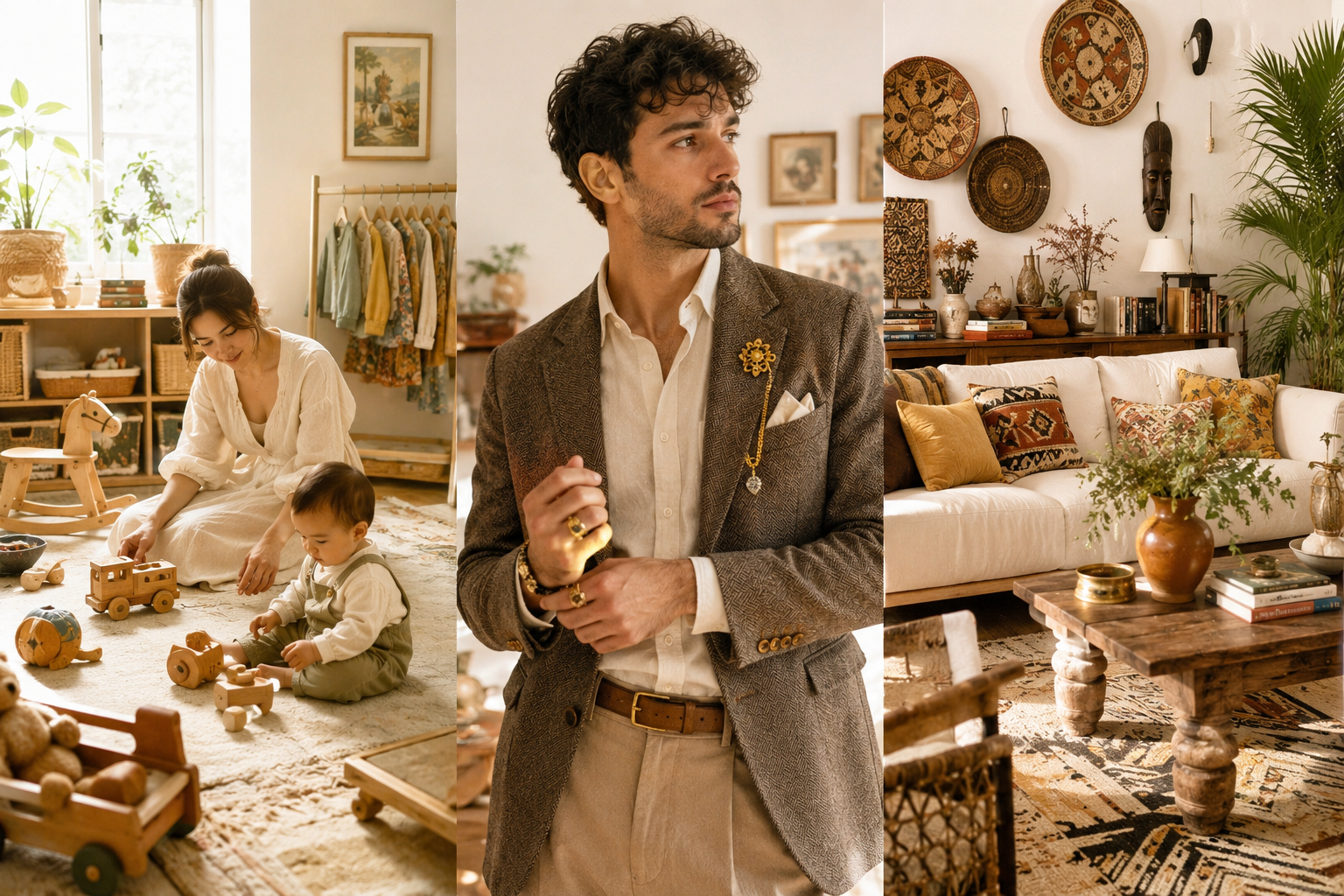
In family and parenting sectors, there is a visible surge in the rejection of ultra-modern, screen-reliant, or minimalist plastic toys. Millennial and Gen Z parents are leaning heavily into the design languages of the 1960s and 1970s. This includes a massive revival of classic wooden toys, vintage children’s clothing patterns, and warm, muted retro color palettes. Parents are consciously trying to curate an un-digitized, tactile childhood environment for their children, romanticizing the physical simplicity of the late 20th century.
2. Grandmacore and Family Heirlooms in Men’s Fashion
Men’s styling is undergoing a dramatic historical reassessment driven primarily by Baby Boomers and Millennials. Rather than pursuing clean, generic minimalism, men are punctuating their daily wardrobe with antique pieces that feel like inherited family treasures. This trend sees classic suits and casual wear accessorized with:
- Vintage ornamental pins and tie clips.
- Crystal clip-on elements.
- Intricately detailed statement brooches.
If an accessory looks like something retrieved from an ancestor’s jewelry box, it has become the standard for modern masculine sophistication.
3. Afrobohemian Interiors: Destination Dakar
In home decor, the sterile “all-white everything” minimalist apartment aesthetic is completely giving way to highly personal, rich storytelling. This movement is dominated by the rise of “Afrobohemian” design (Afro-Chic). Fueled by Gen X and Boomer demographics, interior design is pulling directly from the historical textures, deep earth tones, and traditional patterns of West Africa.
| Trend Vertical | Core Target Demographics | Primary Cultural Aesthetic | Key Consumer Keywords |
| Retro-Parenting | Millennials, Gen Z | 1960s–1970s analog warmth | Vintage children’s wear, classic wooden toys |
| Grandma-Core Fashion | Boomers, Millennials | Historical heirlooms & maximalism | Heirloom brooches, vintage pins, tie crystals |
| Afrobohemian Decor | Gen X, Baby Boomers | Dakar heritage meets Boho-chic | Afro chic home decor, adire fabric, motif berbère |
The Commercial Power of Nostalgia-Driven Marketplaces
The financial reality of these trends shows that nostalgia is an incredibly durable marketing tool. Analytical data from Pinterest indicates that these historical search patterns translate directly into sustained commercial action, outlasting fast-fashion internet fads by nearly double the lifespan.
The transition from user interest to retail commercialization follows a precise path:
| Funnel Step | Consumer Activity | Market Reality |
| 1. Search Volume Surge | Explosive interest in unique cultural identifiers. | Searches for “Afrobohemian decor” rise by +220%, “Motif Berbère” by +210%, and “Brooch for men suit” by +90%. |
| 2. Marketplace Conversion | Outbound clicks for niche fabrics and unique vintage items escalate. | The physical supply of authentic antique jewelry dries up as retail brands scale production. |
For brands, this shift changes how products must be positioned. Consumers are no longer buying items because they look futuristic or cutting-edge. They are buying items because they look like they possess a history. Marketing storytelling has shifted from explaining what a product will do for a consumer to explaining what memory or historical heritage the product evokes.
Crafting Safe Havens in an Uncertain World
The wholesale capitalization of history in 2026 is a collective coping mechanism for a world moving too fast. When the road ahead feels obscured by systemic change, looking back is not an act of regression—it is a strategic act of self-preservation. By transforming our homes into Afro-bohemian sanctuaries, decorating our clothes with vintage heirlooms, and giving our children toys from the pre-digital era, we are building beautiful, tactile fortresses against an unpredictable future.
Do you think this aggressive turn toward historical nostalgia is a temporary cultural pause, or has the speed of modern life permanently broken our ability to look forward and design a truly original future?