



Understanding the contemporary geopolitical dynamics of the Middle East requires deep immersion into the multifaceted history of israel and the surrounding territory. For centuries, scholars, theologians, and historians have debated foundational questions concerning this sacred stretch of land. When tracing the timeline, curious minds frequently ask: how old is israel, how old is palestine, and ultimately, who owned the land first israel or palestine?
To answer these questions objectively, one must peel back the layers of time—spanning from ancient biblical records to the complexities of modern nation-states—to understand how both peoples share deep, indelible historical roots in the exact same soil.
Biblical Times and Antiquity
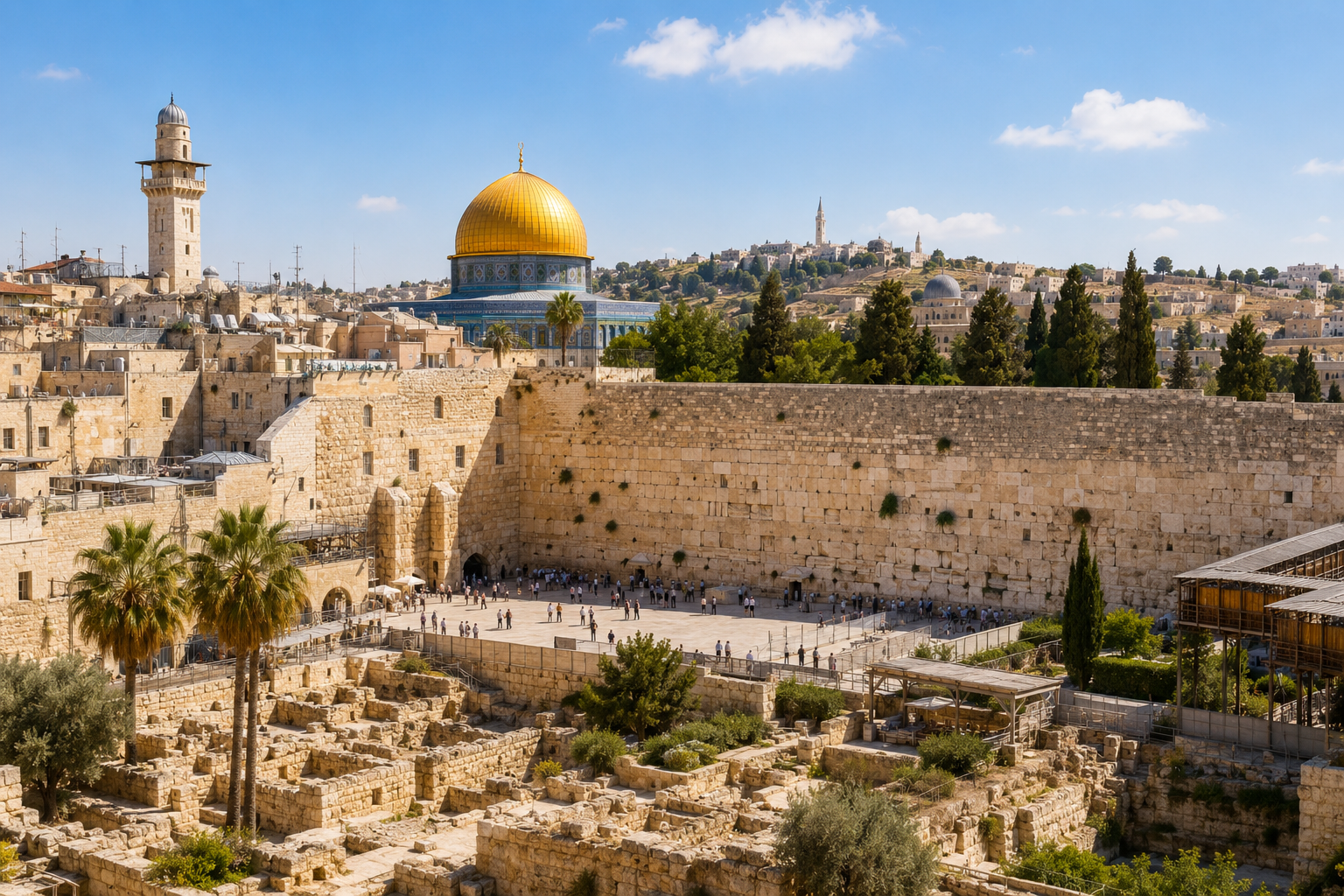
To explore the earliest foundations of this region, we must look into the ancient history of israel and palestine. The history of the land of israel is deeply documented in religious and archaeological records. For those searching for where was israel in the bible or wondering when was israel founded in the bible, the narrative begins roughly 4,000 years ago with the Abrahamic covenant. According to scripture, the land, then known as Canaan, was promised to the descendants of Abraham, Isaac, and Jacob.
When analyzing when did ancient israel begin and end, historians pinpoint the establishment of the United Monarchy under Kings David and Solomon around 1000 BCE. Following Solomon’s death, the territory fractured into the Northern Kingdom of Israel and the Southern Kingdom of Judah. This sovereign era eventually collapsed under the weight of foreign empires; the Assyrians conquered the north in 722 BCE, and the Babylonians destroyed Jerusalem’s First Temple in 586 BCE. This foundational era provides the backbone for the biblical history of israel and shapes much of the modern cultural memory.
Is Palestine Older Than Israel?
A prominent point of curiosity for many people exploring the biblical history of israel and palestine centers on chronological precedence, leading to common queries such as is israel older than palestine, is palestine older than israel, and who was in israel first.
The historical reality reveals overlapping timelines rather than a simple linear succession. While the Israelite kingdoms were established in the highlands during the Iron Age, the coastal plains were concurrently inhabited by the Philistines, a seafaring people from whom the geographic term “Palestine” eventually derived.
Centuries later, following the suppression of the Jewish Bar Kokhba revolt in 135 CE, the Roman Empire sought to erase the Jewish connection to the province of Judea by officially renaming the wider administrative territory Syria Palaestina. Therefore, if one asks what was israel before it was israel, the answer is that the geographic expanse was known as Palestine (or Palaestina) under Roman, Byzantine, and later Islamic administrations for nearly two millennia. Consequently, determining how long has palestine existed depends on whether one defines it by its ancient Aegean-Philistine coastal origins, the Roman cartographic designation, or the distinct national identity that crystallized among its Arab inhabitants over subsequent centuries.
From Empires to the Mandate Era
Following the Roman expulsion and the subsequent centuries of Byzantine rule, the land underwent a profound demographic shift during the Islamic conquests of the 7th century. From this point onward, the Arab population grew, putting down centuries of agricultural, cultural, and familial roots. To properly address the question of who was there first israel or palestine, historians emphasize that both Jewish ancestral presence and Palestinian Arab generational continuity are deeply embedded in the historical record.
For four centuries leading up to World War I, the entire region was governed by the Ottoman Empire. Following the collapse of the Ottomans, the League of Nations placed the territory under the British Mandate for Palestine. During this era, the Zionist movement—seeking a secure homeland for the Jewish people amid rising European antisemitism—accelerated Jewish immigration to the region. This influx created intense demographic friction with the existing Arab population, who had populated the towns and villages for generations, thereby setting the stage for modern territorial claims.
The Modern Era: Establishing the Nation-State
The geopolitical map of the Middle East was permanently altered in the wake of World War II and the horrors of the Holocaust. In 1947, the United Nations proposed a partition plan to divide the British Mandate into separate Jewish and Arab states. While Jewish leaders accepted the plan, Arab leaders rejected it, viewing it as an unjust infringement on their native rights.
How long has israel been a country in the modern sense? The modern nation-state was officially established on May 14, 1948, following the expiration of the British Mandate. This declaration immediately triggered the 1948 Arab-Israeli War. For Israelis, this period represents the war of independence; for Palestinians, it is remembered as the Nakba (the Catastrophe), which resulted in the displacement of hundreds of thousands of Palestinian Arabs.
When evaluating how old is the country of israel or how long has palestine existed as a modern political movement, historians point to 1948 as the definitive rupture. The borders shifted again drastically during the Six-Day War of 1967, during which Israel captured the West Bank, East Jerusalem, and the Gaza Strip, bringing millions of Palestinians under military occupation and cementing the modern parameters of the ongoing conflict.
Two Peoples, One Land
Unraveling the shared history of israel and palestine highlights a profound historical paradox: it is a land where two distinct peoples possess legitimate, deeply historical, and emotional ties to the exact same soil. Whether looking through the lens of ancient archeology, biblical covenants, or centuries of continuous demographic presence, the historical record proves that co-existence, rooted in mutual recognition of history, remains the only path forward.