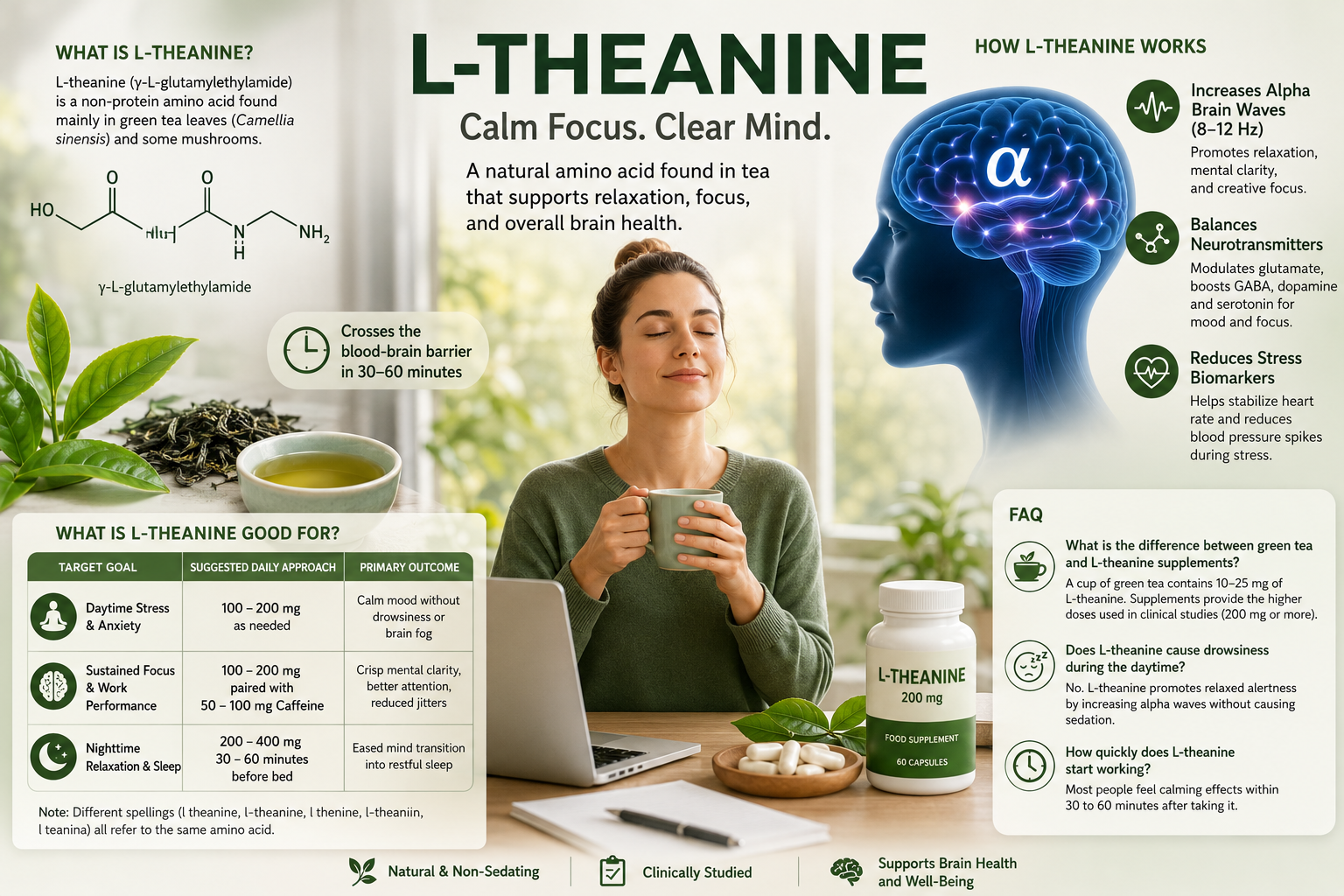





In a fast-paced world driven by high stress and constant distractions, natural nootropics have seen a surge in popularity. Among the most researched dietary compounds is l theanine (also written as l-theanine), a unique non-protein amino acid found primarily in green and black tea leaves (Camellia sinensis) as well as select mushroom species.
As interest in cognitive enhancement grows, millions of people search online asking what is l theanine, what does l theanine do, and whether the scientific evidence supports its reputation as a stress-relieving compound. This comprehensive article explores the biological mechanisms, clinical benefits, and everyday applications of theanine.
Exploring the Basics and Biological Nature of Theanine
To answer what is theanine or what is l-theanine, it helps to understand its chemical structure. Known scientifically as gamma-L-glutamylethylamide, l theanin is structurally similar to glutamine and glutamate, two crucial neurotransmitters in the human central nervous system.
Unlike many conventional sedatives or anti-anxiety medications that cause sluggishness, l-theanine rapidly crosses the blood-brain barrier within 30 to 60 minutes of ingestion. Once inside the brain, it modulates key chemical pathways to encourage a state of “wakeful relaxation”—allowing individuals to stay alert and mentally sharp while feeling calm.
Neurological Mechanisms and What L-Theanine Does in the Body
Understanding what does l-theanine do at the molecular level explains why it has become a staple in natural wellness routines:
- Alpha Brain Wave Generation: L-theanine significantly increases alpha (alpha) brain wave activity (8-12). These are the same electrical rhythms observed during deep meditation or creative flow states, promoting mental clarity without inducing sleepiness.
- Neurotransmitter Balance: The compound acts as a weak antagonist at glutamate receptors, helping block over-excitation in the brain. At the same time, it supports the synthesis of inhibitory neurotransmitters like GABA, while modulating dopamine and serotonin levels to elevate mood.
- Stress Biomarker Reduction: Clinical trials show that l theanine helps blunt the body’s physical response to acute stress, helping stabilize heart rate and preventing sharp spikes in blood pressure during high-pressure tasks.
Key L-Theanine Benefits Supported by Clinical Research
When evaluating l-theanine benefits and overall benefits of l theanine, human clinical trials highlight several major therapeutic areas:
1. Stress Relief and Anxiety Reduction
One of the most celebrated theanine benefits is its ability to reduce subjective feelings of stress and baseline anxiety. Research confirms that daily doses ranging between 200 mg help calm nervous system reactivity in individuals experiencing elevated life or work stress.
2. Enhanced Focus and Synergistic Pairing with Caffeine
When combined with caffeine (commonly found naturally in brewed green tea or matcha), l-theanine produces a powerful synergistic effect. This combination accelerates reaction times, boosts working memory, and improves attention span while smoothing out the jitteriness, spikes, and crashes often associated with coffee consumption.
3. Improved Sleep Quality
While l-theanine is not a direct sedative, its relaxing properties help ease nighttime restlessness. By quieting a racing mind before bed, it reduces sleep latency (the time it takes to fall asleep) and promotes deeper, more restorative sleep cycles.
What Is L-Theanine Good For in Daily Life
For anyone wondering what is l theanine good for or what is l-theanine good for, practical applications extend across various lifestyle goals:
| Target Goal | Suggested Daily Approach | Primary Expected Outcome |
| Daytime Stress & Anxiety | 100 – 200 mg as needed | Calm mood without drowsiness or brain fog |
| Sustained Focus & Work Performance | 100 – 200 mg paired with 50 – 100 mg Caffeine | Crisp mental clarity and reduced caffeinated jitters |
| Nighttime Relaxation & Sleep | 200 – 400 mg roughly 30 – 60 minutes before bed | Eased mind transition into restful sleep |
(Note: Terminology varies globally across languages and common search typos, such as l teanina in Spanish, or terms like l thenine, l-theanin, or i theanine. All refer to the same active amino acid molecule).
Frequently Asked Questions
What is the main difference between green tea and L-theanine supplements?
A typical cup of brewed green tea contains approximately 10 to 25 mg of l-theanine. To achieve the therapeutic doses used in clinical studies (200 mg or more), dietary supplements or concentrated matcha green tea are often utilized.
Does L-theanine cause drowsiness during the daytime?
No. Unlike standard sleep aids, l-theanine relaxes the mind by increasing alpha brain waves without acting as a heavy tranquilizer or causing daytime sedation.
How quickly does L-theanine start working?
Most individuals begin noticing the calming effects within 30 to 60 minutes after oral consumption, with peak concentrations reaching the brain shortly thereafter.