




An in-depth look at the educational structures in developed and underdeveloped African nations, the causes of the technological gap, and the challenges of the “brain drain” on the continent.
The Educational Landscape of Modern Africa
The African continent presents one of the most starkly contrasted educational maps in the world. While some regions are rapidly digitizing their classrooms and producing world-class engineers, others struggle to provide basic literacy in the face of systemic instability. Understanding the “African educational crisis” requires an analysis of both the functional systems in leading nations and the profound barriers that prevent the continent as a whole from reaching a technological breakthrough.
A Continent of Contrasts: Diverse Educational Models
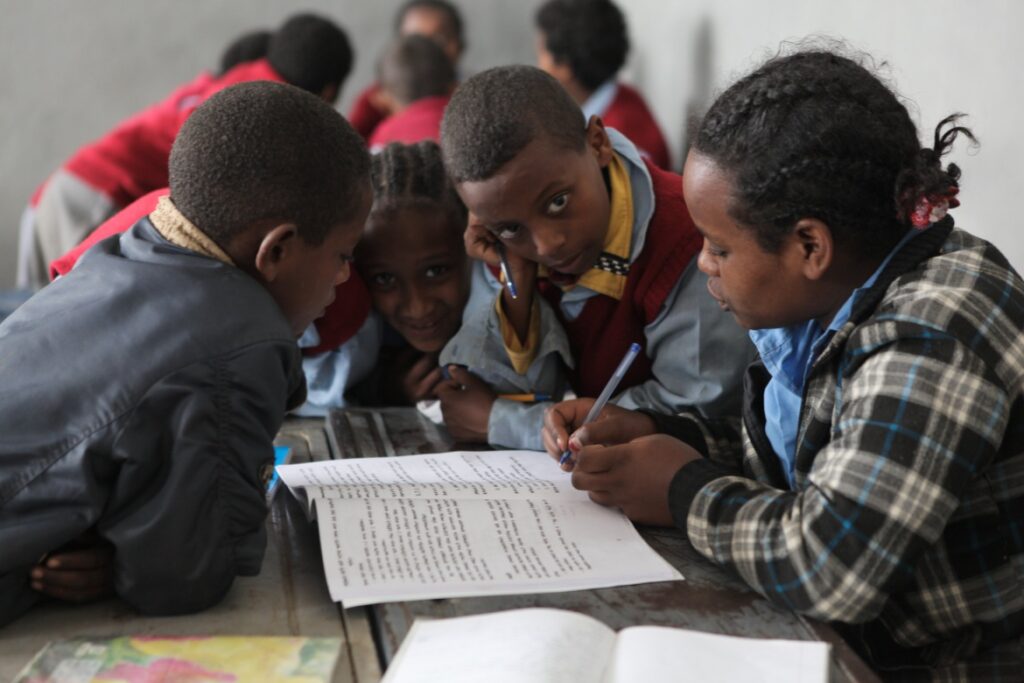
Education in Africa is not a monolith. The experience of a student in a coastal metropolis in the north or south differs fundamentally from that of a student in the landlocked, conflict-prone regions of the interior.
Success Stories: How Developed African Nations Build Elite Systems
Nations such as South Africa, Mauritius, Morocco, and Egypt have established robust educational frameworks that increasingly align with global standards. These systems are characterized by:
- The STEM Focus: A deliberate shift toward Science, Technology, Engineering, and Mathematics to fuel emerging industrial sectors.
- Digital Integration: Urban centers in these countries often utilize “e-learning” platforms and high-speed internet, allowing students to access the same global repository of knowledge as their peers in Europe or Asia.
- Research Hubs: Institutions like the University of Cape Town or Cairo University are recognized globally, producing high-level research in medicine and archaeology.
The Struggle for Literacy: Education in Underdeveloped and Conflict Zones
In contrast, countries like South Sudan, Niger, and the Central African Republic face a fractured educational reality. The “structure” here is frequently broken by:
- Infrastructure Deficits: Many schools lack physical buildings, electricity, and clean water, making a consistent learning environment impossible.
- The Linguistic Barrier: Instruction is often conducted in colonial languages (English or French). For children who only speak indigenous languages at home, this creates a massive cognitive barrier that slows literacy and basic comprehension in early childhood.
Why Africa Lags Behind in Global Science and Technology
Despite the individual success of many African scholars, the continent as a whole remains behind in the global race for scientific innovation. This is not due to a lack of talent, but a series of deep-seated structural issues.
The Colonial Legacy and the Administrative Trap
Historically, colonial education systems were designed to produce low-level clerks and administrators to serve the interests of the empire, not innovators or scientists. Post-independence, many nations inherited these “clerical” systems and struggled to pivot toward a curriculum that fosters original research. The culture of “rote memorization” remains a hurdle in many state-run schools.
The Financial Barrier: High-Tech Research vs. Immediate Survival
Modern science is prohibitively expensive. High-level research requires stable power grids, high-speed fiber optics, and massive investment in laboratories. Many African governments are forced to prioritize immediate survival—food security, healthcare, and debt servicing—over long-term R&D. Without a “Science-First” budget, the continent remains a consumer of foreign technology rather than a creator.
The Brain Drain: Why Africa’s Brightest Minds Innovate Abroad
One of the most significant obstacles to African progress is the “intellectual export.” As noted in the context of international grants, the most brilliant minds often leave for the USA or Europe. When a top-tier African engineer moves to Silicon Valley, their innovation contributes to the Western economy. Africa effectively “donates” its greatest human capital to the developed world because it lacks the internal ecosystem (funding, equipment, and political stability) to retain them.
The Future of African Innovation
The path forward for Africa lies in finding unique solutions to these age-old problems, often referred to as “Leapfrogging.”
Technological “Leapfrogging”: Bypassing Traditional Infrastructure
Africa has shown an incredible ability to skip traditional developmental stages. Just as many Africans skipped landline phones and went straight to mobile, education is “leapfrogging” via:
- Mobile Learning: Using low-cost smartphones to deliver textbooks and lessons to rural areas.
- Solar-Powered Classrooms: Bypassing the unreliable state power grids to provide electricity for computers in remote villages.
- Tech Hubs: The rise of “Silicon Savannah” in Nairobi and the tech scene in Lagos shows that localized innovation is the most effective way to solve continental problems.
Moving from Consumer to Creator
The educational and technological lag in Africa is a complex interplay of historical disadvantage and modern economic constraints. To bridge this gap, the continent must transition from a model of exporting raw talent to a model of building indigenous scientific infrastructure. The goal is a future where an African student doesn’t have to leave their home to change the world.