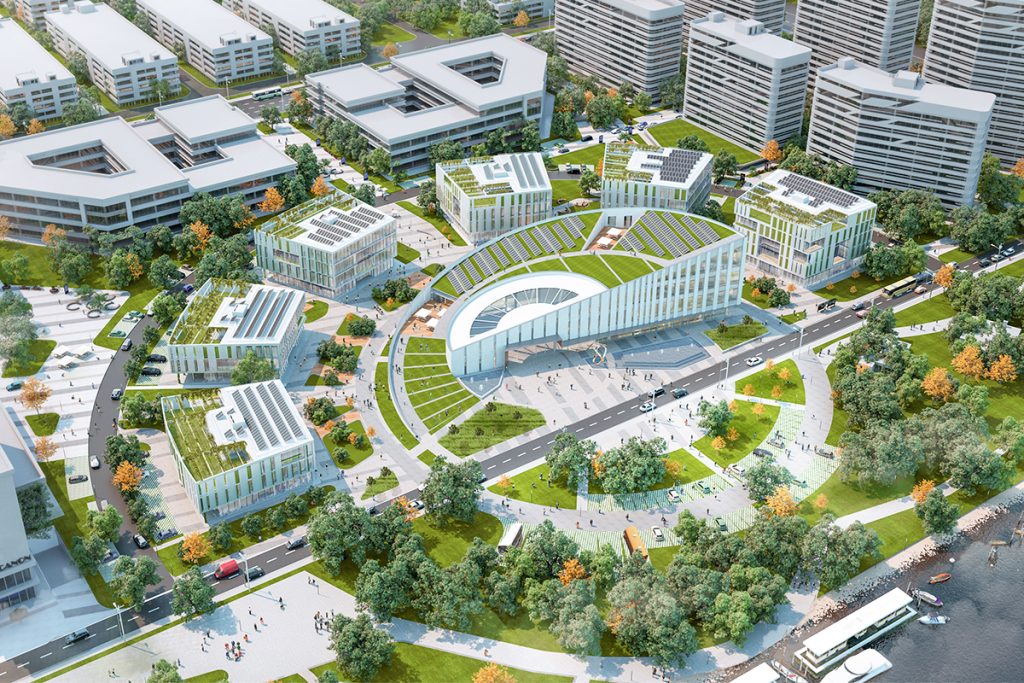





An analysis of the role of technology parks in modern education, their global implementation in the US and Europe, and the legislative frameworks that sustain them.
Technology Parks as the Architects of Modern Progress
In the 21st century, the traditional boundary between an academic laboratory and a commercial marketplace has blurred. Technology parks, often referred to as “technopoles” or “innovation clusters,” have emerged as the physical and intellectual centers where this fusion occurs. These specialized zones are far more than real estate developments; they are highly curated ecosystems designed to accelerate the “knowledge-to-product” lifecycle while simultaneously revitalizing the way we perceive and teach science.
Transforming Education and the Popularization of Science
The impact of technology parks on education is profound, primarily because they solve the “ivory tower” problem of traditional academia. By situating startups and multinational corporations alongside university research centers, these parks provide students with an immediate application for their theoretical knowledge. This environment fosters a “learning by doing” culture where a master’s student might find themselves testing a prototype in a shared clean-room facility alongside a professional engineer from a global tech leader.
Beyond higher education, technology parks serve as powerful tools for the popularization of science. Many of these sites include interactive discovery centers and “open labs” designed to host school tours. When a child sees a humanoid robot being assembled or a vertical farm operating in real-time, science stops being a series of abstract formulas in a textbook and becomes a tangible, exciting career path. This “educational magnetism” is essential for inspiring the next generation of STEM professionals.
Global Benchmarks: The American and European Models
The development of technology parks follows two distinct yet successful philosophies in the Western world. In the United States, the model is predominantly driven by elite research universities and private venture capital. Stanford Research Park in California, the spiritual heart of Silicon Valley, is the quintessential example. It was created to keep Stanford graduates from leaving the area, and in doing so, it birthed a concentration of wealth and innovation that changed the world. Similarly, the Research Triangle Park in North Carolina leverages the collective power of three major universities to create a global hub for biotechnology and agritech.
In contrast, the European model often relies on strong state-led initiatives and regional development strategies. Sophia Antipolis in the South of France stands as the continent’s largest technopole, successfully decentralizing innovation away from Paris. Germany’s Adlershof in Berlin provides another stellar example, where the state has integrated the Humboldt University with non-university research institutes and over a thousand companies. The European approach focuses heavily on cross-border cooperation and sustainability, ensuring that technology serves both the economy and the social fabric of the region.
Strategic Importance and State-Level Integration
Developing a robust network of technology parks is no longer an option but a necessity for national sovereignty. These parks prevent the “brain drain” of a nation’s most talented citizens by providing them with world-class facilities and high-paying jobs at home. Furthermore, they allow a country to maintain technological independence in critical sectors like microelectronics, pharmaceuticals, and artificial intelligence.
To ensure their success, these parks are almost always anchored in law and government policy. At the state level, this often takes the form of “Special Economic Zones” (SEZs). Governments provide a legal framework that includes significant tax incentives, such as exemptions from corporate income tax for a set period or the duty-free import of scientific equipment. Additionally, state support often involves “soft infrastructure”—streamlined bureaucratic processes for patenting inventions and specialized visa programs to attract international talent. By enshrining these parks in national law, governments provide the stability and long-term guarantees that private investors require to fund high-risk, high-reward scientific ventures.
The Nucleus of Future Growth
Technology parks represent the evolution of the industrial age into the era of the mind. By integrating education, research, and commerce into a single geographic point, they create a “multiplier effect” that benefits the entire society. As the global economy becomes increasingly complex, the nations that succeed will be those that invest most heavily in these innovation engines, ensuring that the bridge between a scientific breakthrough and a societal solution is as short and efficient as possible.