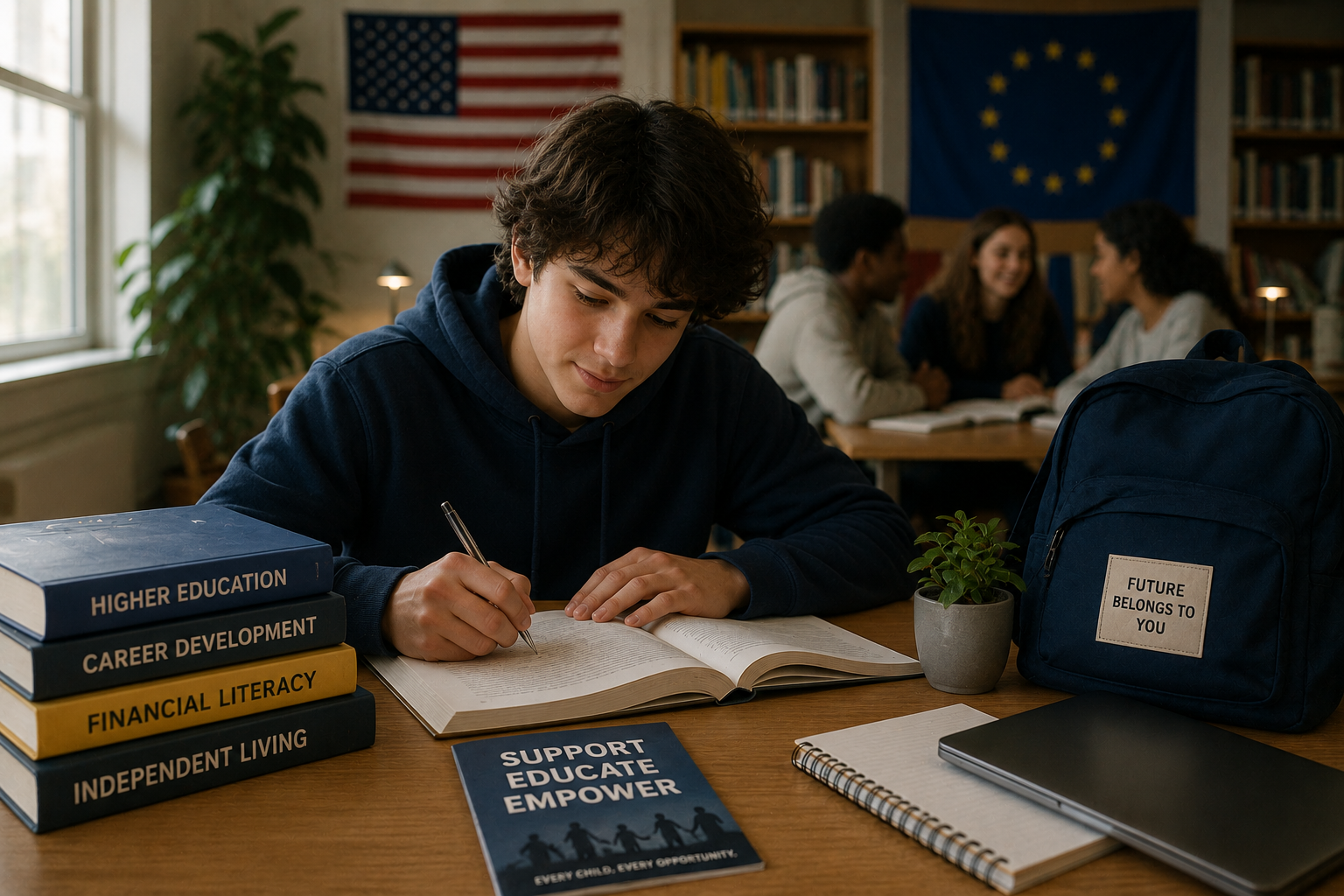





In 2026, the educational landscape for orphans and children in foster care is defined by a shift from simple subsistence to long-term empowerment. Both the United States and European nations have recognized that academic success is the most effective tool for breaking the cycle of poverty and social exclusion. While their methods differ—with the U.S. favoring targeted financial vouchers and Europe leaning toward systemic social guarantees—the shared goal remains the “leveling of the playing field” for youth transitioning into adulthood.
Educational Support in the United States
The John H. Chafee Foster Care Independence Program
The Chafee Program remains the federal backbone of support for older youth in the U.S. foster care system. By 2026, most states have utilized federal flexibility to extend support services to age 23. This program provides crucial funding for “independent living” services, which include career counseling, budget management training, and preparation for post-secondary education applications.
Education and Training Vouchers ETV
One of the most direct forms of assistance is the Education and Training Voucher (ETV) program. In 2026, the maximum annual award was adjusted to $12,000 per student to account for the rising cost of living and tuition. These vouchers are unique because they can be used not only for tuition but also for “indirect costs” such as rent, transportation, and childcare, allowing former foster youth to focus entirely on their studies.
Private Foundations and University Initiatives
The U.S. model is heavily supplemented by the private sector. Organizations like Foster Care to Success (FC2S) provide more than just money; they offer a network of mentors and “care packages” that simulate the support a traditional family would provide. Additionally, a growing number of universities have established specialized programs that guarantee year-round housing, ensuring that students who have no “home” to return to are not left homeless during winter or summer breaks.
Educational Support in the European Union
The Erasmus Plus Inclusion Strategy
In the current 2021–2027 Erasmus+ cycle, inclusion is a primary mandate. For orphans and students from disadvantaged backgrounds, this translates into “Inclusion Support” grants. These are additional monthly payments on top of the standard exchange stipend, designed to cover the specific barriers these students face. In 2026, these programs have reached record participation rates among youth in care, fostering a sense of European identity and global mobility.
The European Child Guarantee Initiative
The European Child Guarantee is a pledge by EU member states to ensure that every child at risk of poverty or social exclusion has effective access to key services. For children in alternative care, this means:
- Free Education: Complete coverage of school materials and digital tools.
- Nutritional Support: At least one free, healthy meal every school day.
- Full Participation: Zero-cost access to sports, arts, and cultural excursions to ensure social integration.
National Support Models in Germany and France
National systems in Europe often provide a deeper “safety net.” In Germany, the BaföG (Federal Training Assistance Act) provides orphans with the highest tier of financial aid, which often does not need to be repaid. Similarly, in France, the Crous system prioritizes students from the social care system for subsidized housing and provides “social emergency” grants for those facing unexpected financial hurdles during their degree programs.
Comparative Analysis of Systems
Funding Mechanisms and Financial Aid
The U.S. system is largely voucher-based and competitive, requiring students to actively apply for specific grants and maintain certain academic standards. In contrast, the European Union model is built on universal guarantees, where support is often automatically triggered by the student’s legal status as a “care leaver” or orphan.
Housing and Social Integration
Housing remains the greatest challenge. The U.S. relies on university-specific initiatives to keep dorms open year-round. European countries tend to integrate these students into their broader social housing systems, providing stipends that allow students to live in the community rather than just on a college campus.
Mentorship and Professional Guidance
The U.S. leads in professional mentorship, utilizing vast networks of corporate and individual volunteers. Europe, however, excels in integrated social work, where a state-appointed counselor or “Personal Advisor” (as seen in the UK’s Care Leaver Offer) stays with the youth until they reach 25, providing a consistent point of contact for all legal, financial, and educational issues.
Conclusion
The year 2026 marks a period of significant progress for educational equity. The United States continues to refine its high-value voucher system, empowering youth through financial independence and private mentorship. Meanwhile, Europe provides a comprehensive, state-led framework that treats educational access as an inseparable part of social welfare. For displaced youth, particularly those from Ukraine under temporary protection in the EU, these systems have been adapted to provide immediate and equal access to these life-changing educational opportunities.