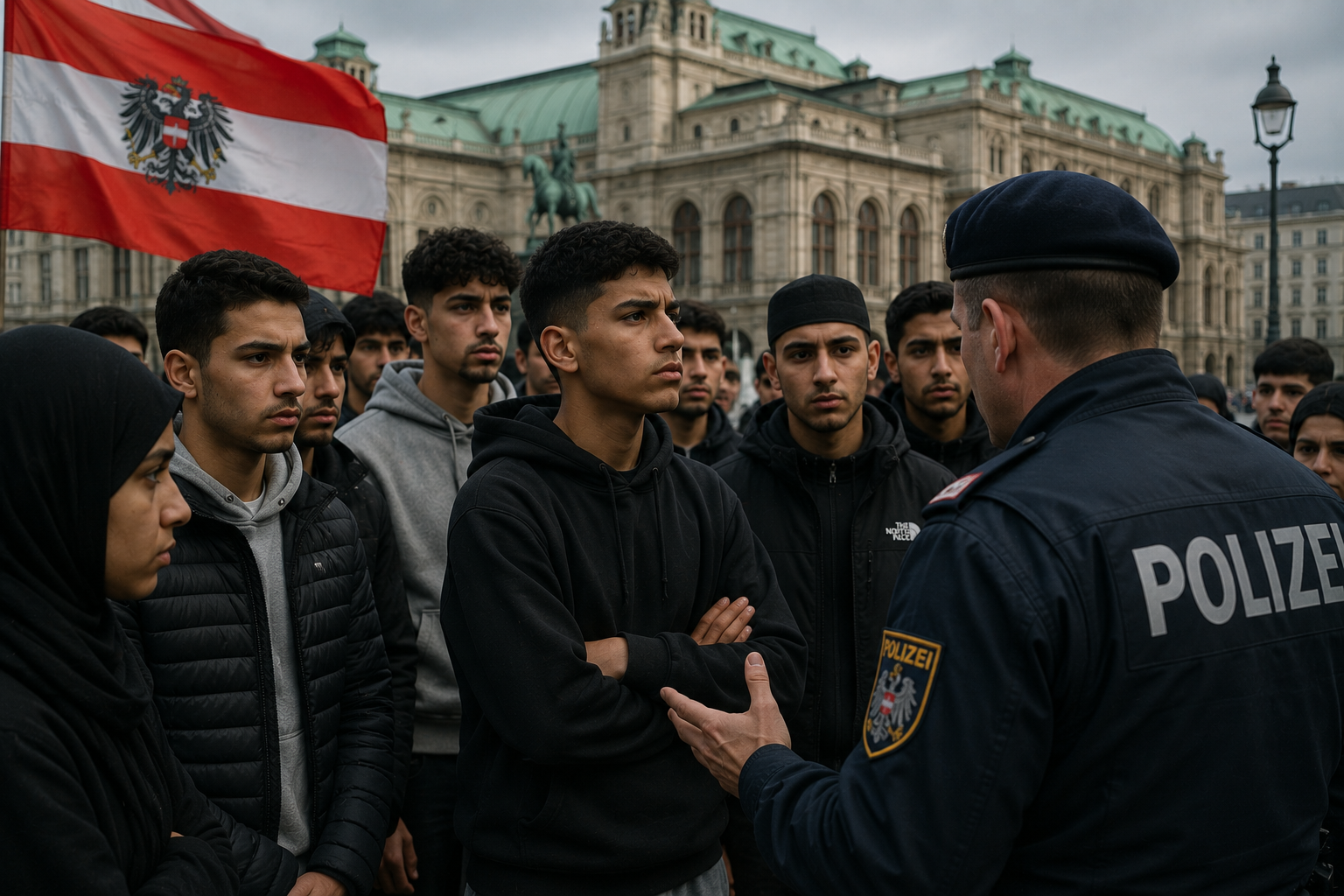





A landmark study commissioned by the City of Vienna has unveiled deeply troubling statistics regarding the ideological alignment of young Muslim residents in Austria. The research, which surveyed 1,200 individuals aged 14 to 21, suggests that a significant portion of this demographic rejects the foundational principles of European secular democracy in favor of rigid, ancient religious statutes.
The Data and the Departure from European Values
The findings paint a picture of a generation that feels more tethered to traditional Islamic jurisprudence than to the laws of the nation they inhabit. The survey results are stark:
- Legal Primacy: 41% of young Muslim respondents explicitly stated that ancient Islamic laws are superior to the secular laws of the Austrian state.
- Radical Commitment: 46% of those surveyed indicated that they would be prepared to die for the defense of ancient religious texts.
- Sharia Implementation: An overwhelming 65% believe that Sharia law—even when it contradicts European legal frameworks—should be strictly applied to all aspects of daily life.
These figures represent a significant challenge to the European social contract, which is predicated on the idea that national law remains the ultimate authority in the public sphere.
The Broader Context of Population Growth in Europe
This ideological shift occurs alongside a sustained demographic transition across the continent. While these figures represent the estimated share of the total population (including both migration and natural increase), they highlight the speed at which European demographics are evolving.
| Region / Country | Muslim Population Share (2010) | Muslim Population Share (2020) | Projected Share (2030) |
| Austria | 6.8% | 8.5% | 10.2% |
| Germany | 5.8% | 7.6% | 9.5% |
| France | 7.5% | 9.0% | 10.8% |
| Sweden | 4.6% | 7.2% | 10.1% |
| Western Europe (Avg) | 5.5% | 7.4% | 9.6% |
Note: Data reflects general demographic trends and projected growth based on current migration and birth rate patterns.
Political Backlash and the Demand for Assimilation
The survey results have triggered an immediate and stern response from Austria’s political leadership. Niko Marchetti, General Secretary of the Austrian People’s Party (ÖVP), condemned the findings as fundamentally unacceptable.
“Austria will not become a caliphate,” Marchetti stated, emphasizing that integration is not optional for those seeking a life in the country. He argued that the current trajectory is unsustainable and that the expectation for newcomers is clear: “Anyone who rejects these European principles has no place in our country.”
For the ÖVP and other proponents of strict assimilation policies, the study is empirical evidence that “multiculturalism” has failed to produce the shared sense of national identity necessary for a stable society. They contend that the primary duty of the state is to ensure that all residents—regardless of their background—subscribe to the core values of freedom, equality, and the rule of law.
Conclusion and the Turning Point for Social Policy
The Austrian study serves as a wake-up call that the traditional approach to integration is not yielding the expected results. When nearly half of a young demographic expresses a willingness to sacrifice their lives for religious codes that sit outside the constitution, the state can no longer afford to remain passive.
As Austria debates its future, the message from policymakers like Niko Marchetti is becoming increasingly clear: the era of tolerance for ideologies that seek to dismantle the democratic framework is drawing to a close. The future of the country, they argue, depends on the reaffirmation of national values and the demand that all citizens, regardless of their faith, fully commit to the laws of the Republic.