

For centuries, scholars have turned to ancient manuscripts, archaeological ruins, and theological texts to decipher the origins of life and the purpose of human existence. Yet, in the 21st century, we have come to realize that the most profound “book” ever written is not composed of ink and parchment, but of nucleotides: the DNA code.
The discovery of DNA and the rise of molecular biology have provided us with a lens through which we can finally read the intricate history of creation. Far from being at odds with the narrative of our existence, this knowledge serves as a bridge, allowing us to understand the mechanisms of life with unprecedented clarity.
The Genetic Manuscript of Life
When we examine the genetic blueprints of living beings, we uncover a story of deep interconnectedness. The similarities are striking: the DNA of a domestic cat and a human share roughly 90% of their sequences, while the genetic architecture of humans and chimpanzees aligns at a staggering 98–99%.
By analyzing repetitive patterns, gene functionality, and adaptive traits, scientists can map the evolution of life across kingdoms and families. We are able to construct phylogenetic trees that reveal the moments of divergence, pinpointing the genetic milestones that led to the diversity of species we see today. DNA is, quite literally, a historical record—a code that, when read with humility and precision, tells the story of our shared biological journey.
Integrating Faith, Science, and Ecology
The beauty of this discovery lies in its holistic nature. To fully grasp our origins, we must look at the convergence of different domains:
- Archaeology: The physical evidence of fossils provides the structural timeline of life’s progression.
- Population Ecology: This allows us to understand how environment and competition drove the movement and adaptation of species.
- Theology and Scripture: The Bible offers a framework for understanding the “why” of existence, providing a moral and spiritual context for our journey.
Consider the evolutionary transition of the coelacanth—a lobe-finned fish that serves as a living bridge in history. DNA analysis confirms the genetic markers that allowed for the development of early limb structures, providing a biological basis for the transition from water to land. This is not a contradiction of ancient wisdom, but a modern illumination of it. The complexity within our cells mirrors the complexity of the world, suggesting that knowledge is revealed to humanity in stages, as our capacity to understand it grows.
The Mathematics of Kinship
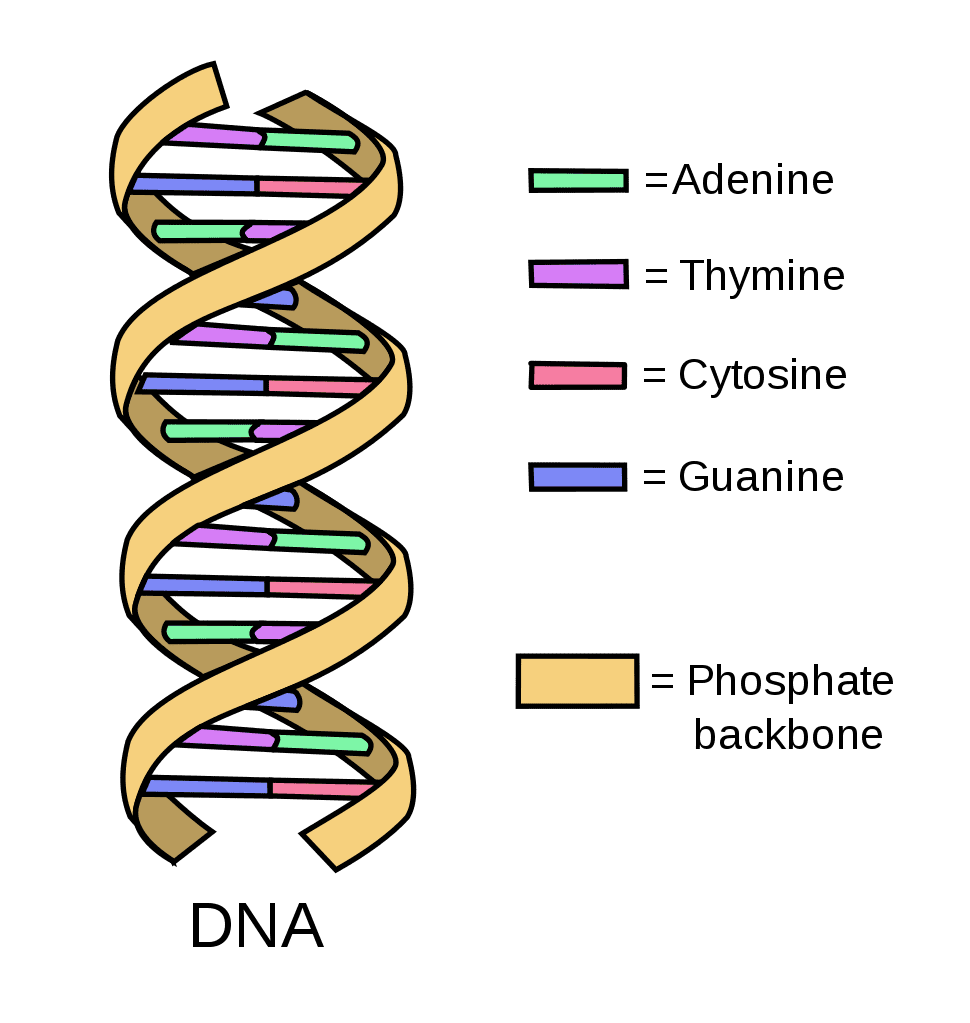
Modern molecular biology has allowed us to quantify the degree of our biological connections. By comparing nucleotide sequences—the “letters” of the DNA alphabet (A, T, C, and G)—we can trace the branches of the tree of life with mathematical precision.
- Humans and Chimpanzees (98-99%): Our closest living relatives. This 1-2% difference explains the vast phenotypic divergence, yet the foundational blueprint remains nearly identical.
- Humans and Cats (~90%): Though separated by millions of years of evolution, the core genes that govern cellular respiration, organ development, and basic metabolism are remarkably similar.
- Humans and Mice (~85%): Mice have become the standard model for medical research precisely because their genetic machinery—the way their bodies process food, react to stress, and fight disease—is so close to our own.
- Humans and Bananas (~50-60%): Even at the level of plants, we share a significant portion of our DNA. This reflects the shared necessity of basic cellular functions: DNA replication, protein synthesis, and metabolic regulation.
Functional Similarities – The “Universal Tools”
The reason for this high level of shared DNA is not merely coincidence; it is functional necessity. Life uses “universal tools”—highly conserved genes that have remained essentially unchanged for eons because they are perfect for their jobs.
The Hox Genes (The Body Plan Architect)
One of the most profound examples of functional similarity is the Hox gene complex. These genes act as the master architects, determining where the head, limbs, and tail should grow in an embryo. Surprisingly, the same Hox genes that organize a fruit fly’s anatomy also dictate the structure of a human fetus. This proves that the fundamental “blueprint of order” was established at the dawn of complex life and has been faithfully preserved ever since.
Cytochrome c (The Energy Powerhouse)
Every aerobic organism, from yeast to humans, requires the protein Cytochrome c for cellular respiration (the process of turning food into energy). The DNA sequence for this protein is almost identical across vast distances of the evolutionary tree. This molecular consistency is a testament to the efficiency of the initial design—once a perfect solution to a biological problem is found, it is retained and passed down through generations.
DNA Repair Mechanisms
Life exists in a state of constant chemical assault. UV radiation and metabolic byproducts frequently damage our DNA. The proteins responsible for “proofreading” and repairing DNA damage are highly conserved across almost all life forms. Whether in a bacterium or a human neuron, the mechanisms that protect the integrity of the genetic code are functionally similar, highlighting a universal mandate for biological preservation.
DNA as a Living Library
These functional similarities are not accidents; they are evidence of a structured, logical progression. When we look at the coelacanth or the transition of ancient fish to land, we see this in action. The genes responsible for limb development were present in a rudimentary state long before they were ever used to walk on solid ground. This suggests that the potential for future adaptation is often “written” into the DNA long before the environmental need arises.
As we continue to “read” the book of DNA, we discover that science does not silence faith; rather, it amplifies it. By integrating our understanding of biological development with the timeless lessons of the Bible, we begin to grasp not only where we came from, but why we are here—and the path that lies ahead for humanity. We are invited to be both researchers of the past and pilgrims of the future, discovering the purpose hidden within the very fibers of our being.