




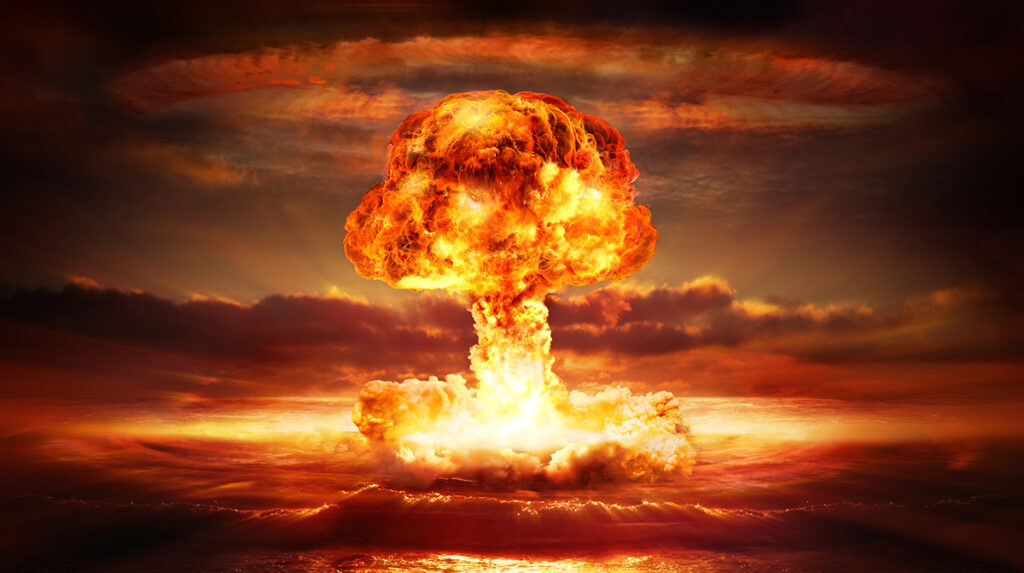
The prospect of a limited nuclear exchange in the Mediterranean involves a catastrophic transformation that goes far beyond immediate casualties. If a state like Iran or Pakistan were to deploy even a small number of nuclear warheads in this region, the unique geography of the Mediterranean—a relatively small, enclosed sea surrounded by high population densities—would act as a force multiplier for the disaster, creating a “domino effect” that would permanently alter the European continent.
The Atmospheric and Environmental Shift
The immediate aftermath would be defined by the movement of radioactive fallout. Unlike the open ocean, the Mediterranean’s weather patterns often drive air masses from the south and east directly toward the European mainland. Within a few days, a radioactive plume would settle over the “cradle of Western civilization,” contaminating the soil and water sources of Italy, Greece, and the Balkans. This isn’t just a short-term health hazard; it represents a fundamental break in the ecological cycle. The soot from the resulting firestorms would rise into the upper atmosphere, creating a regional “nuclear twilight.” This localized cooling would lead to the total failure of the Mediterranean agricultural belt, which currently supplies a significant portion of Europe’s olives, fruits, and wine. The “Garden of Europe” would effectively become a barren, monitored zone.
The Collapse of the Social and Economic Order
Life in Europe would shift from a consumer-driven society to a “survivalist state.” The most dramatic change would be the internal displacement of people. Southern Europe would experience a mass exodus as millions flee contaminated coastal cities for the perceived safety of Northern Europe and the Alps. This would place an impossible strain on the infrastructure of Germany, Scandinavia, and Poland, likely leading to the permanent suspension of the Schengen Agreement. The “Open Europe” of the 21st century would be replaced by a continent of hard borders, checkpoints, and radiation monitoring stations. Economically, the Mediterranean is the primary artery for global trade via the Suez Canal. A nuclear event would turn this sea into a “no-go zone” for commercial shipping, causing global supply chains to snap and leading to a permanent state of hyperinflation and scarcity for energy and food.
The New Reality of Human Existence
Existence would continue, but the “European Dream” of leisure and integration would vanish. The Mediterranean lifestyle, defined by its relationship with the sea, would be replaced by an indoor, highly regulated culture. Governments would exercise total control over the food chain, with “clean” food becoming the most valuable currency on the continent. Psychologically, the trauma of seeing the Mediterranean—a symbol of beauty and history—become a source of death would lead to a profound cultural shift toward isolationism and militarism. Europe would likely unify not through shared values, but through a desperate, collective military necessity to protect its remaining “clean” territories and resources.
Post-Catastrophe Management
In the years following the disaster, European nations would have to pioneer massive “decontamination zones.” Life would be lived according to the Geiger counter, with daily routines revolving around radiation reports and the consumption of processed, imported, or hydroponically grown food. The healthcare systems of Europe would be redesigned to manage a permanent surge in radiation-induced illnesses, creating a society that is perpetually “under treatment.” Ultimately, while the continent would survive, it would be a diminished, hardened version of itself, where the luxury of individual freedom is frequently sacrificed for the collective biological survival of the population.