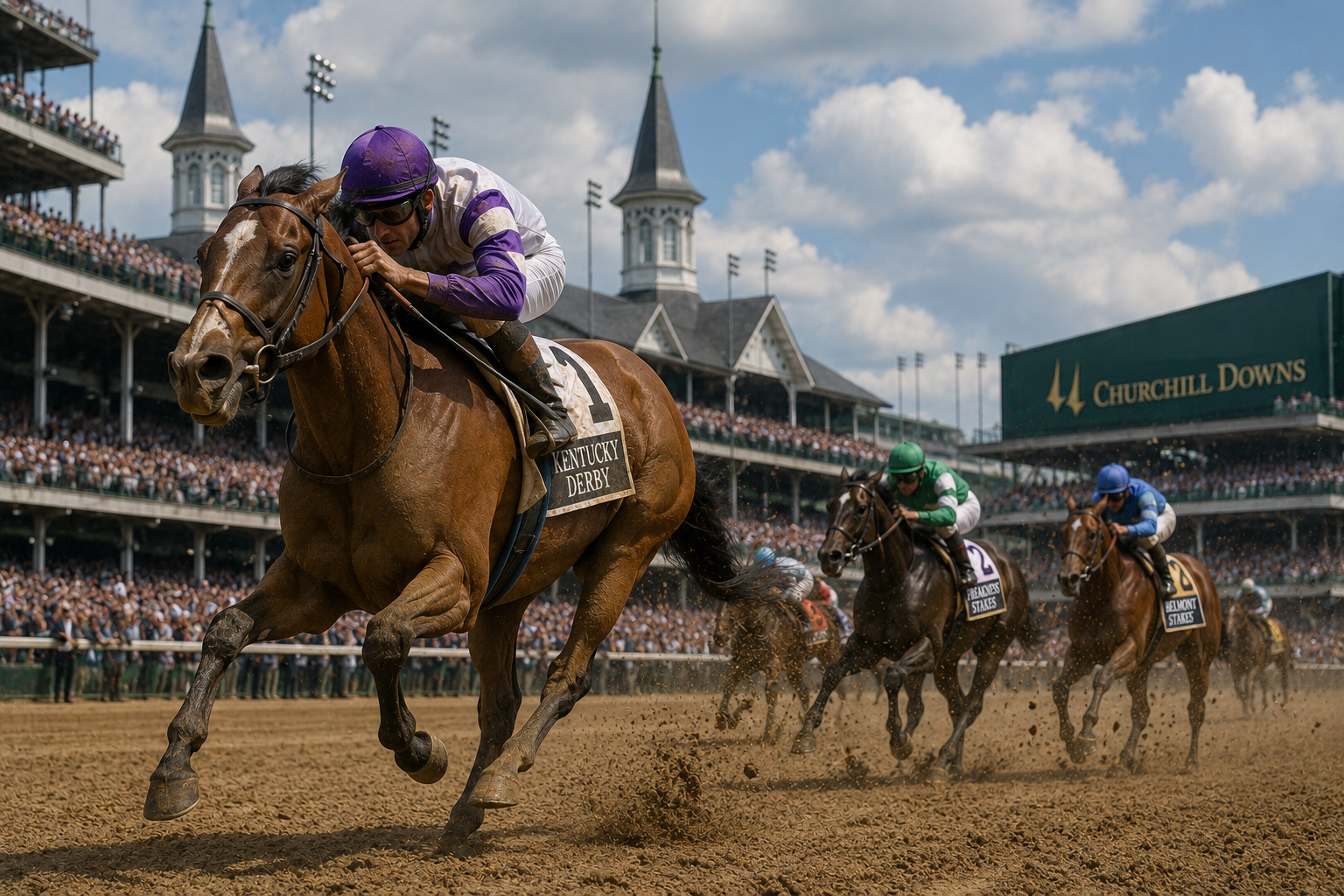




The American Triple Crown is more than just a series of three horse races; it is the ultimate test of speed, stamina, and spirit. Comprising the Kentucky Derby, the Preakness Stakes, and the Belmont Stakes, this achievement is widely regarded as the most difficult feat in all of sports. Yet, the history of this “Crown” is inextricably linked to the darkest and most turbulent chapters of American history.
The First Kentucky Derby of 1875
The foundation of the Triple Crown as we know it today began on May 17, 1875. This was the date of the very first Kentucky Derby at Churchill Downs. The race was established by Meriwether Lewis Clark Jr., the grandson of the legendary explorer William Clark. Inspired by the Epsom Derby in England, Clark sought to create a premier racing event that would showcase the quality of American Thoroughbreds.
The inaugural race was won by a colt named Aristides, ridden by Oliver Lewis, an African American jockey. In fact, 13 of the 15 jockeys in the first Derby were Black, highlighting the massive role African American horsemen played in the early days of the sport. This event transformed Louisville into the horse racing capital of the world and set the stage for the Preakness (Maryland) and the Belmont (New York) to join forces in creating a unified championship series.
Civil War and the Transformation of the Turf
The grandeur of the Triple Crown would never have been possible without the survival of the industry during the American Civil War. Before the conflict, the South—particularly Virginia and Kentucky—was the heart of American breeding. The war nearly destroyed this legacy.
During the conflict, Thoroughbreds were confiscated for use as cavalry mounts, and many of the nation’s most famous stud farms were burned or turned into battlefields. However, the war also transformed the industry. As the South struggled to rebuild, the center of racing shifted toward the North and the emerging wealth of the Gilded Age. The war forced breeders to focus on sturdier, more resilient horses, and the post-war era saw the construction of major tracks like Saratoga and Belmont Park, fueled by a national desire for reconciliation and public entertainment.
The Era of Prohibition and the Fight for Survival
While the sport flourished in the late 19th century, it faced a near-fatal blow in the early 1910s. A wave of moral reform swept across the United States, targeting the gambling industry that was the lifeblood of horse racing. By 1910, nearly every state in the Union had banned racetrack betting.
Between 1911 and 1912, New York tracks were forced to close their doors entirely. The sport was pushed underground or forced into exile in Canada and Mexico. This period, known as the “Dark Ages” of American racing, lasted until the mid-1910s when “pari-mutuel” betting systems were introduced. These systems allowed for state-regulated wagering that was deemed more “scientific” and less prone to corruption. It was during this recovery period, in 1919, that Sir Barton became the first horse to win all three races, though the term “Triple Crown” would not be popularized until Gallant Fox repeated the feat in 1930.
The Modern Legacy
Today, the Triple Crown remains a cultural phenomenon that captures the national imagination. It survived the carnage of a civil war and the legal strikes of the moral reform era to become a symbol of American excellence. The journey from the first strides of Aristides in 1875 to the legendary runs of Secretariat and American Pharoah is a testament to the enduring bond between the American people and the Thoroughbred.