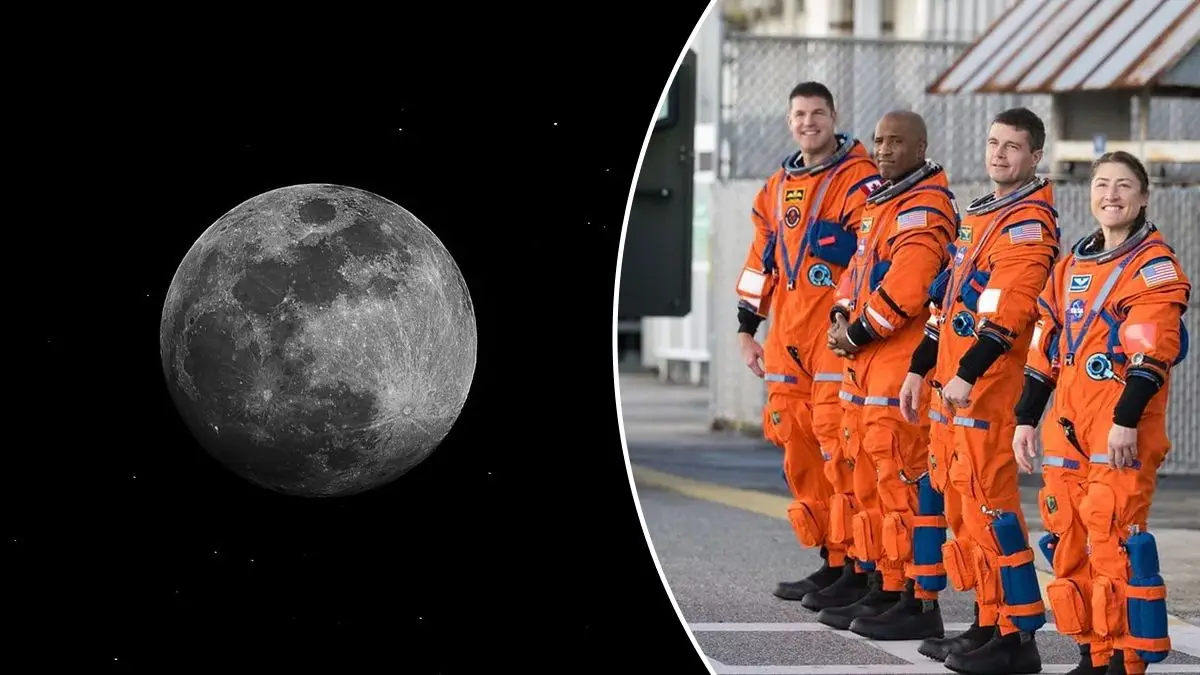





The Artemis II mission marks a historic milestone in humanity’s journey back to the Moon. As the first crewed flight of the Orion spacecraft, it represents a bold step toward establishing a long-term presence on the lunar surface. However, as the mission beams back stunning new imagery of Earth and the Moon, it has reignited decades-old debates ranging from photographic technicalities to deep-seated conspiracy theories.
The Visual Evolution: Why Earth Looks Different in 2026
One of the most discussed aspects of the Artemis II mission is the aesthetic quality of the new “Blue Marble” photos. Many observers have noted that the Earth appears significantly dimmer or less vibrant than the iconic photographs captured during the Apollo missions over fifty years ago.
The Film vs. Digital Reality
The primary reason for this visual discrepancy is not a change in our planet’s atmosphere or health, but rather a fundamental shift in photographic technology.
- Apollo’s Analog Brilliance: The famous Apollo 17 “Blue Marble” was shot on 70mm Hasselblad film. Film has a natural chemical response that often results in higher contrast, saturated colors, and a specific “warmth” that digital sensors struggle to replicate without post-processing.
- Artemis’s Digital Precision: The Orion spacecraft utilizes ultra-modern digital sensors designed for scientific accuracy and high dynamic range. These sensors often capture a more “flat” or realistic raw image to preserve data, which can appear muted compared to the highly stylized and naturally high-contrast look of 20th-century film.
The “Rescue Ships” and Launch Anomalies
The launch of Artemis II was scrutinized by millions globally, leading to the rise of new viral “mysteries.” Social media has been flooded with discussions regarding strange “ships” or objects seen near the rocket during its ascent. Some online theorists suggested these were emergency craft meant to “return the astronauts” secretly if the launch failed, or even extraterrestrial observers.
In reality, these objects are typically identified as optical illusions, ice crystals shedding from the frozen rocket body, or specialized tracking drones used by NASA to monitor the structural integrity of the Space Launch System (SLS) during its departure from Earth’s atmosphere.
The Persistent Shadow of the “Studio” Conspiracy
Despite the technological triumphs of Artemis II, the mission has not escaped the “faked flight” narrative that has trailed NASA since 1969. A significant portion of the online community continues to argue that all lunar missions—past and present—are sophisticated productions filmed in high-tech pavilions or movie studios.
The “Faked” Narrative vs. Scientific Evidence
Conspiracy theorists point to the perfection of the video feeds and the perceived “flatness” of the Earth photos as evidence of CGI or green-screen technology. They argue that the Van Allen radiation belts make human travel beyond low Earth orbit impossible, a claim NASA counters with the specialized shielding of the Orion capsule.
While NASA provides mountains of telemetry data, laser retroreflector experiments, and independent tracking from other nations’ space agencies (including those of geopolitical rivals), the question remains “open” in the world of conspiracy culture. For skeptics, no amount of 4K footage can replace the distrust sown by the original Apollo era debates.