


In the modern quest for peak cognitive performance, individuals frequently default to synthetic stimulants, double-shot espressos, or nootropic supplements. However, a body of neuroscientific research led by investigators at the Karolinska Institute suggests that one of the most effective tools for immediate mental enhancement requires no chemical intervention.
Recent laboratory trials demonstrate that the mechanical act of chewing chewing gum initiates a profound physiological shift, accelerating cerebral blood flow, altering metabolic states, and directly enhancing memory retrieval, focus, and spatial awareness. By leveraging the specific vascular pathways that connect the human jaw to the central nervous system, this simple habit acts as a direct, non-invasive method for optimizing cognitive endurance without the classic crash associated with traditional stimulants.
The Vascular Mechanics of Mastication
The cognitive benefits derived from chewing are rooted in the complex anatomy of the human cranial circulatory system. The brain requires a continuous, highly regulated supply of oxygenated blood and nutrients to sustain neural firing, a process known as cerebral perfusion.
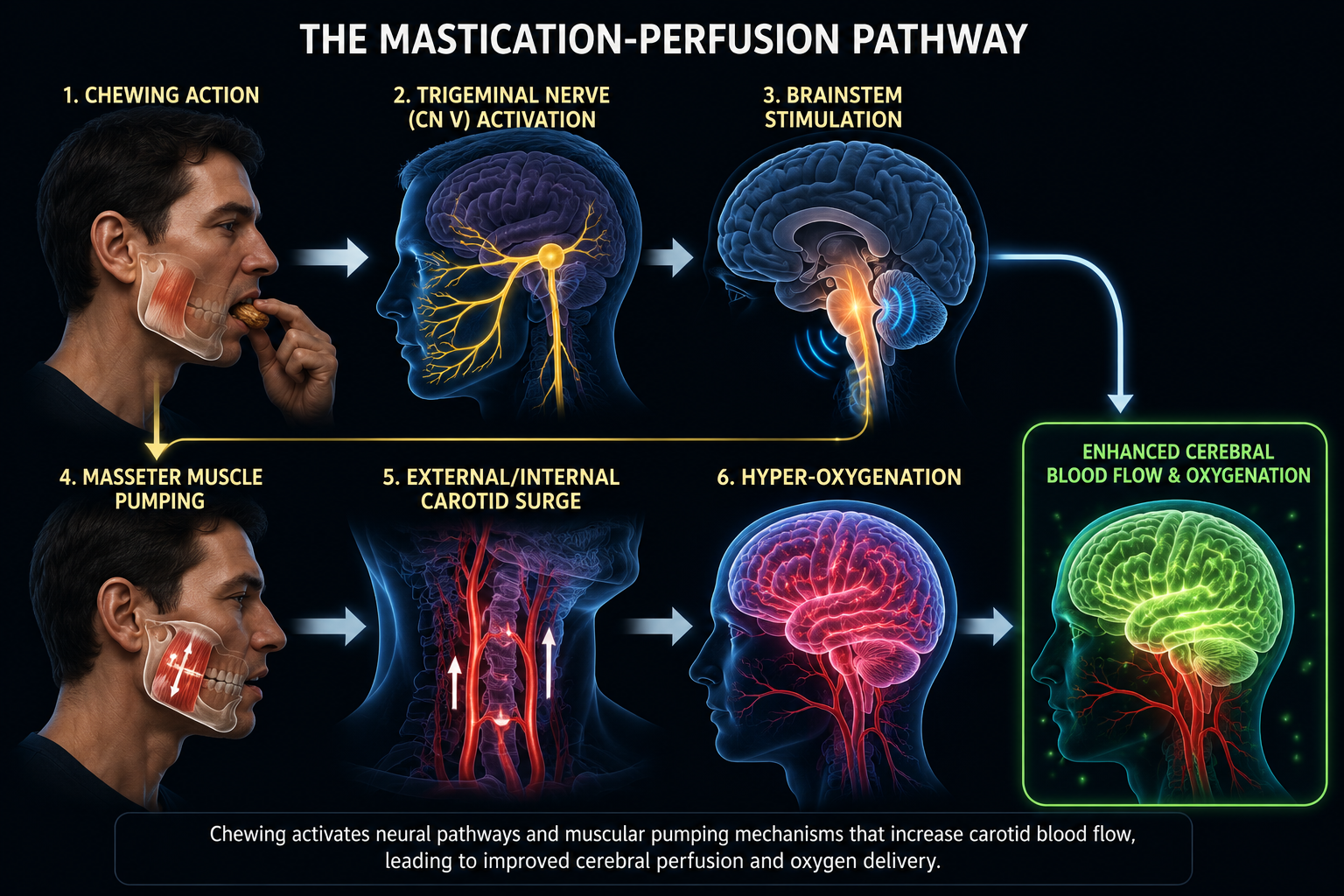
When you chew, the masseter and temporalis muscles—the primary muscles of mastication—contract with significant force. This repetitive muscular exertion triggers a sequence of neurovascular events:
- Trigeminal Nerve Stimulation: The mechanical pressure on the periodontal ligaments and the contraction of the chewing muscles generate sensory signals carried by the trigeminal nerve (CN\V) directly to the brainstem.
- Autonomic Vasodilation: This neural feedback loop stimulates the reticular activating system, leading to a localized dilation of cerebral blood vessels.
- The Carotid Surge: The physical pumping action of the jaw muscles assists the venous return and elevates arterial blood velocity through the external and internal carotid arteries, increasing overall cerebral blood volume.
Selective Hyper-Perfusion and the Hippocampus
What makes mastication unique is that blood does not flood the brain uniformly. Neuroimaging studies reveal that chewing causes selective hyper-perfusion, channeling oxygenated blood primarily toward vital cognitive regions:
- The Hippocampus: Located within the temporal lobe, the hippocampus is the brain’s central hub for memory consolidation, spatial orientation, and the processing of new information. The influx of fresh, nutrient-dense blood to this region explains why chewing has been shown to improve short-term working memory and accelerate learning retention rates.
- The Prefrontal Cortex: Responsible for executive functioning, decision-making, and sustained focus, this area experiences a marked increase in glucose and oxygen metabolism during chewing activities.
- Emotional Control Zones: Increased blood flow to parts of the limbic system helps stabilize neural networks associated with emotional regulation, preventing the sensory overload that often leads to workplace anxiety.
| Cognitive Domain | Neural Region Affected | Direct Mastication Benefit |
| Working Memory | Hippocampus | Enhances information retrieval and processing speed. |
| Executive Focus | Prefrontal Cortex | Extends deep concentration thresholds up to 25 minutes. |
| Motor Reflexes | Cerebellum / Motor Cortex | Accelerates physical reaction times by up to 20%. |
| Stress Mitigation | Amygdala / Limbic System | Smooths emotional spikes and lowers panic responses. |
The Cortisol Paradox: Balancing Stress, Energy, and Focus
Beyond modifying blood flow dynamics, the physical act of chewing serves as a highly efficient regulator of the endocrine system, specifically targeting the hormone cortisol.
Produced by the adrenal glands via the Hypothalamic-Pituitary-Adrenal (HPA) axis, cortisol is the body’s primary stress hormone. In acute, survival-driven scenarios, a spike in cortisol shifts energy resources toward physical defense. However, in a modern workplace setting, chronically elevated cortisol levels wreak havoc on cognitive architecture:
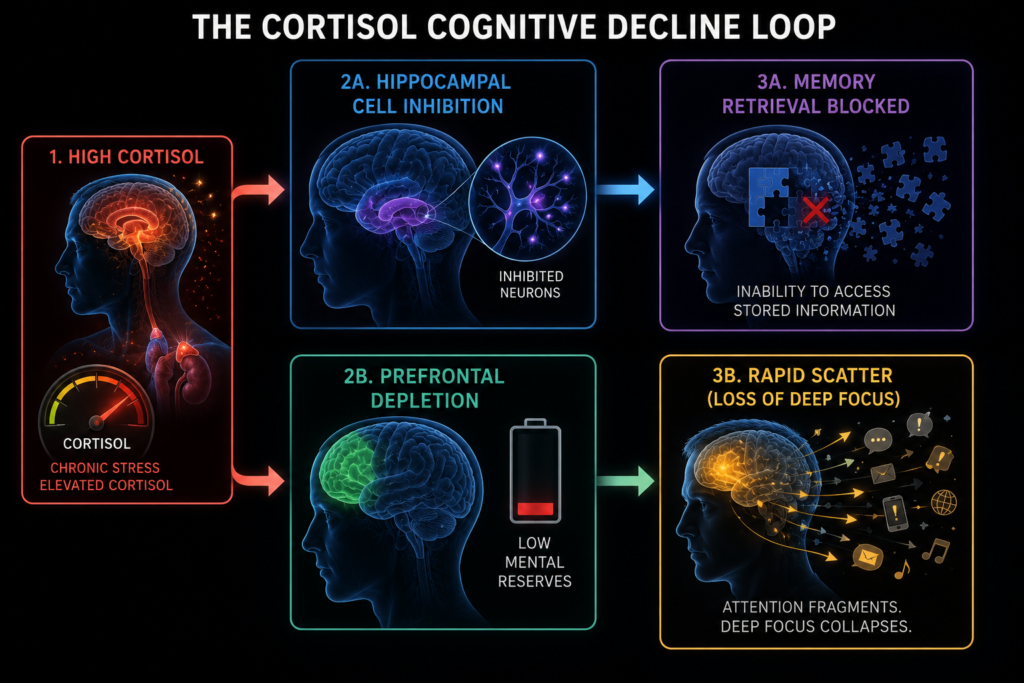
High cortisol levels actively inhibit the function of the hippocampus, temporarily blocking the neural pathways required to retrieve existing memories. Furthermore, it depletes glucose reserves in the prefrontal cortex, causing mental fatigue and a fragmented attention span.
Chewing directly counteracts this process. The rhythmic, repetitive nature of mastication acts as a biological pacing mechanism that signals safety to the brainstem. This suppresses the overactivation of the HPA axis, resulting in a measurable drop in systemic cortisol. With cortisol suppressed, the hippocampus is freed from chemical inhibition, allowing focus to stabilize and memory access to clear instantly.
A Tool for Digital Optimization
The findings from the Karolinska Institute reshape how we view everyday habits. Without relying on external chemical stimulants like caffeine or synthetic energy blends—which carry the risk of vasoconstriction, elevated heart rates, and eventual exhaustion—the act of chewing utilizes the body’s intrinsic neurovascular plumbing to deliver identical, if not more stable, cognitive benefits.
By engaging the powerful mechanics of the jaw, any individual can safely induce a state of heightened cerebral perfusion, lower stress hormones, and lock in a 25-minute window of peak performance using nothing more than a simple piece of gum.