


A Quantitative Analysis of Campus Climate
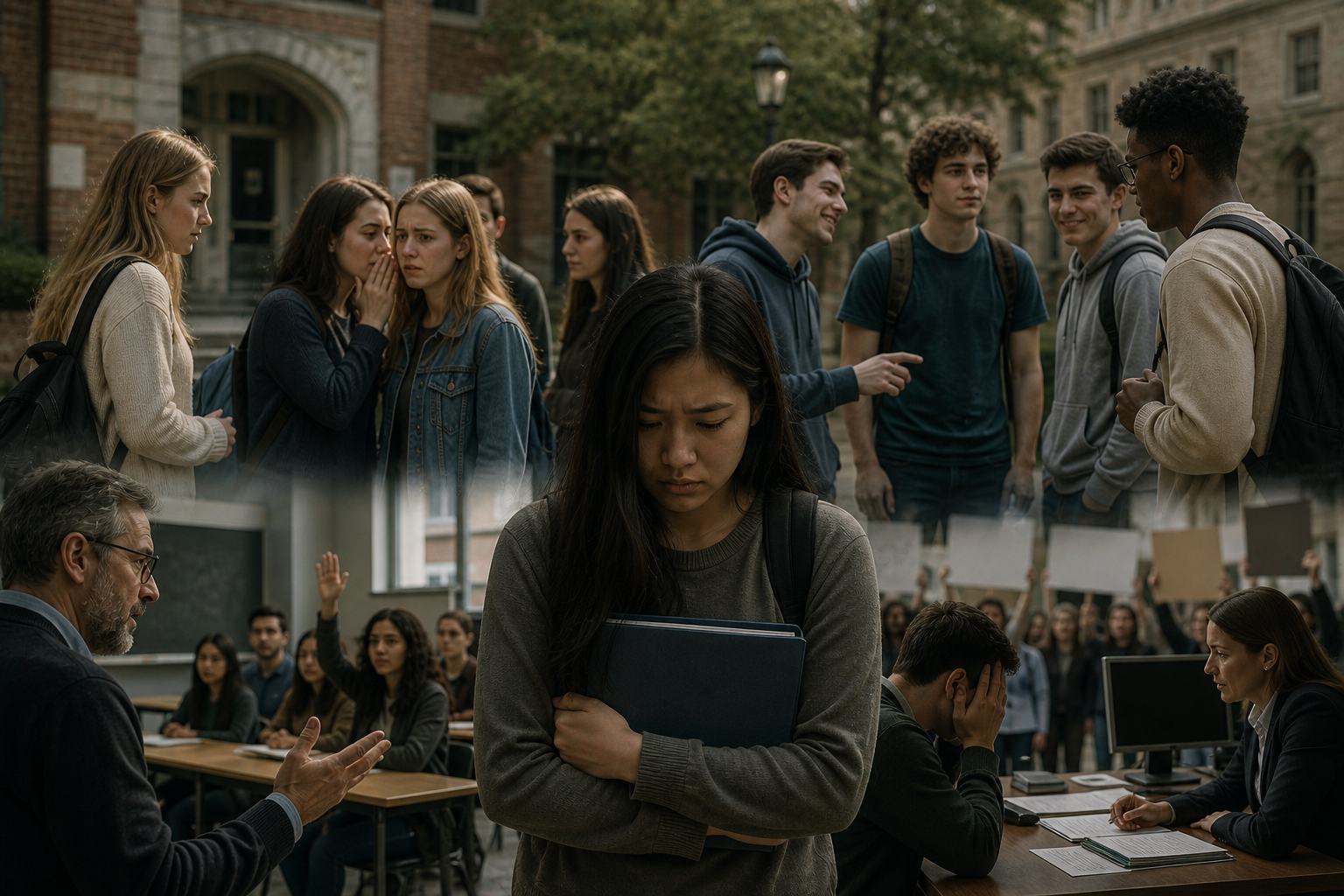
The anonymous survey of 300 students in Texas provides a stark contrast to official university reports. The data suggests that discrimination is not a series of isolated events but a structured part of the student experience.
Survey Results Breakdown
Below is a representation of the key findings from the 300 respondents:
| Category of Inquiry | Key Finding / Percentage |
| Personal Experience with Discrimination | 62% reported direct encounters or witnessing incidents. |
| Primary Basis of Bias | 48% Ethnicity/Race; 22% Social Status; 18% Religion; 12% Other. |
| The Reporting Gap | 74% of victims chose not to report the incident to authorities. |
| Perception of Academic Fairness | 45% feel their background negatively impacts how faculty grade them. |
| Confidence in Administration | Only 12% believe the university takes discrimination seriously. |
The Roots of the Poison: Why Xenophobia Takes Hold
To solve the problem, we must understand why ksenophobia (the fear or hatred of that which is perceived as foreign or strange) persists even in “progressive” educational settings. It is rarely a sudden outburst; rather, it is a deeply rooted social construct.
1. The “In-Group vs. Out-Group” Bias
At a biological level, humans have an evolutionary tendency to favor their own “tribe.” In a university setting, this manifests as cliques and exclusive social circles. When an institution does not actively encourage cross-cultural integration, students naturally retreat into familiar groups, viewing others as “competitors” for grades, scholarships, or social status.
2. Historical and Systematic Normalization
Xenophobia is often passed down through “cultural inheritance.” If a society has historically marginalized certain groups, these biases are unconsciously brought into the classroom by both students and faculty. This is known as implicit bias—where discrimination happens not through open hatred, but through subtle exclusions, such as a professor consistently overlooking an international student’s hand during a lecture.
3. Economic Anxiety and Resource Competition
In times of economic instability, xenophobia often spikes. Students may view “the other” (especially international or scholarship students) as threats to limited resources. This “Zero-Sum Game” mentality—the belief that someone else’s gain is your loss—is a primary driver of hostility in competitive academic environments.
A Global Crisis Masked by Institutional PR
The issues identified in this Texas-based survey are symptoms of a global crisis. From European capitals to North American campuses, educational institutions are increasingly prioritizing “reputational management” over student welfare.
In many cases, universities treat discrimination as a PR problem to be suppressed rather than a systemic issue to be solved. This “culture of silence” creates a dangerous feedback loop: students stop reporting incidents because they see no action taken, and administrations claim low report rates as evidence that discrimination does not exist.
Path to Progress: Solutions for a New Academic Era
To dismantle these systemic barriers, we propose a shift from passive tolerance to active protection:
- Independent Reporting Channels: Establish third-party ombudsman offices that are financially and administratively independent of the university’s Dean.
- Radical Transparency: Mandatory annual publication of “Campus Climate Reports” that detail every complaint filed and the specific disciplinary actions taken.
- Curriculum De-Biasing: Moving beyond “Diversity Days” to integrate diverse perspectives into the core curriculum of all departments, ensuring that “the other” is no longer viewed as foreign, but as an essential part of the academic fabric.
Conclusion
The voices of the 300 students in Texas serve as a wake-up call. Xenophobia is a weed that grows in the shade of institutional silence. Only by shining the light of data and transparency on these dark corners can we hope to build an educational system that is truly open to all.