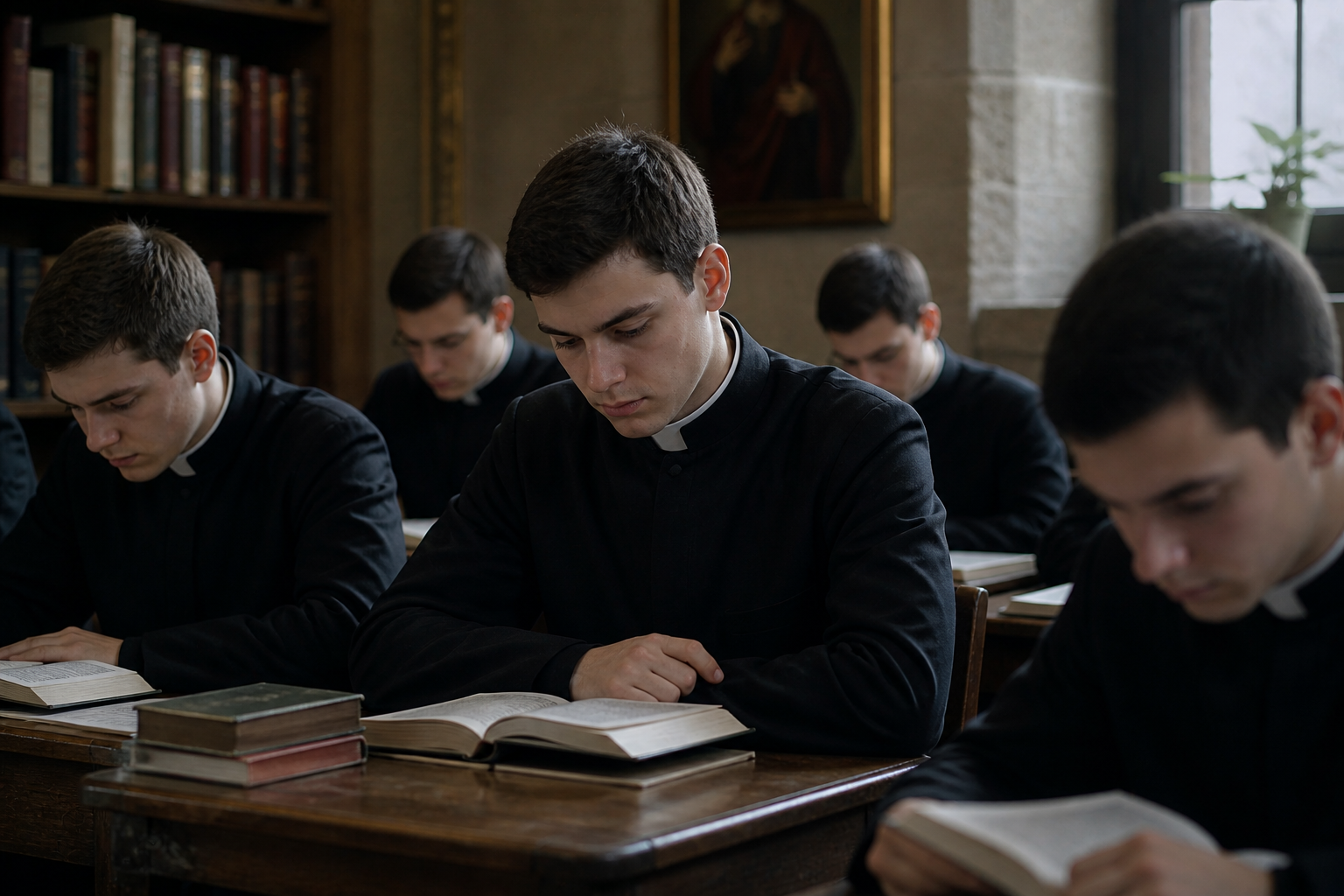





The sanctity of religious education has long been a cornerstone of moral development. However, beneath the veneer of discipline and spiritual guidance, a dark history of sexual abuse has haunted Catholic all-boys schools and Orthodox institutions for decades. To understand why these “Houses of God” often became sites of trauma, one must examine the intersection of isolation, power dynamics, and a pervasive culture of shame.
The Architecture of Institutional Secrecy
The prevalence of abuse in these institutions is rarely an accident of individual deviance alone; it is a systemic byproduct of a closed society. Catholic all-boys schools historically operated as “total institutions,” where the clergy held absolute moral, physical, and psychological authority over their pupils.
In this environment, several factors contribute to a “perfect storm” for predators:
- The Closed Ecosystem: Strict hierarchies and physical isolation prevent external oversight, allowing predators to operate with impunity behind cloistered walls.
- Vulnerability and Spiritual Trust: Parents entrust their children to the clergy, assuming a divine mandate of protection. This “halo effect” makes it nearly impossible for a child to question the actions of a figure who represents the Divine.
- The Barrier of Shame: In hyper-masculine and religious environments, victims are often paralyzed by the fear of being perceived as “weak” or “sinful.” The social stigma surrounding sexuality ensures that the victim remains silent to protect their own dignity and that of the church.
Modern discussions on reforming these systems emphasize the need for a more transparent approach to training. For instance, the Integration of Empirical Science and Spiritual Education in Western Seminaries suggests that incorporating psychological and empirical standards into theological training could be a key step in preventing systemic failures.
Public Cases of Abuse in Religious Contexts
The crisis spans denominations, revealing that the structural flaws are not unique to one branch of Christianity. While the Catholic Church has faced massive public scrutiny, Orthodox institutions have also dealt with systemic failures in protecting the vulnerable.
| Year | Location | Institution / Context | Key Participants | Consequences |
| 1950s–1980s | Ireland | Industrial Schools (Catholic) | Various religious orders | The Ryan Report (2009); billions in state and church payouts. |
| 1970s–2000s | Boston, USA | Archdiocese of Boston | Over 250 priests | $85M+ settlement; resignation of Cardinal Bernard Law. |
| 2010s–2020s | Russia | Orthodox Monasteries & Schools | High-ranking clergy | Dismissal of specific clerics; rare criminal probes amid public outcry. |
| 2018–2024 | Greece | Orthodox Orphanages/NGOs | Local clergy and staff | Major legal reforms regarding child abuse reporting in religious NGOs. |
Theological Paradox and the Parallel of Sodom and Gomorrah
For many, the occurrence of such acts within a religious setting feels like a profound betrayal of the divine. Historically and biblically, the cities of Sodom and Gomorrah serve as a potent parallel. Contrary to common misconceptions, theological analysis often emphasizes that these cities were destroyed for a total collapse of hospitality, the exploitation of the vulnerable, and a culture of depravity that ignored the cries of the oppressed.
When religious institutions prioritize the “reputation of the cloth” over the safety of a child, they create a “miniature Sodom.” The fire that consumed the biblical cities was a judgment on a society that had lost its moral compass. Today, that judgment arrives through legal reckoners, mass exoduses of the faithful, and the collapse of institutional credibility. The historical lesson is clear: an institution that shelters the predator while silencing the victim cannot survive its own internal rot.
Breaking the Cycle of Abuse
To protect children in religious environments, the culture of “blind trust” must be replaced with one of transparency and objective accountability. Protection requires both structural and cultural shifts:
- Mandatory External Reporting: Bypassing internal church “tribunals” and ensuring all allegations go directly to secular law enforcement.
- Psychological Vetting: Rigorous, independent screening of clergy and educators with a focus on identifying predatory behaviors.
- Empowering the Victim: Removing the “stigma of shame” and educating students on body autonomy, ensuring they know the fault lies entirely with the abuser.
- Secular Oversight: Independent boards comprised of laypeople (non-clergy) to manage grievances and safety protocols.
Conclusion
The end of “naive history” applies to the church as much as it does to any other power structure. We can no longer view the sanctuary as a place inherently immune to the darkness of the world. By recognizing the systemic nature of abuse and the historical parallels of moral collapse, society can begin to dismantle the walls of silence. True holiness is found not in the silence of the victim, but in the courage to speak the truth, even when it shakes the foundations of the temple.