





For centuries, humanity has lived in an era of explosive intellectual expansion. From the Newtonian revolution to the mapping of the human genome, the boundaries of the “known” pushed outward at a staggering pace. However, in the third decade of the 21st century, a quiet anxiety has begun to permeate the halls of academia. There is a growing sense that in our foundational disciplines, we have reached a plateau—a “crisis of invention” where the low-hanging fruit of discovery has been plucked, leaving only the prohibitively complex or the infinitesimally small.
The Biological Ceiling: Botany and Zoology
In the natural sciences, the era of the great explorers is effectively over. In Botany and Zoology, the cataloging of Earth’s biodiversity has reached a point of diminishing returns. The primary challenge is biological: the evolution of a truly “new” species requires a geological timescale that dwarfs a human lifespan.
Today, the discovery of a new mammal or a distinct flowering plant is a rare headline. Modern taxonomists are increasingly forced to look toward the “margins of existence.” New species are now predominantly found in two extreme environments: the hadal zones of the deep ocean (depths exceeding 6,000 meters) or zones of ecological catastrophe and extreme isolation, such as deep-cave systems or toxic vents. In these places, life adapts in ways that defy standard biological norms, but these findings represent outliers rather than shifts in our fundamental understanding of life.
The Mathematical Plateau: Logic and Computation
In Mathematics, there is a prevailing sentiment that the fundamental “rules of the game” are fully mapped. While the field remains vibrant, the nature of discovery has shifted. We are no longer discovering new arithmetic or foundational geometry; instead, we are refining the efficiency of solutions.
The focus has moved toward accelerating the resolution of incredibly complex, pre-existing problems—such as the P vs NP millennium prize problem—using raw computational power and AI. Mathematics is becoming a discipline of “optimization” rather than “invention.” We are building faster engines to drive on the same roads laid down by Gauss, Euler, and Riemann centuries ago.
The Instrumentalization of Physics
Physics faces a similar existential crossroads. The “Golden Age” of the early 20th century provided us with General Relativity and Quantum Mechanics, frameworks that successfully describe almost every physical interaction in the observable universe. Today, the laws of classical and quantum physics are treated as a completed toolkit.
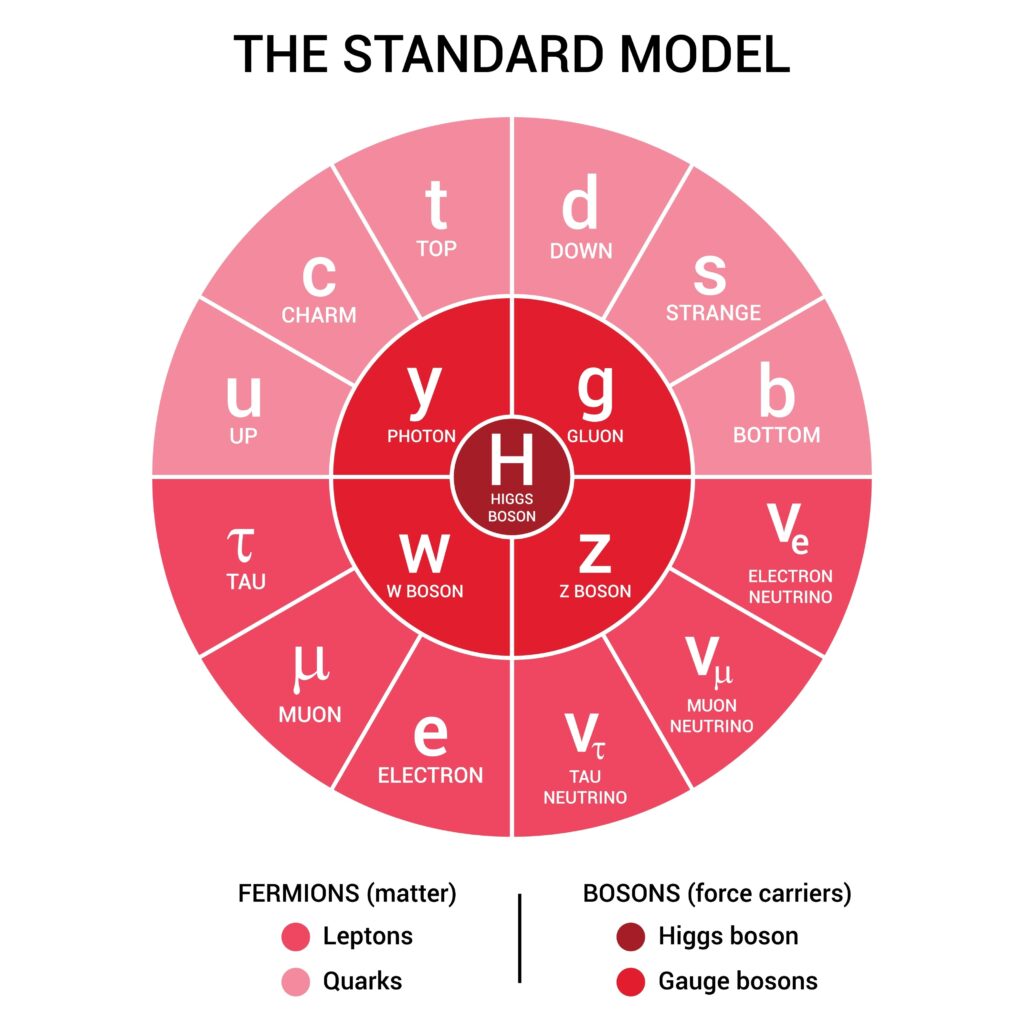
Fundamental physics is increasingly viewed as an instrument rather than a frontier. We use these known laws to build better semiconductors, lasers, and MRI machines, but we are not finding “new” laws of motion. Even the discovery of the Higgs Boson served more as a confirmation of existing theories (the Standard Model) than a leap into the unknown. Without the ability to build colliders the size of the solar system, we may have reached the limit of what we can empirically verify regarding the fabric of reality.
The Crisis of Interpretation: Philosophy
Philosophy, once the “Mother of all Sciences,” finds itself in a state of perpetual circularity. The difficulty lies in its inherent lack of a cumulative experimental record. Unlike chemistry, where a discovery stays discovered, philosophy is a battle of interpretations and systematization.
In the modern era, the complexity of linguistic analysis and the fragmentation of schools of thought make it difficult to achieve a “breakthrough.” Philosophy has become a meta-science—analyzing how we talk about things rather than proposing new ways to live or think. It struggles to provide a unified direction for a world increasingly governed by cold algorithms rather than moral frameworks.
The Remaining Frontiers: Extremes and the Micro-World
Despite this stagnation in traditional fields, three specific areas remain “open” for genuine, fundamental discovery:
- Deep Space: The cosmos remains the only laboratory large enough to test physics beyond the Standard Model. Observations of dark matter and dark energy suggest that 95% of the universe is made of stuff we do not understand at all.
- The Deep Earth: The interior of our own planet remains more mysterious than the surface of Mars. The high-pressure physics of the Earth’s core could reveal states of matter we cannot yet replicate.
- Molecular and Sub-Atomic Physics: While we know the “laws,” we do not fully understand the emergence of complexity. How do simple atoms transition into the “spark” of biological life? Exploring physics at the molecular level, particularly in the realm of quantum biology, may be the only place where a new fundamental “invention” is still possible.
The crisis of invention is not a failure of human intellect, but perhaps a tribute to its success. We have mapped the world so thoroughly that the only maps left to draw are of the invisible, the distant, and the extreme. To move forward, science must shift its gaze from the “what” to the “how”—transitioning from a quest for new laws to a deeper mastery of the complex systems that those laws create.